
Storage Solutions for Shared Children's Bedrooms
Shared kids' bedroom storage that actually works: divided zones, reachable heights, labeled bins, and a toy rotation system that stops the nightly fight.
Published · Linda Wise
7 min readLast updated: November 8, 2026 | Reviewed by: Linda Wise, managing editor
Two children in one bedroom is not a storage problem. It is a territory problem that looks like a storage problem.
The room has one set of walls and two people who each generate belongings at a rate no one anticipated. When there is no defined place for a thing, it lands on the floor, and the floor is shared, so the mess becomes everyone’s fault and no one’s responsibility.
The fix is structural: equal zones, reachable heights, containers that match the contents, and less stuff in circulation. Do those four things and the nightly argument mostly stops.
Start by Cutting the Volume in Half
Before buying a single bin, do the audit. It takes an afternoon and it changes the entire math.
- Empty the room’s toys into one pile in the hallway or living room.
- Sort into three piles: keep, rotate, and release.
- Be ruthless on the release pile. Broken items, duplicates, fast-food toys, and anything neither child has touched in six months.
- Bag the rotate pile and put it somewhere out of the room. Not the closet. Out of the room, so it is genuinely gone.
- Count what is left and compare it to the storage you have.
Most families find the keep pile is roughly half of what was on the floor, and that the existing storage was adequate all along. Buying more bins before doing this step is how people end up with a bedroom that is 40 percent containers.
The rotation box is the single highest-leverage tool here. Swap its contents every six to eight weeks and the toys coming back feel new. You get the novelty effect without buying anything.
Divide the Room Into Two Territories
Fairness is the whole game in a shared room. Children track inequality with alarming precision, and “your side is bigger” ends more negotiations than any other sentence.
Divide by volume, not by furniture. Two beds of different sizes can still sit in zones of equal usable storage if you compensate with under-bed capacity or a taller shelf.
| Zone element | What to give each child | Why it matters |
|---|---|---|
| Bedside surface | One small shelf or clip-on tray | Somewhere for a book, water, and a nightlight that is theirs |
| Under-bed storage | Equal number of containers, matched to bed height | The biggest untapped volume in most kids’ rooms |
| Personal shelf | One shelf at eye level, theirs to arrange | Ownership without adult curation |
| Private container | One lidded box the other child does not open | Prevents most disputes over small treasures |
| Hanging space | Equal rod length, or a shared rod with divided sections | Clothing volume is usually unequal; measure it |
| Shared bin | One neutral container for communal toys | Gives unowned items a home so they do not default to the floor |
The private container is not a luxury. A child with no space that is genuinely theirs will claim space by leaving things everywhere, because that is the only territory available.
Get the Heights Right
Storage a child cannot reach is adult storage. That is fine for out-of-season clothing and not fine for the toys they use every day.
The reachable band for most children from about age three is roughly 20 to 48 inches off the floor. Plan around that:
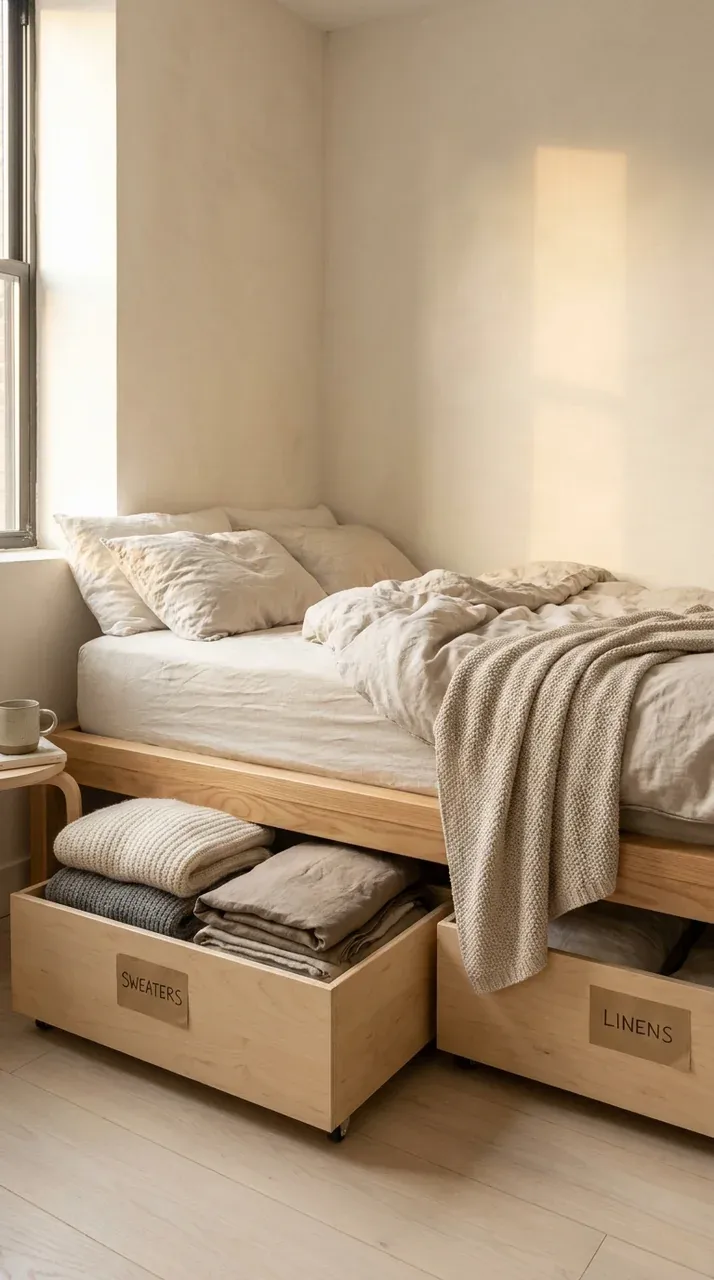
- 0 to 20 inches: large bins, bulky items, and shoes. Accessible but dusty, and awkward for small children to manage. Good for under-bed drawers.
- 20 to 48 inches: the prime band. Daily toys, books, clothes they choose themselves, art supplies.
- 48 to 60 inches: older children and taller kids. Books, display, supervised craft materials.
- Above 60 inches: adults only. Out-of-season, rotation boxes, anything breakable or hazardous.
Two practical rules follow. First, put the heaviest things low — a bin full of wooden blocks dropped from shoulder height is a hazard and a mess. Second, keep the top shelf for the rotation boxes, because that is the one category where adult access is the point.
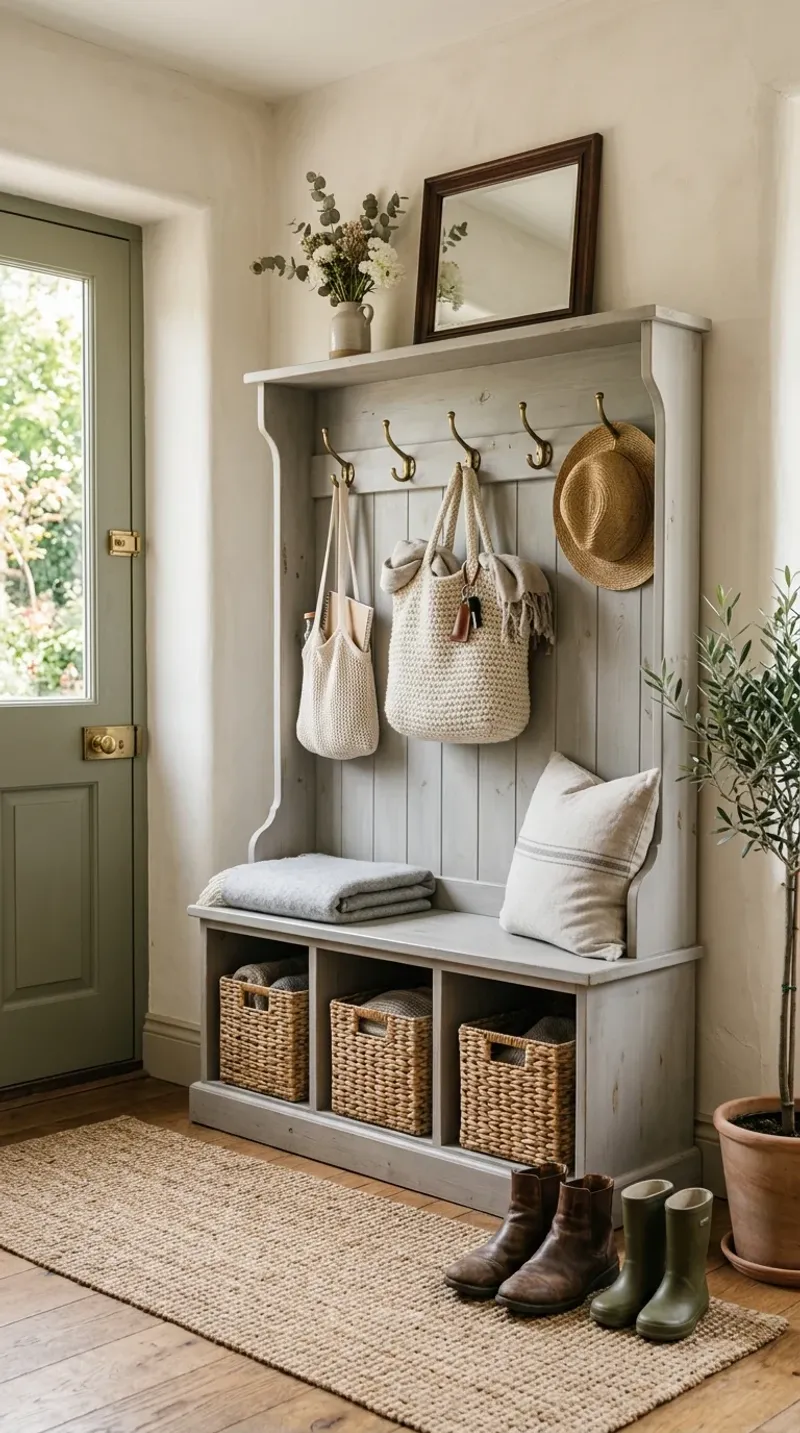
If you are setting up hooks or low-access organizers for younger children, our guide to designing a kid-friendly entryway covers the same height logic for the front door, and the kid-friendly entryway organization piece covers hook heights and zones that make the system self-sustaining.
Choose Containers That Match the Contents
The most common kids’ storage mistake is a beautiful matched set of small bins and a room full of large toys. A bin that holds three stuffed animals is not storage, it is decoration.
Match the container to the category:
- Building sets and small pieces: shallow, compartmented, or a single deep bin with a lid. Deep bins hide pieces; shallow trays keep them findable.
- Stuffed animals: one large open hamper, not twelve small bins. Volume, not sorting.
- Books: a forward-facing shelf or a deep bin with the spines up. Forward-facing display genuinely increases how much children read.
- Art supplies: a caddy that moves to the table, plus a lidded bin for the rest. Portability beats capacity here.
- Dress-up clothes: a low hook or a soft-sided bin. Hangers in a closet are a losing battle at age five.
- Clothing: drawers at chest height, divided with internal dividers so a stack of shirts does not become a pile.
Open bins for daily use, lidded bins for rotation and out-of-season. A lid is a barrier a young child will not clear, so a lidded bin in daily use is a bin that stays full of the wrong things.
Labels matter more than you think. Pictures work better than words for pre-readers, and a photo of the actual contents taped to the bin end lets a four-year-old put things away correctly without an adult narrating. Our cube storage ideas guide covers the shelving side of this in more detail.
Make the System Self-Sustaining
Storage that requires an adult to maintain is storage that fails the week you get busy. The test is simple: can the room be reset in ten minutes by the children alone?
Build toward yes with four habits:
- A ten-minute reset before bed. Not a deep clean. Everything back in its labeled home, floor clear.
- One-in, one-out. A new toy means an old one goes to the rotation box. This is the only rule that keeps volume stable.
- The shared bin absorbs the unowned. Anything without a home goes there, and the bin gets sorted monthly. This prevents the “it’s not mine” deadlock.
- A weekly five-minute check of the rotation box. If nothing has come out in two months, it is time to release it.
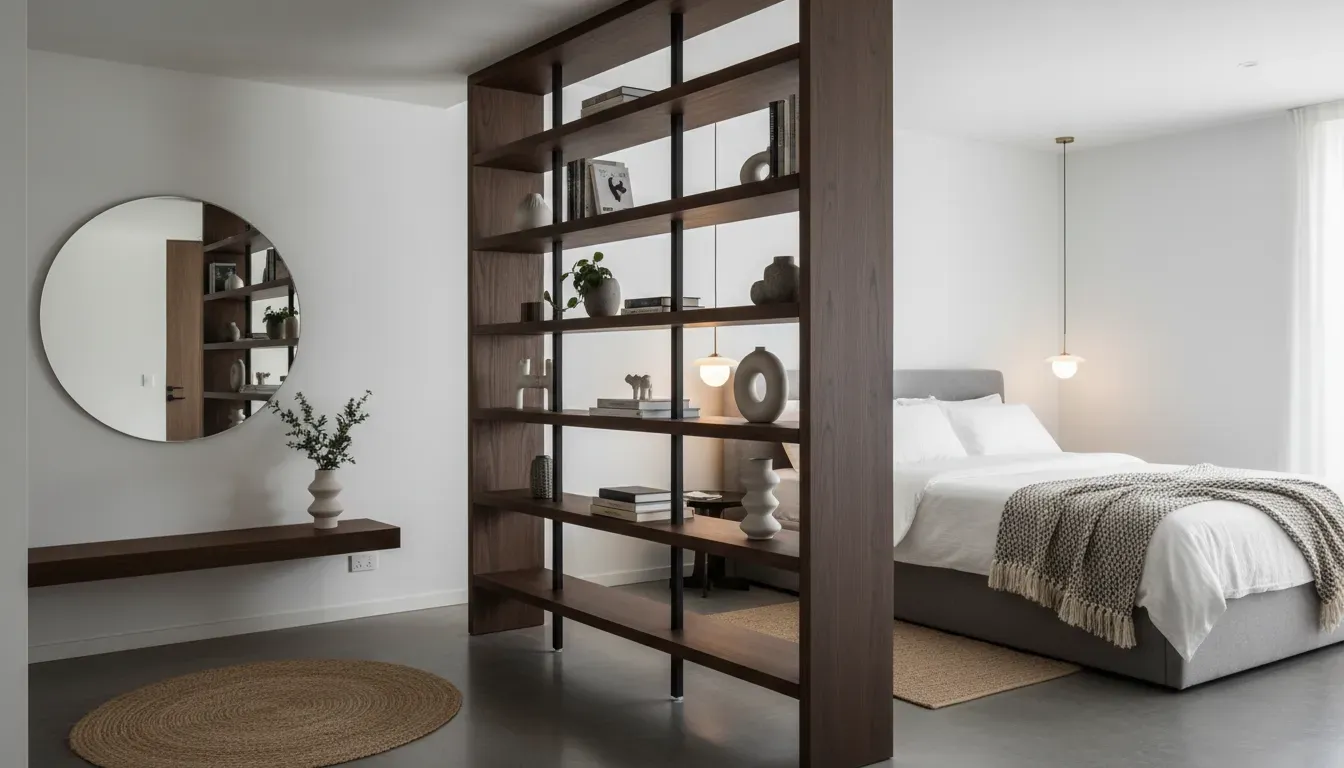
For the door and the transition space, the same principles apply at smaller scale. Our guide to storage solutions for small apartments covers multi-use furniture, and maximizing small spaces has the vertical-storage math for rooms where floor area is the constraint.
When the Room Is Genuinely Too Small
Sometimes the honest answer is that two children in one bedroom need a different furniture plan, not more bins.
Three moves buy real capacity without adding floor space:
- Bunk or loft beds. A lofted bed frees the entire footprint underneath for a dresser, a desk, or drawers. This is the largest single gain available in a shared room, and it often solves the storage problem outright.
- Bed risers and under-bed drawers. Raising a bed by six to eight inches creates a full second storage layer. Use shallow drawers rather than open bins so dust stays out.
- A tall, narrow wardrobe instead of two dressers. Two dressers eat wall space and floor space. One tall unit with divided halves uses vertical space and gives each child a side.
If the room has a closet, treat it as the primary storage and the bedroom as the secondary. Our guide to transforming closet entryways covers how to squeeze usable capacity out of a shallow closet, and the awkward alcoves and nooks piece is useful for the odd corners that every shared bedroom seems to have.
One caution on loft beds: check the ceiling height and the guardrail specification before buying, and do not put a loft over a child under the age the manufacturer specifies. Storage gains are not worth a fall risk.
A budget-friendly supplement
Costway’s storage and organization range includes stackable bins, foldable baskets, and closet organizers at factory-direct prices. Affiliate link: we may earn a commission at no extra cost to you. Measure first, and buy one sample before committing to a matching set.
Safety Points Worth Taking Seriously
Children’s bedroom storage has a hazard profile that adult storage does not.
- Anchor every tall unit. Dressers, shelving, and wardrobes must be fixed to the wall. This is not a precaution; it is the standard recommendation from furniture safety guidance, and it applies to units well under waist height once drawers are open.
- Watch the climbable geometry. Open shelves with wide spacing become a ladder. Drawers left open become steps.
- Avoid heavy items overhead. Nothing dense above 48 inches in a room where children jump on beds.
- Check for pinch points on folding and hinged storage, especially anything with a lid that can drop.
- Keep small parts out of reach of under-threes in a house with mixed ages. The older child’s building set is the younger child’s choking hazard.
Bottom Line
Shared-room clutter is almost always a volume and territory problem wearing a storage costume. Cut the toy count in half, give each child an equal zone with one genuinely private container, keep daily items in the 20 to 48-inch band, and label everything with pictures.
In our assessment, that combination beats any amount of additional shelving. Buy containers last, after the audit and the zone plan, and buy one sample before committing to a matched set. The room will tell you what shapes it actually needs.
Shop Entryway Furniture & Storage Deals on Costway
Factory-direct pricing on entryway benches, shoe cabinets, hall trees, and organizers with fast, free US delivery.
* Affiliate disclosure: We may earn a commission if you shop through this link at no added cost to you.
Check Costway Entryway DealsFrequently Asked Questions
How do I divide storage fairly between two children in one room?
Divide by volume, not by furniture. Measure the usable cubic feet each child gets and make the two numbers match, even if the shapes differ. Then give each child one private container that the other does not open, because a small amount of genuine privacy prevents most of the disputes.
What height should kids' storage be?
Daily-use items belong between roughly 20 and 48 inches off the floor, which is the reachable band for most children from about age three upward. Above 48 inches is adult territory for out-of-season and supervised items. Below 20 inches is floor-level access, which works for large bins but collects dust and stray pieces.
How many toys should be out at once?
Fewer than most families keep. A workable rule is one bin per category per child in the room at a time, with everything else in a rotation box. If a child cannot put the room back in ten minutes without help, there is too much out, and the storage system will lose to the volume every time.
Are open bins or lidded bins better for kids?
Open bins for daily use, because a lid is a barrier a child will not clear. Use lidded bins only for rotation storage and out-of-season clothing. Labels with pictures work better than words for children who cannot read yet, and they let a four-year-old put things away correctly without supervision.
How do I stop one child's mess spreading into the other's side?
Physical boundaries do the work that rules cannot. Use a low shelf as a divider, give each bed its own under-bed storage, and place a shared bin in neutral territory for communal toys. Anything without a home defaults to the shared bin, which makes the boundary enforceable without an argument.