
11 Clever Storage Solutions for Small Dorm Spaces
11 clever dorm storage solutions that survive a 12x15 room: bed risers, over-door racks, closet doubling, and the rules most dorm move-in guides skip.
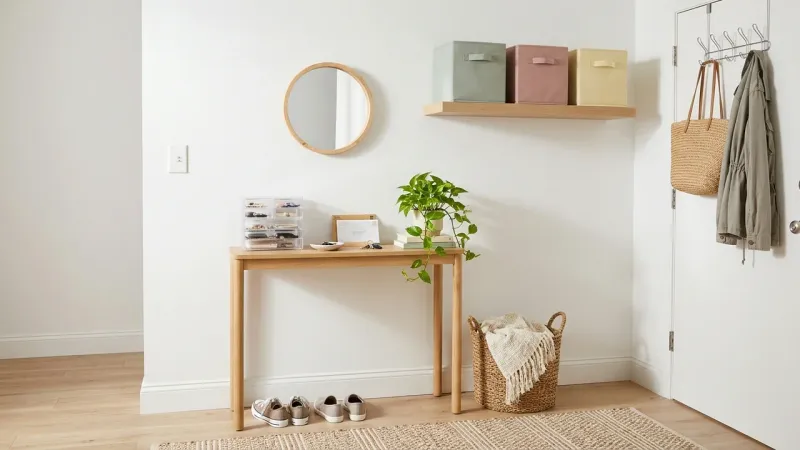
Published · Linda Wise
7 min readLast updated: November 8, 2026 | Reviewed by: Linda Wise, managing editor
A dorm room gives you roughly 180 square feet, a shared closet, and a rulebook that forbids most of the things you would normally do to a wall.
That combination breaks generic small-space advice. You cannot build shelves, you cannot anchor anything heavy, and you will move out in nine months. What works instead is storage that adds cubic feet without touching the structure.
These eleven moves are ranked by how much space they actually recover per dollar, with the dorm-specific constraints called out where they matter.
The Constraints That Shape Every Decision
Before the list, three rules that eliminate half the options on a typical shopping trip.
- No drilling. Most housing contracts prohibit nails, screws, and adhesive hooks that pull paint. Removable strips are usually allowed, but check your handbook and the product’s weight rating.
- No blocking egress. Nothing goes in front of the door or the window. Fire code is not negotiable, and inspections are real.
- No permanent furniture. Anything you buy has to come out in May, ideally in a car trunk.
Measure your room and closet before move-in if you can, and photograph the closet. Schools rarely publish exact closet dimensions, and a 4-foot closet needs a very different plan than a 6-foot one.
The 11 Solutions, Ranked by Space Gained
| # | Solution | Typical cost | Space gained | Drill needed |
|---|---|---|---|---|
| 1 | Bed risers or loft kit | $25-$90 | 15-25 cu ft | No |
| 2 | Under-bed rolling bins | $20-$60 | Uses #1 | No |
| 3 | Over-door rack or pockets | $15-$40 | 3-6 cu ft | No |
| 4 | Closet doubler rod | $15-$35 | Doubles hanging | No |
| 5 | Hanging shelf unit | $20-$45 | 4-8 cu ft | No |
| 6 | Slim velvet hangers | $15-$30 | 30-50% more hanging | No |
| 7 | Over-the-desk shelving | $30-$80 | 3-5 cu ft | Sometimes |
| 8 | Stackable crates | $10-$25 each | 2-3 cu ft each | No |
| 9 | Door-pocket shoe organizer | $10-$25 | 2-4 cu ft | No |
| 10 | Vacuum storage bags | $15-$30 | 50-70% of soft goods | No |
| 11 | Bedside caddy or clip lamp shelf | $10-$30 | 1-2 cu ft | No |
Costs are typical retail ranges, not quotes. Verify dimensions and weight limits on the product page before ordering.
1. Bed Risers or a Loft Kit
The bed is the largest object in the room and the largest unused volume. Raising it 6-8 inches creates a storage zone you cannot get any other way.
- Use the school’s loft kit if one is offered. It is engineered for the frame and permitted by definition.
- If you use risers, choose interlocking ones that seat into the leg and cannot slide out.
- Never stack risers or use cinder blocks and books. A collapsed bed at 2 a.m. is a hospital visit.
- Check the handbook. Some schools prohibit aftermarket risers outright.
This is the highest-return move on the list, and the one most worth getting right.
2. Under-Bed Rolling Bins
Once the bed is up, fill the space with bins that roll out.
- Measure the clearance from floor to frame, then buy bins 1 inch shorter.
- Choose lidded bins so dust and stray items stay out.
- Use low-profile bins in the middle and taller ones at the ends where the frame is higher.
- Label the ends, because you will be pulling these out sideways.
Clear bins let you see contents without unstacking. Opaque bins look tidier if the bed is visible from the door.
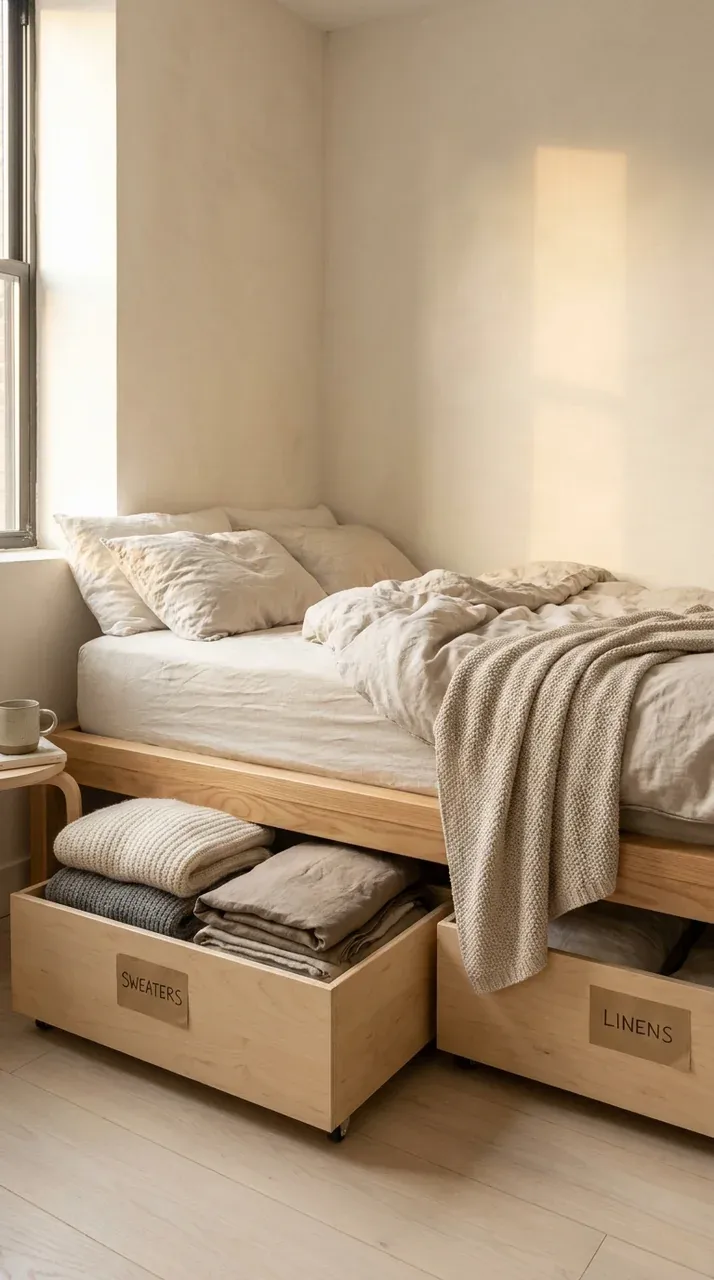 Raising the bed and filling the space with rolling bins recovers more cubic feet than any other dorm move.
3. Over-Door Racks and Pocket Organizers
The back of the entry door is free vertical real estate.
- Over-door hook racks hold coats, towels, bags, and lanyards.
- Over-door pocket organizers hold shoes, toiletries, chargers, and snacks.
- Check the door clearance at the top: some doors have less than an inch of gap.
- Keep the swing clear. Nothing should hang low enough to catch on the door or block the handle.
This is the cheapest way to get things off the floor, and it needs no hardware.
4. Closet Doubler Rods
A dorm closet usually has one rod at 66-68 inches. Most of your clothes are shirts and pants that need half that.
- A hanging closet doubler clips onto the existing rod and adds a second rod below.
- A tension rod works if the closet has two side walls close enough to span.
- Keep long items on the top rod and short items below.
- Leave the floor clear for shoes or a hamper.
This roughly doubles hanging capacity for under $35, which is the best ratio on the list after the bed.
5. Hanging Shelf Units
A fabric or canvas hanging shelf unit turns one rod into five or six shelves.
- Choose one with a rigid base panel in each shelf; soft-sided units sag.
- Hang it at the end of the closet, not the middle, so it does not block access.
- Use it for folded clothes, towels, and shoes, not heavy books.
- Check the rod’s load rating. A full hanging unit plus clothes can exceed what a thin dorm rod is anchored for.
6. Slim Velvet Hangers
Replacing bulky plastic hangers with slim ones is the least glamorous move here and one of the most effective.
- Slim hangers fit 30-50 percent more garments on the same rod.
- Velvet grips, so knits do not slide off.
- Match them all. Mixed hanger types waste space and look chaotic.
- Skip wire hangers for anything with shoulders you care about.
7. Over-the-Desk Shelving
The desk is usually the only flat surface, and it disappears under books by week three.
- A small shelf riser or a monitor stand with storage creates a second level.
- Wall-mounted units need permission and often a drill, so prefer freestanding.
- Keep the desk edge clear for writing and laptops.
- Use the vertical space above the desk for books and bins, not decor.
If your desk is against a wall and drilling is allowed, a simple bracket shelf adds real capacity. Ask housing first.
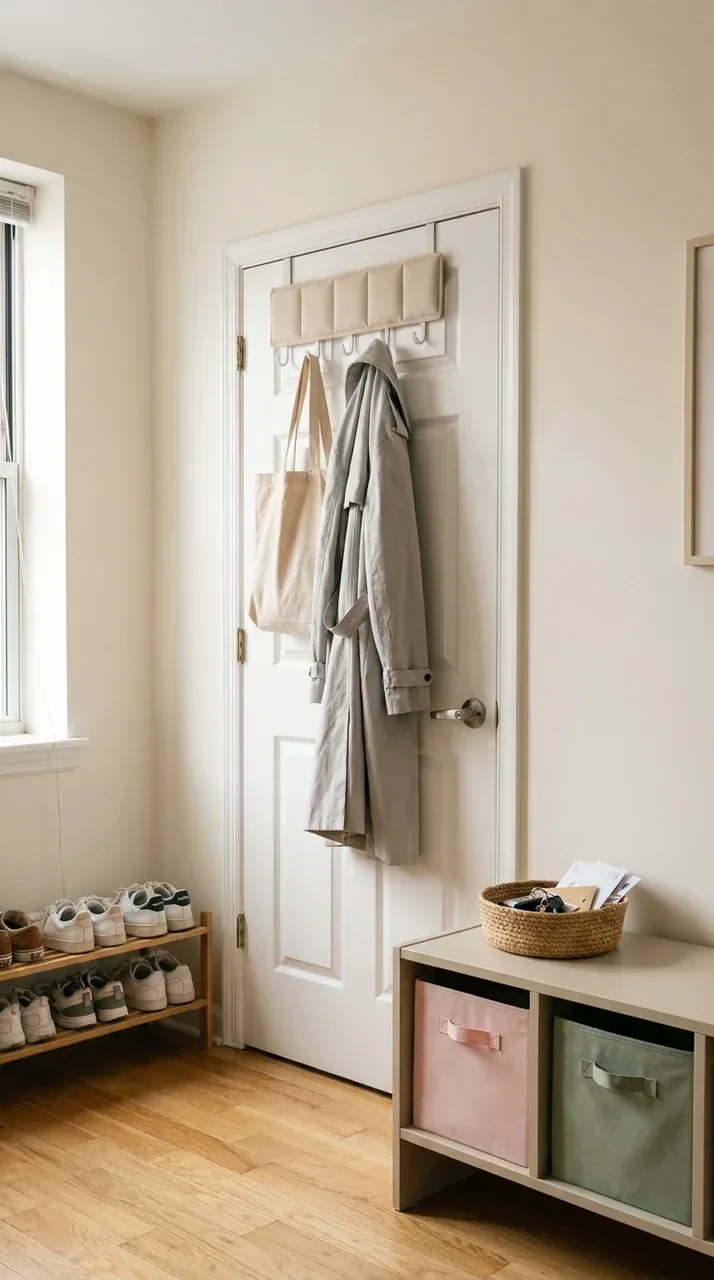 Adding a second level above the desk keeps the work surface clear without touching the wall.
8. Stackable Crates
Crates are the dorm workhorse because they are cheap, light, and stack.
- Choose straight-sided crates so they tile without gaps.
- Stack no more than three high and keep the heaviest on the bottom.
- Use them for dry goods, school supplies, and overflow, not for anything fragile.
- Check load ratings if you plan to fill them with books.
Our guide to plastic storage crates for pantry shelving covers how to read load ratings, which applies directly to a dorm room.
9. Door-Pocket Shoe Organizers
An over-door shoe organizer is really 24 small pockets for anything.
- Shoes, chargers, toiletries, snacks, cleaning supplies.
- Hang it inside the closet door to keep the room looking calm.
- Check pocket depth for anything taller than a phone.
- Skip it if the door is hollow-core and flexes under load.
10. Vacuum Storage Bags
Winter coats, comforters, and extra bedding take up disproportionate space for eight months of the year.
- Vacuum bags compress soft goods by 50-70 percent.
- Store them flat under the bed rather than standing up.
- Do not vacuum-pack down items or anything with rigid structure.
- Check the bag holds its seal before you trust it with a wool coat.
11. Bedside Caddy and Clip Shelves
The last few square feet are at the head of the bed.
- A bedside caddy holds a phone, glasses, and a water bottle without a nightstand.
- A clip-on shelf attaches to the bed frame for a lamp or book.
- Keep cords tidy with clips so nothing pulls a device off the bed.
- Nothing heavy above head height while you sleep.
Rules That Keep It Working
- Store by frequency, not category. Daily items at arm height, seasonal items under the bed.
- Leave 20 percent empty. A full dorm room becomes a mess in a week.
- Label bins on the side, not the lid, because lids get swapped.
- Do a mid-semester purge. Anything untouched for six weeks goes home.
- Plan the move-out in September. Buy things that pack flat.
If you are organizing a shared apartment rather than a dorm, our small apartment storage guide covers the renter-friendly options in more depth. For entryway-style drop zones that work in tight spaces, see our small space maximization guide.
A budget-friendly supplement
Costway’s storage and organization range includes stackable bins, foldable baskets, and closet organizers at factory-direct prices. Affiliate link: we may earn a commission at no extra cost to you. Measure first, and buy one sample before committing to a matching set.
Foldable baskets are especially useful in a dorm because they collapse flat for the trip home. Buy one, check that it holds its shape when full, then order the rest.
Bottom Line
Raise the bed, fill the space underneath with rolling bins, and double the closet rod. Those three moves recover more usable storage than everything else on this list combined, and none of them require a drill.
Buy for one school year, not four. Dorm rooms change, roommates change, and the bin you bought freshman year rarely fits the room you get as a senior. Measure first, check the housing handbook, and spend the savings on a better mattress topper.
Shop Entryway Furniture & Storage Deals on Costway
Factory-direct pricing on entryway benches, shoe cabinets, hall trees, and organizers with fast, free US delivery.
* Affiliate disclosure: We may earn a commission if you shop through this link at no added cost to you.
Check Costway Entryway DealsFrequently Asked Questions
How much storage space does a typical dorm room have?
Most dorm rooms run about 12 by 15 feet with a shared closet roughly 4 to 6 feet wide, plus a desk and a dresser. The usable storage is usually a single hanging rod, two or three drawers, and a shelf. That is why under-bed and vertical space do the heavy lifting.
Can I use bed risers in a dorm?
Many schools allow them, but some prohibit anything that alters the bed frame or blocks egress. Check your housing handbook first. Loft kits supplied by the school are always safer than aftermarket risers, and never stack risers or use blocks that do not lock to the leg.
Can I drill into dorm walls?
Usually not. Most housing contracts prohibit nails, screws, and large adhesive hooks that damage paint. Command-style removable strips are typically permitted, but check the specific product weight limit and your school's policy. Over-door and freestanding solutions avoid the question entirely.
What is the best way to store clothes in a small dorm closet?
Double the hanging space with a closet doubler or a second tension rod, use slim velvet hangers instead of plastic ones, and add a hanging shelf unit for folded items. Keep shoes in an over-door pocket organizer or under the bed, not on the closet floor.
How do I store things over the summer?
Store only what you will reuse. Under-bed bins, stackable crates, and vacuum bags pack flat and travel well. Label every bin on the side, not the lid, because lids get swapped. Anything you did not touch all year should not come back in the fall.