
Wobbly Hall Tree? Anchor It, Shim It, and Pick Safer Entryway Storage
What should you look for in tall entryway storage to make it safer? Anchor and shim a wobbly hall tree — hardware, studs, straps, the 30-second test inside.
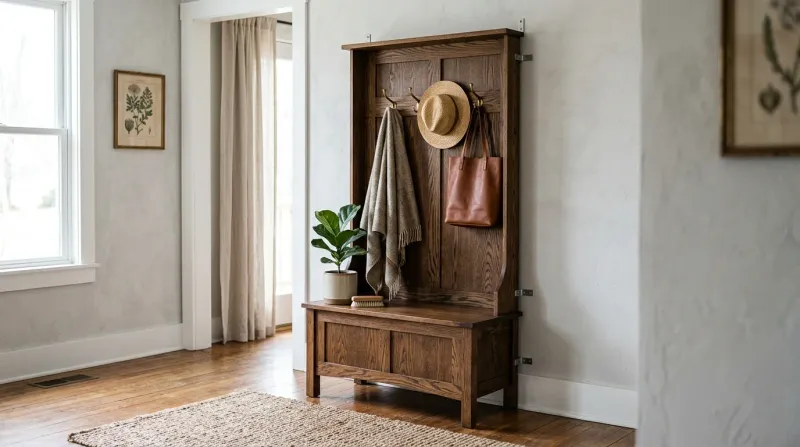
Aug 8, 2026 · Linda Wise
15 min readA wobbly hall tree is a fixable safety problem — anchor it, shim it, and it will stop being the thing you edge around.
What should you look for in tall entryway storage pieces like hall trees or shoe cabinets to make them safer? Choose a heavy, deep base over a flimsy one, solid wood or steel over thin particleboard, and a unit that ships with wall-anchoring hardware — then anchor it to studs no matter what.
What maintenance tips keep a hall tree looking good over time? Dust weekly with a soft cloth, tighten screws every 6 months, condition the wood annually, and never let wet or soaked boots sit on the bench.
Below: the why behind both answers, plus the exact steps to take today.
Is Your Hall Tree a Tip Risk? (the 30-second test)
You don’t need a level or a stud finder, you need thirty seconds and a steady hand.
The test: lean on the top hook. If the whole tree moves, we’re fixing it today.
Load the top hooks with the three heaviest coats you own first — that’s how the unit lives its life, so that’s how you test it. Then:
- Push the top rail — palm flat, steady pressure toward and away from the wall. Movement means the base isn’t carrying the load.
- Push the sides — one hand on the frame, lean your weight sideways. Rocking means the joints are loose, not just the wall mount.
- Check the feet — slip a business card under each corner. If any corner rocks like a dentist’s chair, the floor or the base is uneven.
Pass all three? Great — re-test it the day you change the clocks, because humidity loosens joints and anchors every year. Fail any one? Keep reading — everything here is fixable in an afternoon.
How to Anchor a Tall Hall Tree (and shoe cabinets: hardware, studs, furniture straps)
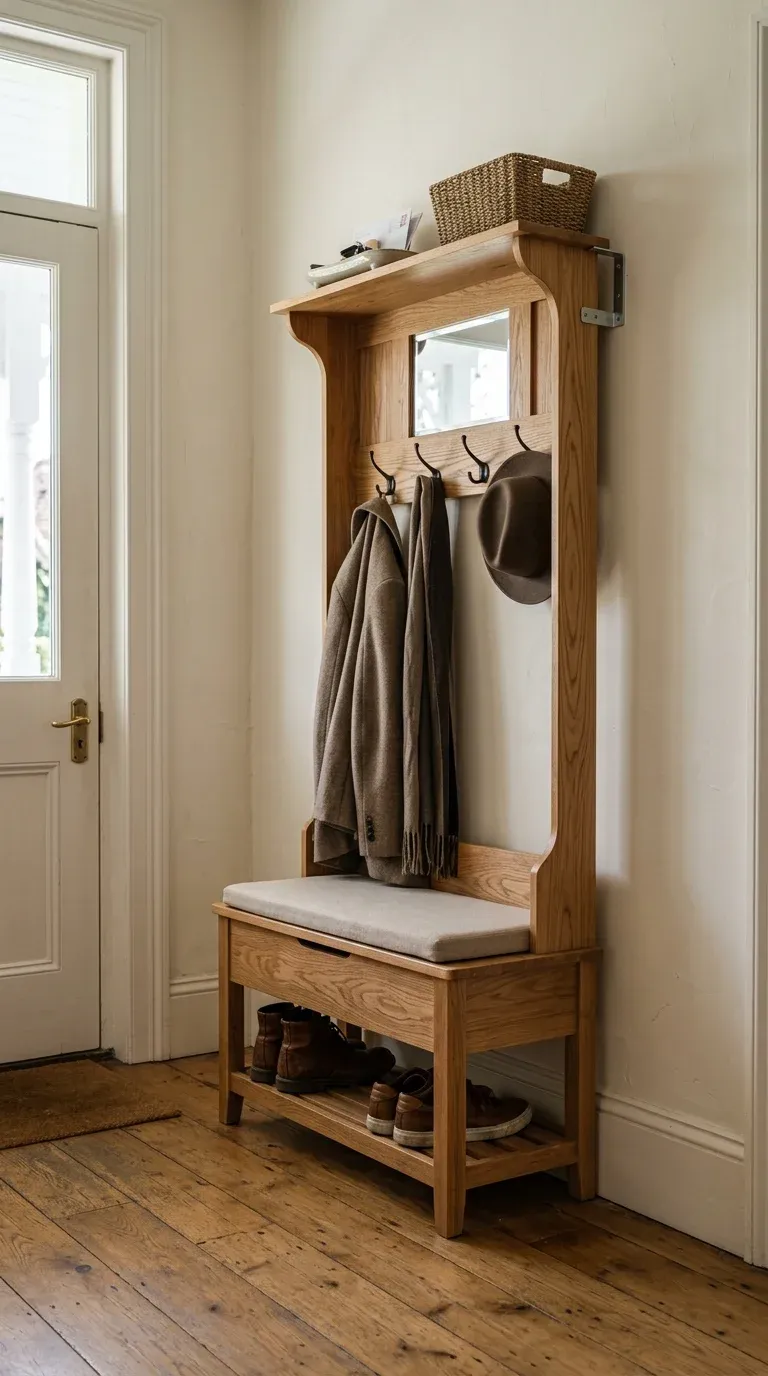
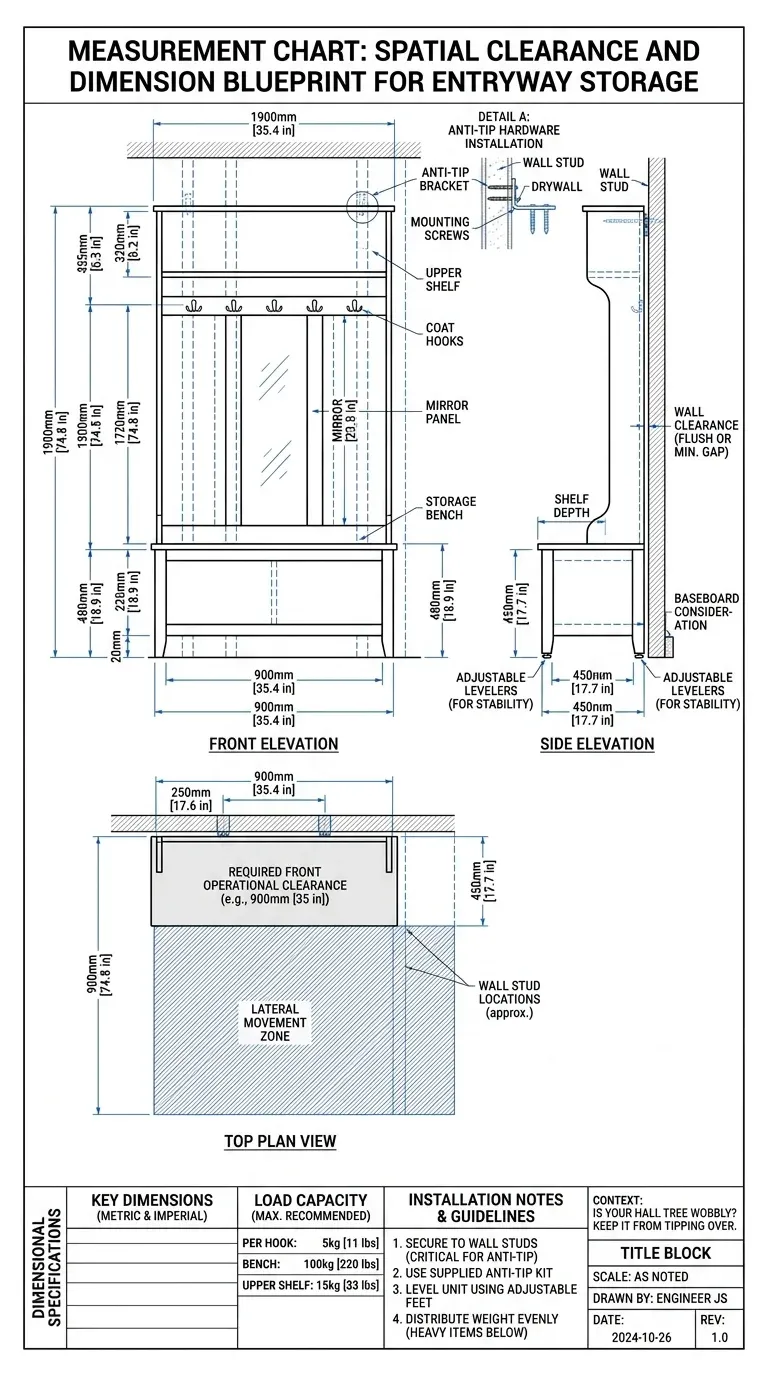
A 70-inch hall tree on a 14-inch base is a lever waiting for a child, a dog, or one wrong lean — anchored to the wall, it’s a non-event. This applies to hall trees, tall shoe cabinets, and any piece over 60 inches in a house with kids.
Hardware you’ll want (most of it goes to the stud, not the drywall):
| Hardware | When to use it | What it does |
|---|---|---|
| 3-inch #10 wood screws | Hall tree has a solid back rail and you can hit studs | Gold standard; bites deep into the stud |
| 1/4-inch steel toggle bolts | Studs don’t line up with the mounting holes | Spreads pull-out force across the drywall |
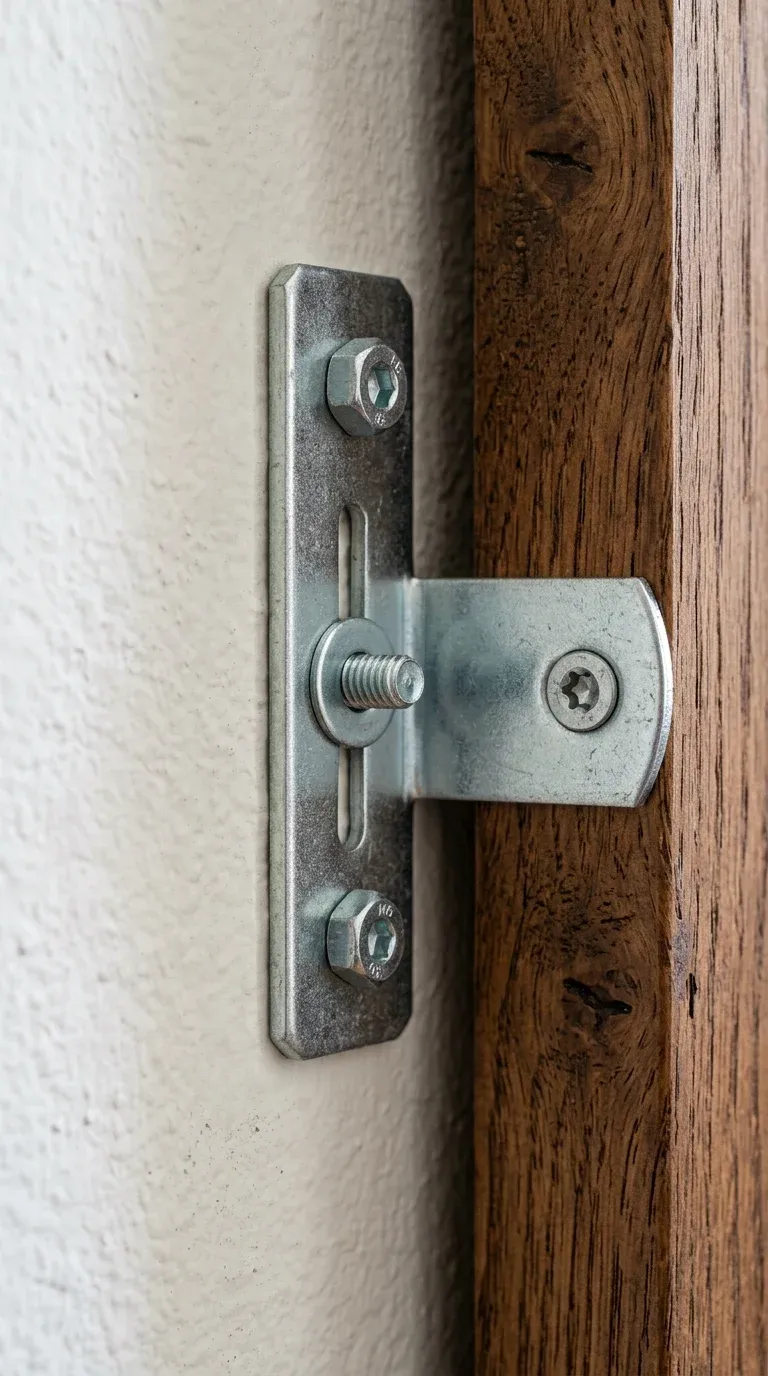
| Steel L-brackets | Open metal frames with no back panel | Bridges frame to wall at the top rail |
| Furniture straps / safety cables | Kits, rentals, or frames you don’t want to drill | Wrap around the top bar into wall anchors |
| Plastic drywall anchors — skip them | Never, on anything heavy | Pull straight out under dynamic load |
The anchoring steps:
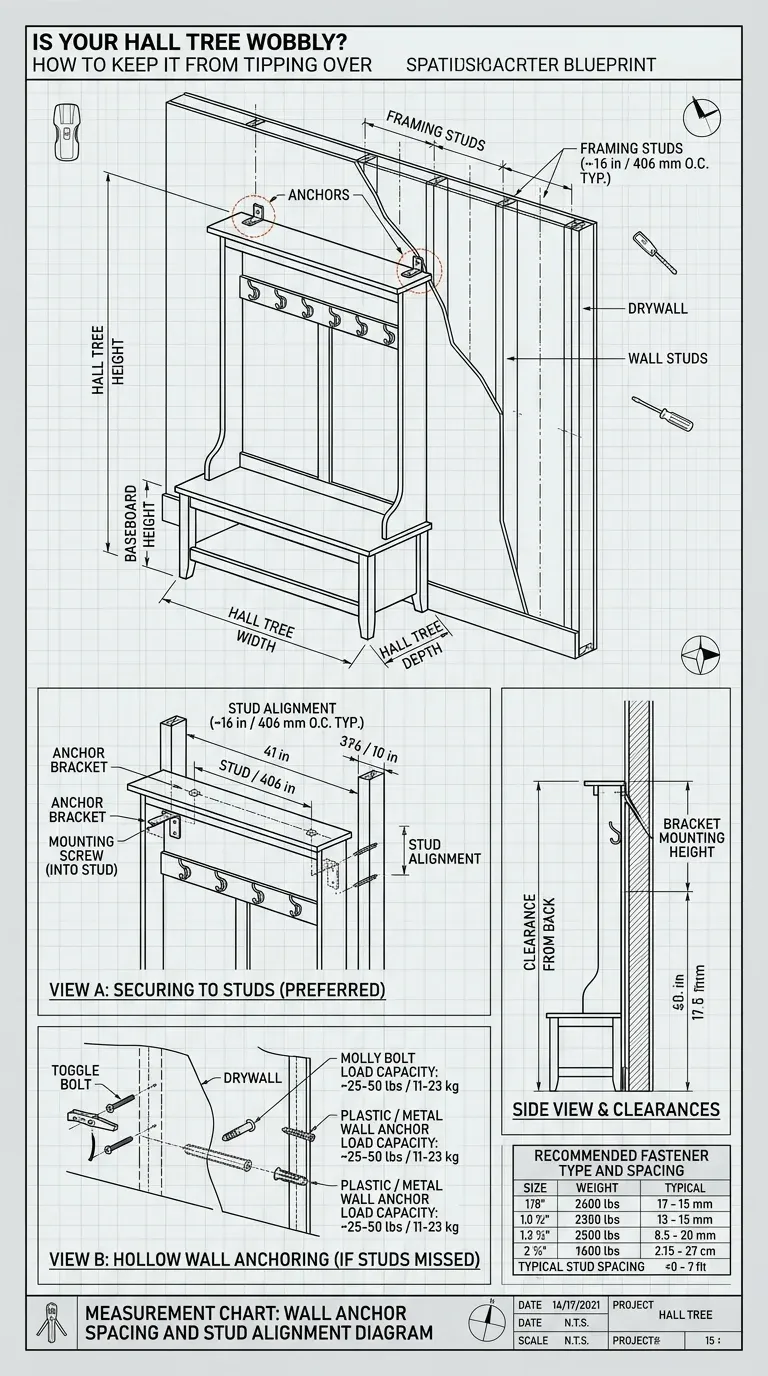
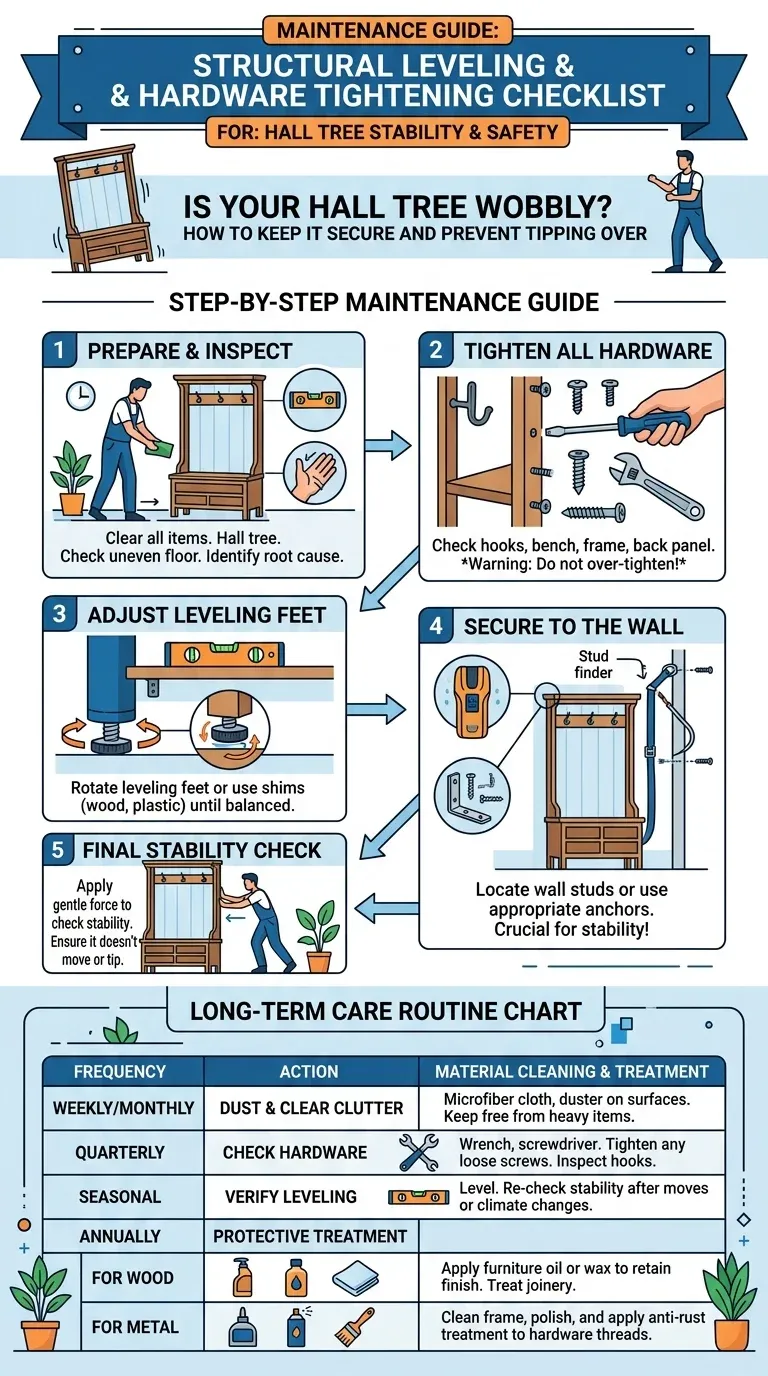
- Find the studs. Run a magnetic or deep-sensing stud finder across the wall where the top rail sits, and mark both edges. You want two studs if the unit is wider than 24 inches.
- Level the base first. Shim under the low corners with non-compressible composite shims — soft wood shims crush over a season. Check the bench seat with a 24-inch level, front-to-back and side-to-side. Anchor a leaning tower and you’ve just anchored a problem.
- Mount at the top, not the bottom. Attach the bracket, strap, or L-bracket to the upper rail or top shelf, pre-drill a pilot hole, and drive a 3-inch #10 screw into the stud. Screws near the floor do almost nothing for tip-over; the top connection is the one that saves the day.
- No stud where you need one? Drill a 1/2-inch hole, push in a 1/4-inch toggle bolt, tighten until the wings bite — roughly 150 lbs of pull-out, plenty for a coat load.
- Pull-test it. Same 30-second test after anchoring — zero movement is the only pass.
Got a unit still wobbly at the joints after anchoring? The frame itself is loose — the anchor hall tree safely guide covers straps, cables, and stud layouts, and the common hall tree problems guide walks tighten-shim-glue-replace hands-on.
What to Look For When Buying Tall Entryway Pieces (safety checklist)
Call this the “buy it safe” checklist. Run it on any hall tree or tall shoe cabinet before paying — these ten questions catch most problems that show up as wobble six months later.
- Base weight. Heft matters — pick up the corner of an unboxed unit. A heavy base means a low center of gravity; when in doubt, heavier wins.
- Depth. 14–16 inches deep is the safe zone for a tall unit. Anything shallower is a tall building on a narrow footprint.
- Joinery. Solid wood or steel frames with real fasteners beat cam-locks in particleboard — and if it ships with cams, budget for tightening them on schedule.
- Wall anchor hardware. Does the box include straps, a cable, or brackets — or pre-drilled anchor holes? That’s a manufacturer telling you the unit needs anchoring and helping you do it right.
- Double-prong hooks into a solid rail, not a thin panel. Hooks on a cardboard back are the first thing to rip out.
- Adjustable leveling feet. Worth the extra $15 forever if your floors are anything but flat (most floors are anything but flat).
- Slatted or ventilated shelves. Closed-solid shelves trap moisture and rot the base; airflow protects the structure.
- Finish on all six sides. Sealed edges resist the wet-boot damage that starts every wobble story.
- No cheap plastics in the load path. Plastic anchors and glides are fine as accessories, never as structure.
- The lean test in the aisle. Gently rock the display model — swaying in the store means swaying at home. Walk away.
Shopping around? Our roundup of the best hall trees scores every pick on stability and anchoring, which is exactly where cheap money goes wrong.
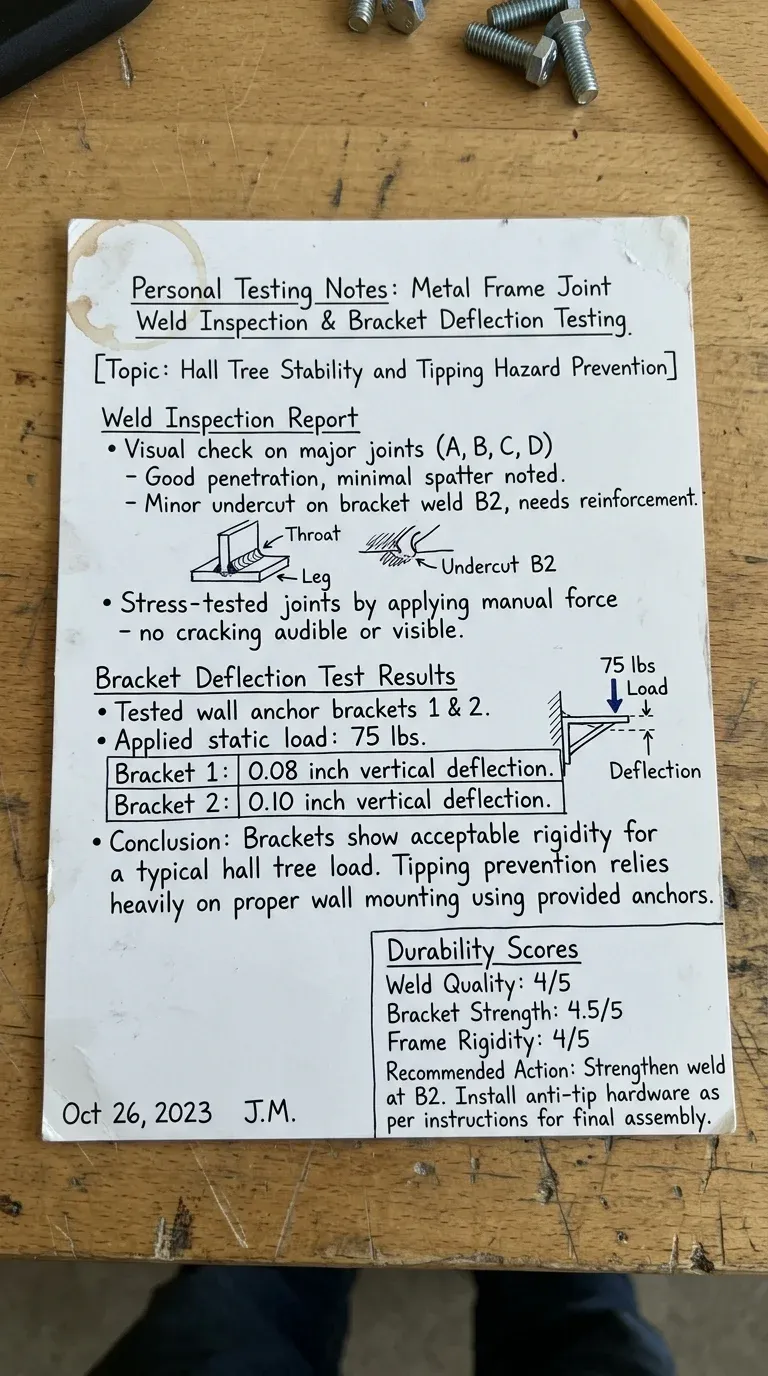
Maintenance Tips That Keep a Hall Tree Looking Good (dusting, oiling, hardware checks)
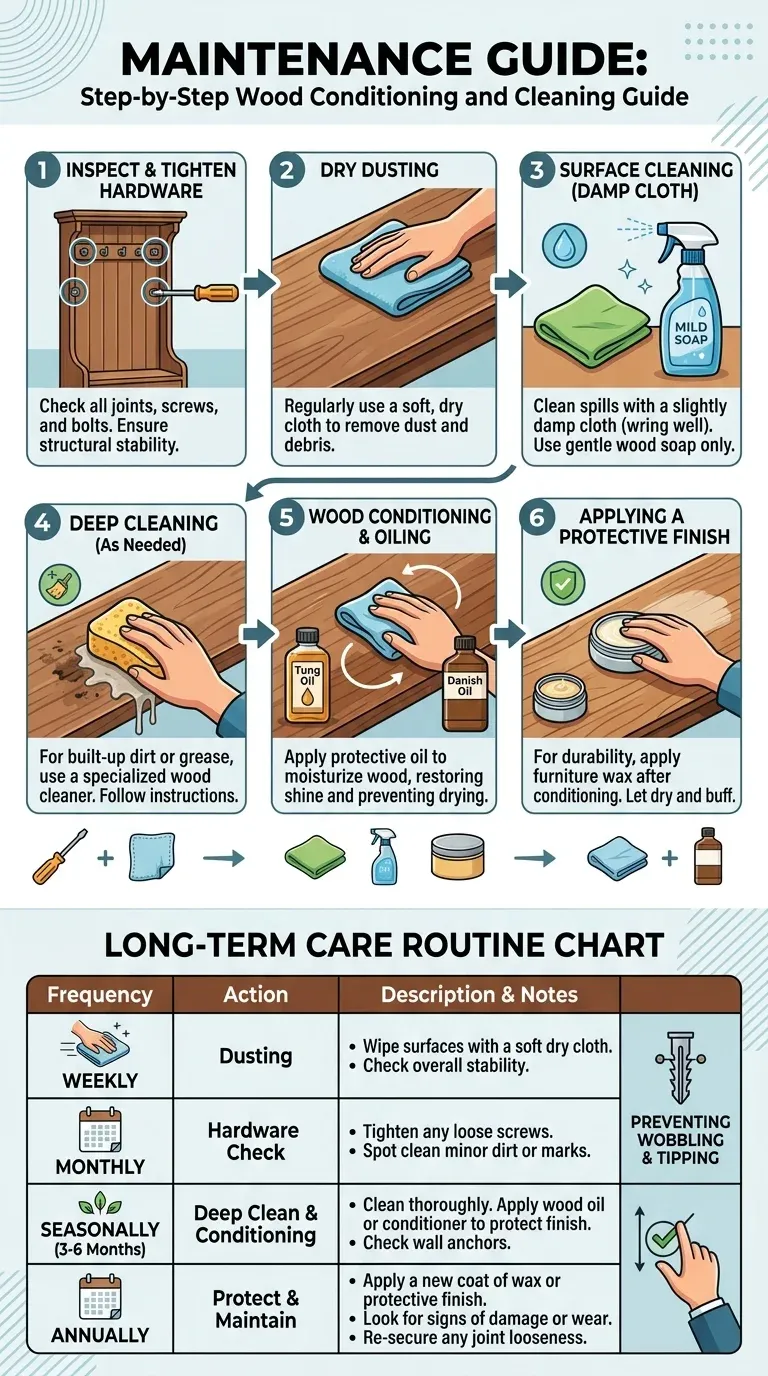
Anchoring fixes today; maintenance keeps it fixed. Wood swells in summer humidity and shrinks under dry winter heat, and every move loosens a joint or anchor by a hair — not a defect, just the material working. Your job is the four-part routine:
Weekly (2 minutes): Dust with a soft cloth or microfiber — dust grinds finish like sandpaper. Wipe up puddles from wet gear immediately.
Every 6 months (10 minutes): Hand-tighten every cam-lock, bracket, and hook screw — hand-tighten only; an impact driver strips the holes it’s supposed to save. Give the top rail a pull to confirm the anchor is snug.
Annually (30 minutes): Condition the wood — a thin coat of paste wax or furniture conditioner, buffed out. It’s the biggest difference between a five-year-old hall tree and a fifteen-year-old one. Check the leveling feet and re-shim anything that settled.
Every wet season (as needed): Keep soaked boots off the wood. A raised-edge boot tray on the bench or shelf catches the water and salt that would otherwise work into the seams — where every wobble is born.
When to Repair vs. Replace
Not every wobble is worth fixing. Here’s the honest cutoff — I’d rather you replace a compromised unit than spend three weekends polishing a hazard.
| Situation | Verdict | Why |
|---|---|---|
| Loose joints, stripped screw holes | Repair | Toothpick-and-glue and new fasteners restore full strength |
| Uneven floor, base not level | Repair | Shims or leveling feet fix it in an hour |
| Small split in a back panel | Repair | Glue, clamp, sand — good for years |
| Swollen, crumbling MDF or particleboard base | Replace | Swollen board can’t be un-swollen; structure is gone |
| Cracked main leg or broken frame member | Replace | A repaired break can fail under load — don’t risk kids on it |
| Anchored, level, but still rocking | Replace | The joints are fatigued past the point of tightening |
One rule overrides the table: if a child can climb it or a guest can lean on it, anything less than structurally sound is a replace, not a repair.

Still on the fence?
Three quick answers to the questions I hear most:
My hall tree wobbles even though it’s anchored — why? The wall mount is solid but the frame joints are loose — tighten every fastener, shim the low corner, re-test, and add corner brackets if movement persists.
Is a hall tree on carpet safe? Carpet springs under the base. Anchor to studs and use carpet spikes or a rigid base plate so the unit rests on something solid.
Will anchoring damage my walls? A small bracket or strap screw in the top rail — a dab of spackle covers it if you move. A fair trade for never explaining a toppled hall tree to anyone.
Keep the base level, the top anchored, and the wet boots off the wood — do that and your hall tree stops being a fix-it project and starts being furniture. Thirty seconds to test it, an afternoon to fix it, ten minutes every six months to keep it that way.
Top Picks: Best Repair & Maintenance Supplies
Editor's shortlist with verified ratings. Prices and availability below — clicking an Amazon link earns us a small commission at no extra cost to you.
| # | Product | Rating | Reviews | Tag | Check Price |
|---|---|---|---|---|---|
| 1 | Furniture Repair Kit (Wood Filler & Markers) | 9,120 | Top Pick | Check Price | |
| 2 | Gorilla Wood Glue | 21,450 | — | Check Price | |
| 3 | Cam Lock & Connecting Screw Kit | 3,450 | — | Check Price | |
| 4 | Furniture Leveling Feet (Set of 4) | 7,610 | Stability Fix | Check Price | |
| 5 | Anti-Tip Furniture Wall Anchor Straps | 5,230 | Safety | Check Price |
Affiliate disclosure: As an Amazon Associate we earn from qualifying purchases.
Tag: smartlyhomme-20 — change in src/data/topPicks.ts.