
Best Plastic Storage Crates for Pantry Shelving
The best plastic storage crates for pantry shelving: how to pick heavy-duty, modular crates that fit standard shelf depths, plus load limits and stacking rules.
Published · Linda Wise
7 min readLast updated: November 8, 2026 | Reviewed by: Linda Wise, managing editor
Most pantry crate advice is a list of products. That is the wrong starting point, because the crate that ruins a pantry is rarely badly made. It is the wrong size.
A crate that is 2 inches too deep hides food at the back. A crate that is 1 inch too tall will not clear the shelf above. A crate rated for 15 lb full of canned tomatoes will crack at the rim in a year. All three are fit problems, not quality problems.
So start with measurements, then narrow by material and load rating. Here is the framework, and the crate categories that hold up in real pantries.
Measure These Three Things First
Before you look at a single product page, get these numbers.
- Shelf depth. Most pantry shelves are 11-14 inches deep. Subtract 1-2 inches so you can reach past the crate.
- Clearance to the shelf above. Measure from shelf surface to the underside of the shelf above. Subtract 1 inch for lifting clearance.
- The door opening and any corner. A crate can fit on the shelf and still not make the turn into the pantry.
Write those three numbers down. Every crate decision below filters through them.
The depth rule
A crate should be at least 1 inch shallower than your shelf. Deeper crates look efficient and behave badly: you cannot see the back row, and pulling the crate out to check means unloading the front. In a 12-inch pantry, a 10-inch crate beats a 12-inch crate every time.
The clearance rule
Cereal boxes are the usual culprit. A standard cereal box is about 12 inches tall. If your shelf spacing is 12 inches, no upright crate will work and you need a shorter crate plus decanted cereal. Measure the tallest item you plan to store, not the average one.
Crate Types and What They Are Good For
| Crate type | Typical load rating | Best pantry use | Watch out for |
|---|---|---|---|
| Light nesting crate | 10-20 lb | Snacks, bread, chip bags | Cracks at rim when overloaded |
| Standard stackable crate | 25-40 lb | Canned goods, jars, boxes | Stacking only 2 high |
| Heavy-duty industrial crate | 50 lb+ | Bulk staples, root vegetables | Too deep for shallow shelves |
| Clear modular bin | 15-30 lb | Visible dry goods, baking | Thinner walls, less rigid |
| Collapsible crate | 10-25 lb | Seasonal or overflow | Sides bow when full |
| Wire or mesh crate | 20-40 lb | Produce, onions, potatoes | Small items fall through |
Match the crate to what goes in it. A crate holding cereal boxes needs stiffness, not load rating. A crate holding canned goods or potatoes needs both.
Heavy-Duty: What Actually Makes a Crate Strong
Strength in a plastic crate comes from geometry, not thickness alone.
- Reinforced top rim. The rim carries most of the load when a full crate is lifted. A rolled or double-walled rim resists the flex that eventually cracks corners.
- Ribbed or tapered sides. Vertical ribs add stiffness without weight. Fully smooth sides bow outward under load.
- Solid base with internal ribs. A flat base distributes weight; a base with molded ribs resists sagging between shelf supports.
- Handles molded into the wall, not cut through it. Cut-out handles create a stress line exactly where you lift.
- Virgin or high-grade polypropylene. Recycled blends vary; avoid crates that feel chalky or smell strongly of plastic.
If a listing does not state a load rating, treat it as light-duty. That is not a knock on the product, just an honest reading of what the seller is willing to claim.
The rim test you can do in the store
Pick the crate up by one handle with nothing in it and twist gently. A crate with a reinforced rim resists; a thin one flexes visibly at the corners. Now press down hard on the middle of the base with your thumb. If it deflects more than a quarter inch, it will sag under cans.
These two checks take ten seconds and predict most real-world failures better than a spec sheet.
What load ratings actually mean
A 40 lb rating usually assumes an evenly distributed load on a flat surface. Real pantry contents are neither. A crate of canned tomatoes concentrates weight in a few square inches at the base, and a crate carried by one handle puts the entire load through one wall.
Plan to use roughly 60 percent of a stated rating for canned goods and jars, and up to the full rating for light, bulky items like cereal and chips. That margin is what keeps a crate from cracking in year two.
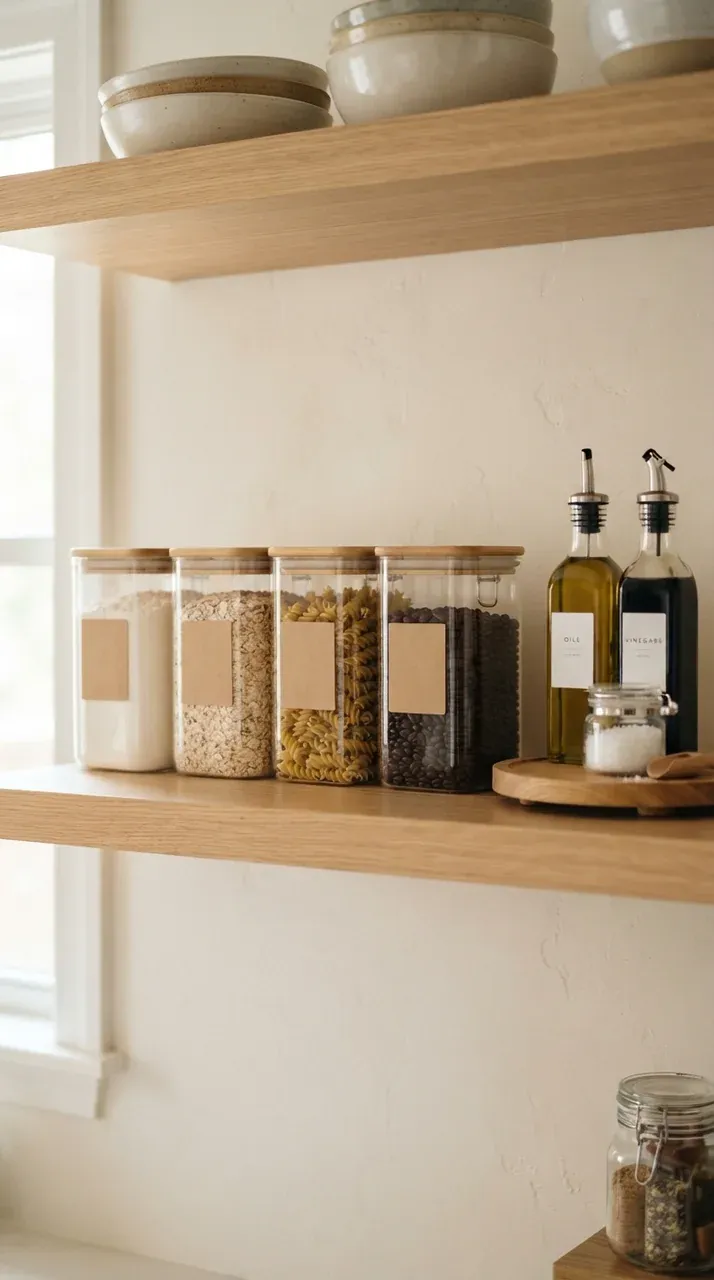 Reinforced rims and ribbed sides matter more than wall thickness when a crate is lifted full.
Modular: Why Matching Footprints Beat Matching Colors
Modularity in a pantry means one thing: crates that tile the shelf without gaps.
- Same footprint across sizes. A line where the small crate is exactly half the large one lets you swap contents without re-planning the shelf.
- Straight, vertical sides. Tapered crates leave triangular dead space between them. Straight sides butt up cleanly.
- Stacking registers. Molded feet or rims that locate into the crate below prevent the sideways creep that makes stacks collapse.
- Consistent height increments. If small crates are half the height of large ones, two smalls equal one large and the shelf stays level.
The practical test: buy one crate, put it on the shelf, and see how much gap is left at each side. If the answer is more than an inch, the line is not truly modular for your shelf.
Brands Worth Knowing
These are established, widely sold lines rather than lab-tested winners. Descriptions are category-level because specific models change.
- Rubbermaid makes several pantry and home storage crate lines with clear and opaque options and molded handles. Widely available and easy to replace piecemeal.
- Sterilite covers the budget end with clear stackable bins and latching crates. Check wall thickness in person if you can; the lightest lines flex.
- IRIS USA sells modular clear bins and stacking crates with consistent footprints, useful when you want a matched set.
- The Container Store carries its own clear modular lines plus heavier utility crates, and lets you see the whole system in one place.
- Home Depot’s HDX and Lowe’s house brands cover heavy-duty black and clear crates at low prices, often in the same footprint across sizes.
- IKEA sells a few molded and foldable crate options that fit standard shelf depths, though stock varies by store.
Verify dimensions and load ratings on the product page before ordering a set. Manufacturers revise molds and specs between production runs, and a listing photo is not a measurement.
Fitting a Pantry Shelf, Step by Step
- Empty one shelf and measure it. Depth, width between supports, and clearance above.
- Group your items by category. Baking, canned goods, snacks, bulk staples, produce.
- Assign a crate size per category, based on the tallest and heaviest item in each group.
- Buy one crate. Test the fit, load it fully, and lift it.
- Buy the set only after the sample passes.
- Label the front edge, not the lid, so labels stay visible when crates are stacked.
This sequence costs one extra week and prevents the most common outcome: a shelf full of crates that almost fit.
If you are still deciding between crates and airtight containers for dry goods, our pantry and countertop container guide covers when a sealed container beats an open crate. For small kitchens generally, see our small apartment storage guide.
Crates also solve a different problem: awkward spaces. A deep corner cabinet or a shallow alcove that fits no standard bin will usually take two small crates side by side. Our guide to organizing awkward alcoves and nooks covers the measurement approach for those spaces, and our roundup of the best storage bins compares materials if you want something softer than rigid plastic.
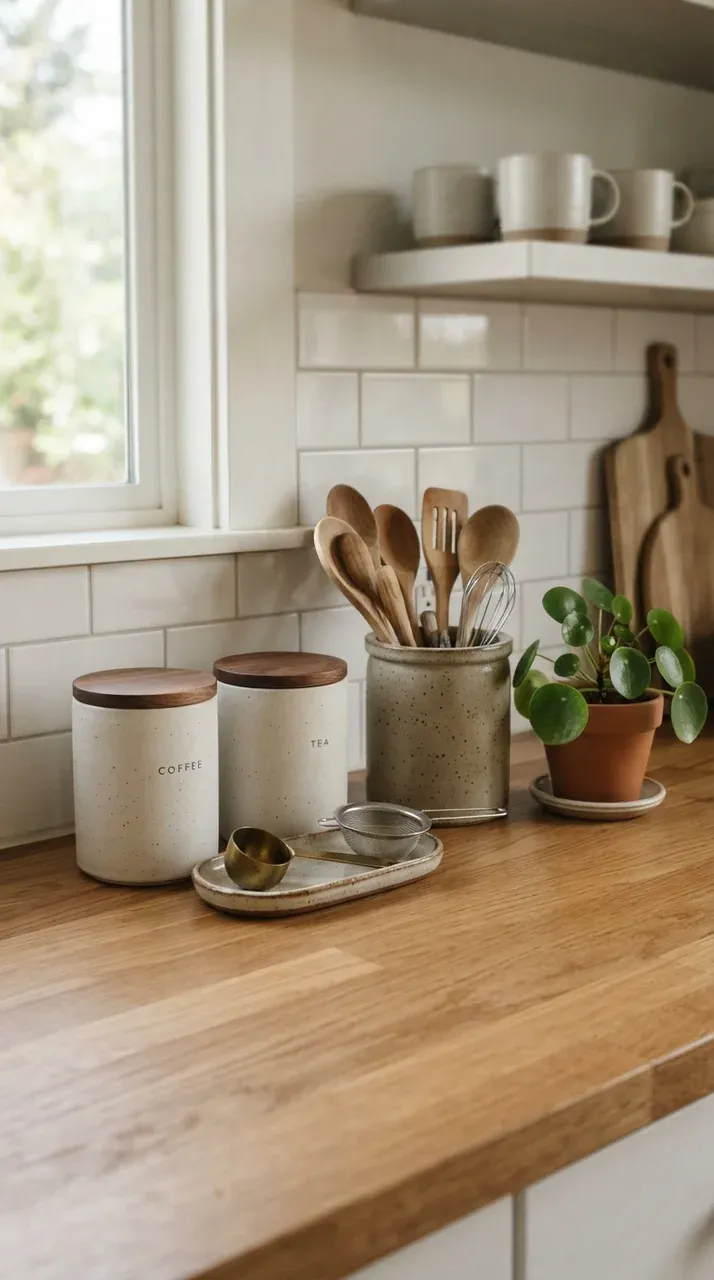 Straight-sided crates in matching footprints tile a shelf with almost no wasted space between them.
Load and Safety Rules
- Never stack more than two high on a shelf, and only when the crate is designed to stack.
- Put the heaviest crates at floor level or on the lowest shelf. A 40 lb crate of jars at eye level is a hazard, not an organization win.
- Do not stack on wire shelving without a solid board. The wire concentrates load on a few points and can deform the crate base.
- Keep crates away from heat. A crate near a stove or radiator becomes brittle and fails without warning.
- Check shelf ratings. Standard particleboard pantry shelves on pin supports are often rated lower than people assume, especially over a long span.
A budget-friendly supplement
Costway’s storage and organization range includes stackable bins, foldable baskets, and closet organizers at factory-direct prices. Affiliate link: we may earn a commission at no extra cost to you. Measure first, and buy one sample before committing to a matching set.
Bottom Line
The best pantry crate is the one that is 1 inch shallower than your shelf, clears the shelf above by an inch, and is rated for what you actually put in it. Everything else is finish and preference.
Measure three numbers, buy one crate, load it fully, and lift it. If it passes, buy the set in matching footprints so the shelf tiles cleanly. If it fails, you spent $12 to avoid a shelf full of regrets.
Shop Entryway Furniture & Storage Deals on Costway
Factory-direct pricing on entryway benches, shoe cabinets, hall trees, and organizers with fast, free US delivery.
* Affiliate disclosure: We may earn a commission if you shop through this link at no added cost to you.
Check Costway Entryway DealsFrequently Asked Questions
What size plastic crates fit standard pantry shelves?
Most pantry shelves are 11-14 inches deep, so crates with a 10-12 inch depth leave room to reach behind them. Width is more flexible: 12 inch wide crates fit two across a 24 inch shelf bay. Measure your shelf depth, the clearance to the shelf above, and the pantry door opening before ordering.
How much weight can a plastic storage crate hold?
Light household crates often rate 10-20 lb, mid-weight crates 25-40 lb, and heavy-duty crates 50 lb or more. Ratings usually assume an evenly distributed load, so a crate full of canned goods can exceed a rating that a crate of cereal boxes never approaches. Check the rating on the product page rather than assuming.
Are clear or opaque crates better for a pantry?
Clear crates win for a pantry because you can see what is running low without pulling the crate out. Opaque crates hide clutter better and look tidier on open shelving. A common compromise is clear crates on lower shelves and opaque baskets on the top shelf where you cannot see in anyway.
Can I stack plastic crates in a pantry?
Only if the crate is designed to stack and the shelf can carry the combined load. Nesting crates do not stack safely when full, and stacking more than two high on a shelf above eye level is awkward. Stack two high at most, heaviest on the bottom, and never stack on a wire shelf without a solid board underneath.
Do plastic crates last in a pantry?
Quality polypropylene crates last many years indoors, away from heat and sunlight. The common failure points are brittle rims from UV exposure, cracked corners from being dropped when full, and stress cracks where a handle meets the wall. Avoid storing crates near a stove or a sunny window.