
Hall Tree Vs Entryway Bench Vs Coat Rack: Which One Belongs at Your Door?
Hall tree vs entryway bench, console, or coat rack — plain-English definitions, a furniture vocabulary family tree, and a decision guide for your front door.
Jul 29, 2026 · Linda Wise
15 min read‘Hall tree vs entryway’ isn’t really a battle — the hall tree lives in the entryway. What you’re really choosing is hall tree vs. entryway console, bench, or cabinet.
Say the words ‘hall tree’ to five people and two will picture a mirror. Let’s fix that. One will picture a coat stand with an umbrella drip tray, one will picture a school locker, and the fifth will picture that thing in Grandma’s house that smells faintly of cedar.
Before you spend a single dollar on entryway furniture, you need the vocabulary. Once you know what each piece actually is, the right choice becomes almost obvious — and I’ve made it mistake-proof with a decision guide and three real-world scenarios at the end.
Hall Tree vs. Entryway: The Plain-English Version
“Entryway” is a room; “hall tree” is a piece of furniture. So the comparison isn’t really hall tree vs. entryway at all — it’s hall tree vs. everything else you could put in the entryway: a console table, a storage bench, a coat rack, a cabinet, or a combination.
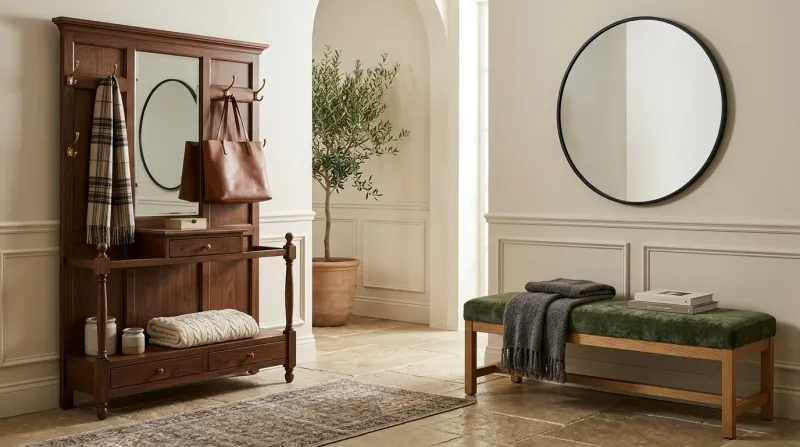
The hall tree is the great all-in-one of the front hall. It stands against the wall and combines the jobs that other pieces do separately: hanging coats and bags, sitting down to change shoes, storing footwear, and holding the hats, scarves, and keys that orbit the front door. A row of hooks plus a bench equals a hall tree, every time.
The other pieces are specialists. The console holds things on top. The bench stores things underneath. The coat rack hangs things and does nothing else. The cabinet hides everything behind doors. The hall tree is the only one that does all of it in a single vertical footprint — which is why it exists at all and why it survives every design trend.
Hall Tree Definition (one clear sentence)
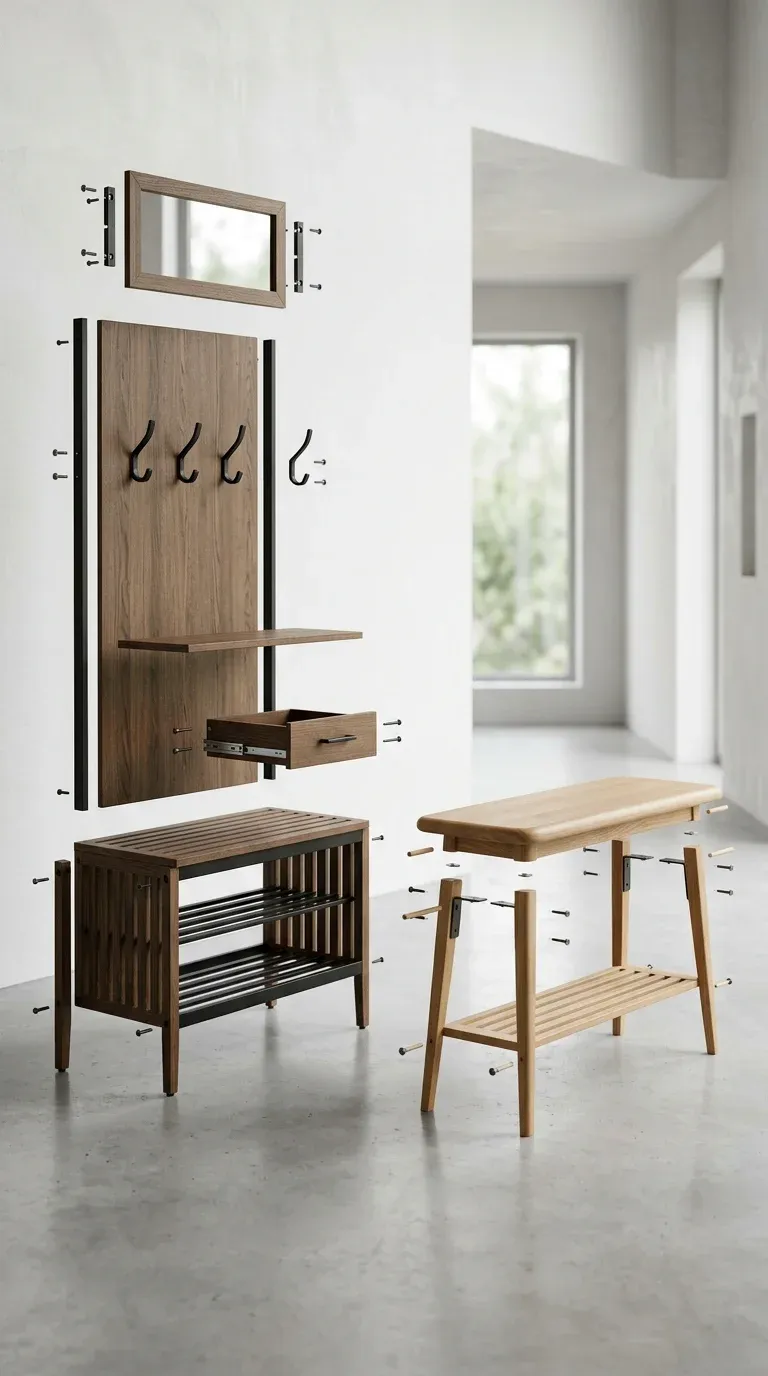
A hall tree is a tall entryway piece that combines a storage bench, a back panel with coat hooks, and an upper shelf into one wall-hugging unit — hanging, seating, and shoe storage in a single footprint.
That’s the definition, and it’s worth unpacking once, because the three parts explain every buying decision:
- The bench (lower third). Seat height typically 18–20 inches, with shoe cubbies, drawers, wire shelves, or a lift-top chest underneath. Rated for 250–400 pounds.
- The back panel (middle). The tall frame (68–78 inches) that carries the coat hooks and protects the wall from wet sleeves and muddy backpack corners.
- The upper shelf (top). A cap for seasonal gear, baskets, or decorative storage that keeps the unit looking like furniture instead of a locker.
If a piece is missing one of those three parts, it isn’t a hall tree — it’s a bench with hooks, or a coat rack with a seat, and there’s nothing wrong with either of those. The vocabulary is simply useful.
Here’s the family tree of entryway furniture terms, so the species are clear at a glance:
                ENTRYWAY FURNITURE
                        |
        +---------------+----------------+
        |              |                |
    SITTING         HANGING          STORING
        |              |                |
    storage bench   hall tree      console table
    flip-top bench  coat rack      cabinet / armoire
    shoe bench      wall hooks     shelf unit
                        |
                 (the hall tree is
                  the all-in-one)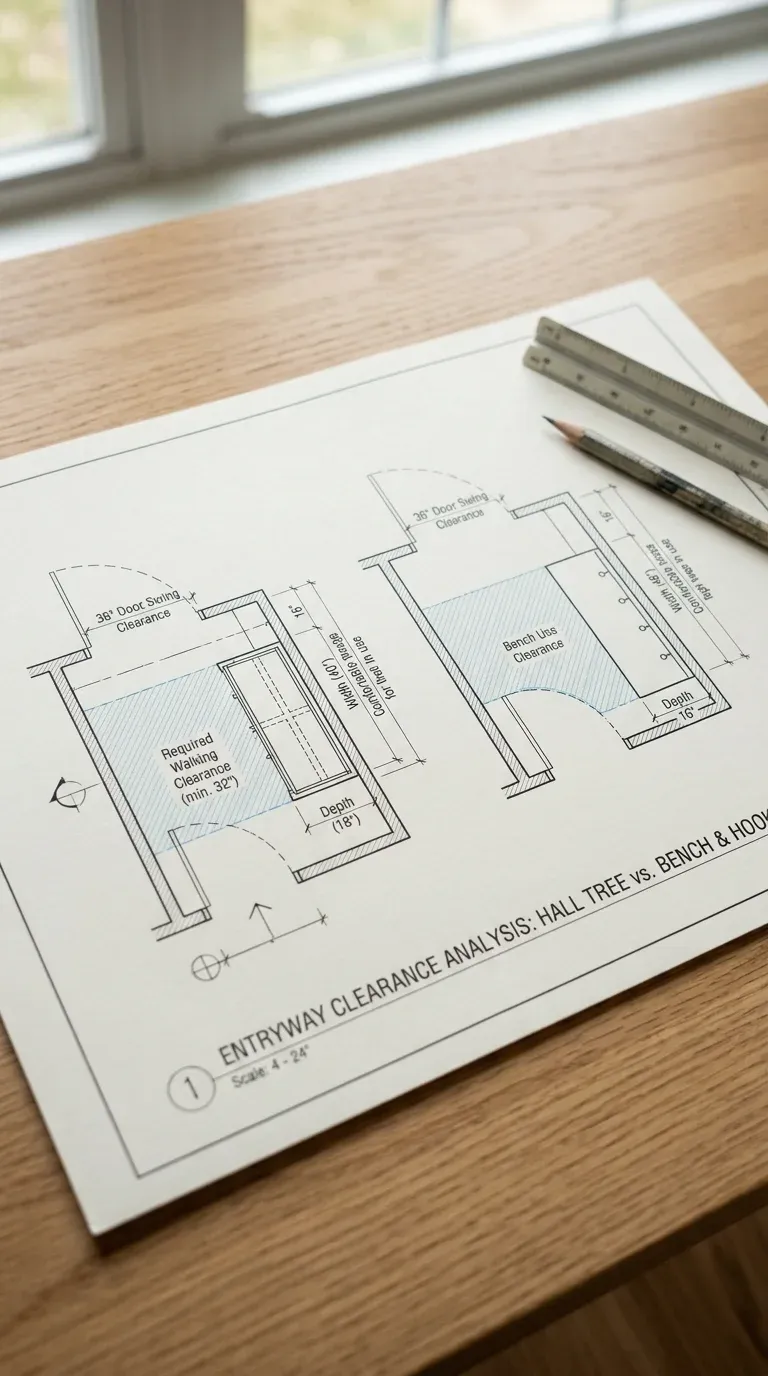
Hall Tree vs. Coat Rack vs. Console vs. Bench
| Piece | What it does | Depth | Best when |
|---|---|---|---|
| Hall tree | Hangs coats, seats you, stores shoes, tops out with a shelf — one piece, one footprint | 14–20” | You have no coat closet and want maximum storage per square foot |
| Coat rack | Hangs coats and bags. Nothing else | 12–18” | You have a closet and a bench, and only hanging is missing |
| Console table | Holds mail, keys, and decor on top; some have a low shelf or drawers | 10–18” | You want a landing surface and the wall above it free for art |
| Entryway bench | Seats you and stores shoes underneath | 12–18” | Shoes are the problem, and coats live elsewhere |
The honest summary: a hall tree replaces a coat rack and a bench and a bit of console. It’s the only piece that answers three questions at once — where do coats go, where do I sit, and where do shoes go.
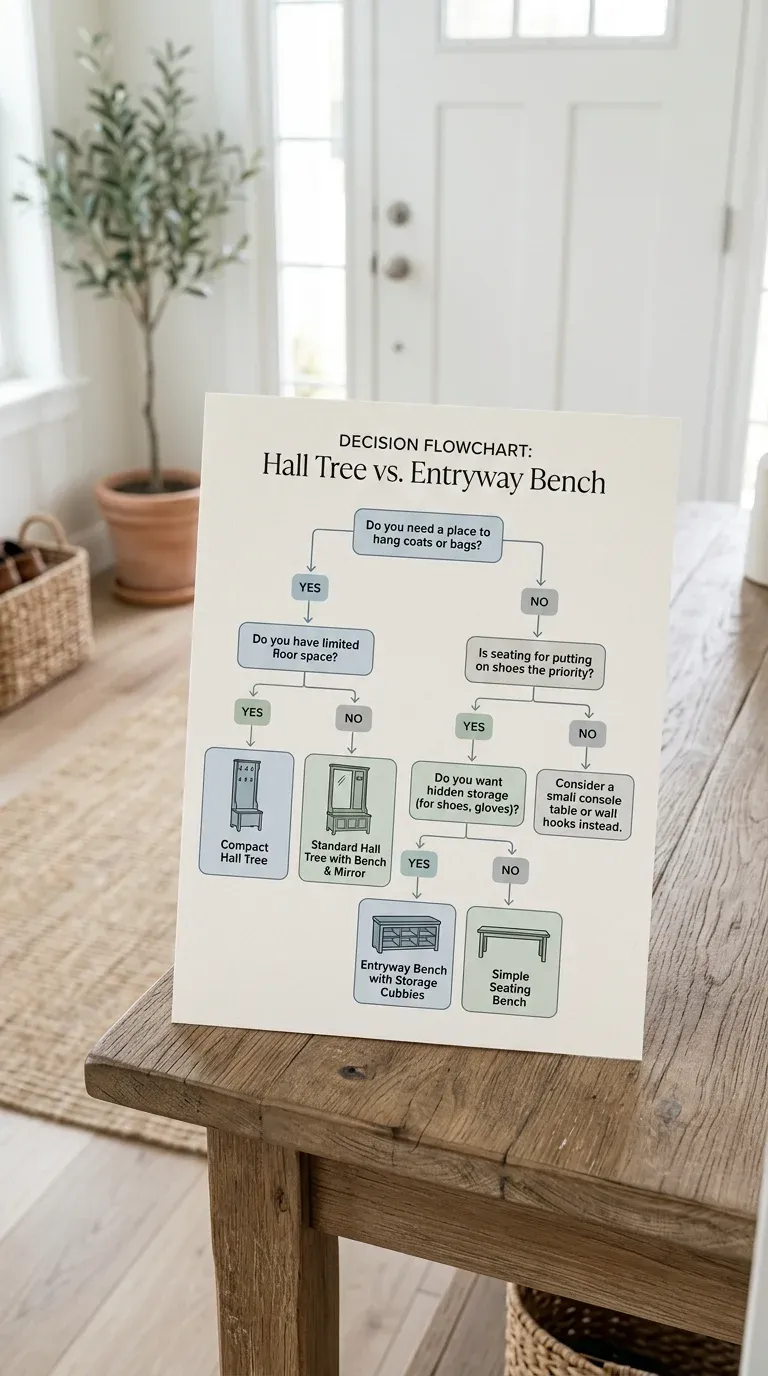
Which Entryway Piece Should You Buy? (decision guide)
Walk through these five questions in order. By the end, you’ll have your answer.
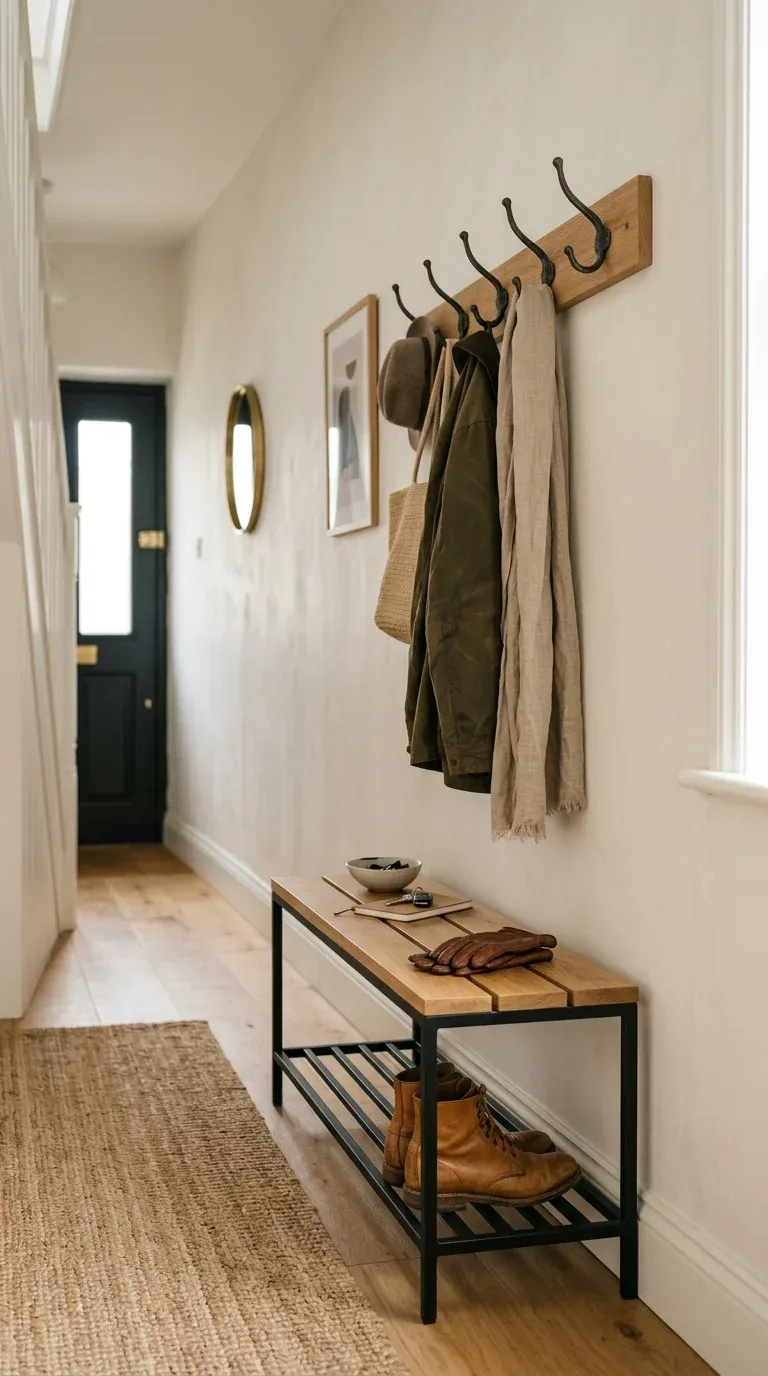
- Is there a coat closet near the front door? Yes → skip the hall tree’s hanging role; a storage bench with wall hooks above covers you. No → a hall tree (or the best hall trees for your style) is the strongest candidate.
- How much wall depth is available? Under 14 inches → a slim console or wall hooks beat a hall tree. Fourteen inches or more → hall trees fit comfortably.
- How tall is the ceiling? Under 8 feet or with a bulkhead → a low bench plus hooks keeps the room from feeling like a tunnel. Tall ceilings → a hall tree’s height becomes an asset.
- What piles up at your door? Coats and backpacks → hall tree. Shoes only → bench. Mail and keys only → console or a wall organizer. Everything → hall tree, unambiguously.
- Who lives here? Children and pets → anchor anything tall to the wall, hall tree included. Two adults with a closet → a bench plus hooks is often the calmer choice.
The guide to benches with storage covers the bench-first path in depth, and the hall tree directory covers the all-in-one path. Both work — the questions above tell you which one is yours.
Real Entryways, Real Choices (3 scenarios)
Scenario 1: The no-closet colonial. A 1910s home with a 4-foot-wide foyer, high ceilings, and no coat closet — four people, winter coats, backpacks. The answer is a hall tree. It consolidates everyone’s daily gear into one 33-inch-wide wall footprint, the bench offers 220-plus pounds of seating, and the height fills the tall foyer the way furniture should. Skip the console — there’s no room for both.
Scenario 2: The apartment with a coat closet. A two-bedroom rental with a coat closet three steps from the door, a 36-inch hallway, and a deposit to protect. The answer is a storage bench plus wall hooks, not a hall tree. The bench stays under 22 inches high so the hallway stays open and the light switches stay reachable; two rows of hooks ride above it; nothing touches the floor. The hall tree would block the narrow passage and buy nothing the closet doesn’t already provide.
Scenario 3: The door-swing box. A cottage where the front door opens straight into a wide family room, with only 30 inches of wall beside the doorframe. The answer is a console or a mail-and-key station, not a hall tree and not a bench — there’s simply no wall dedicated to a tall unit, and a 2-foot console behind the swing arc uses dead space without stealing traffic depth.
Frequently Asked Questions
What is a hall tree?
A hall tree is a tall entryway piece that combines a storage bench, a back panel with coat hooks, and an upper shelf into one wall-hugging unit — hanging, seating, and shoe storage in a single footprint.
What is the difference between a hall tree and a coat rack?
A coat rack only hangs coats and bags. A hall tree hangs coats on its back panel and provides bench seating with shoe storage underneath. If a piece makes you sit down, it's trading up in the furniture vocabulary.
Is a hall tree or an entryway bench better for a small entryway?
It depends on your hanging needs. If coats pile on chairs, a hall tree's vertical footprint earns its 14–20 inches of depth. If shoes are the only problem and coats have a closet, a bench under 22 inches high is the lighter, more open choice.
Do I need to anchor a hall tree to the wall?
Yes if children or pets are in the house — a loaded hall tree is top-heavy, and anti-tip straps into a wall stud are non-negotiable. In a childless adult household, anchoring is still recommended practice on tall units.
Top Picks: Best Entryway Benches
Editor's shortlist with verified ratings. Prices and availability below — clicking an Amazon link earns us a small commission at no extra cost to you.
| # | Product | Rating | Reviews | Tag | Check Price |
|---|---|---|---|---|---|
| 1 | Vasagle Industrial Entryway Bench | 8,420 | Top Pick | Check Price | |
| 2 | Simplihome Artisan Solid Wood Bench | 3,127 | Best Solid Wood | Check Price | |
| 3 | Crosley Furniture Seaside Hall Tree | 5,410 | — | Check Price | |
| 4 | Prepac Shoe Storage Bench | 2,980 | Best Budget | Check Price | |
| 5 | Walker Edison Modern Farmhouse Bench | 1,765 | — | Check Price |
Affiliate disclosure: As an Amazon Associate we earn from qualifying purchases.
Tag: smartlyhomme-20 — change in src/data/topPicks.ts.