
Wood Vs. Metal Hall Trees: Weight, Wobble, and a Decade of Wet Jackets
A practical wood vs metal hall tree comparison: weight, wobble, water resistance, fastener holding, care, and which material survives a decade of wet jackets.
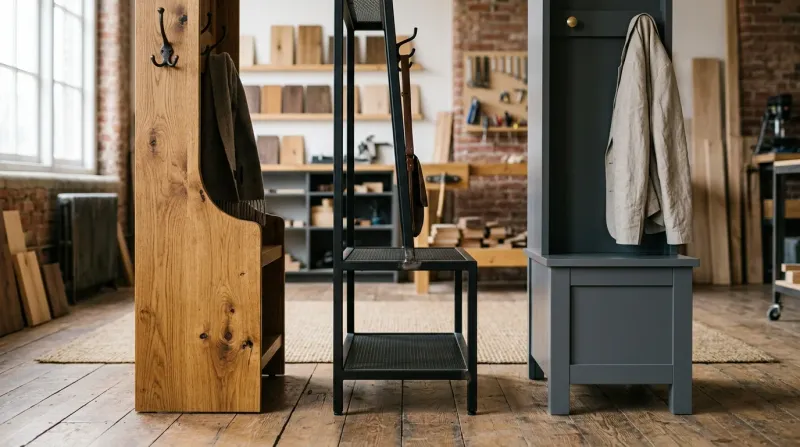
Aug 8, 2026 · Linda Wise
15 min readWood vs. metal for a hall tree isn’t about looks — it’s about weight, wobble, and whether it’ll still be standing after a decade of wet jackets.
I’ve spent 12 years fitting entryways for families, and I’ll tell you straight: most people pick a material like it’s a paint color, then wonder why the unit sways in year two. So let’s talk like materials nerds who speak layman’s terms — what each material actually does when you hang a wet coat on it, sit on it, and bang a boot against it for ten winters.
If you’re deciding between a wood unit and a metal unit for your entryway rather than diving into materials, also see our summary at /wood-vs-metal-which-material/ — this page is the deep dive.
Wood vs. Metal: The Honest Comparison Table (durability, weight, care, price, style)
Here’s the whole argument on one page. Every “winner” below assumes a decently built unit — cheap anything loses to solid anything.
| Solid Wood | MDF | Metal | |
|---|---|---|---|
| Weight | Heavy, dense, sturdy feel | Deceptively heavy | Lightest |
| Durability | Decades, if finished | 2–5 years in wet use | Near-indestructible frame |
| Water resistance | Good with sealed finish | Poor — swells, delaminates | Best |
| Fastener holding | Excellent, re-drillable | Weak, cam-lock failure | Machine-thread, strong |
| Care | Oil or refinish yearly | Avoid water at all costs | Wipe down; touch up rust |
| Price | Highest | Lowest | Mid-range |
| Best style | Farmhouse, classic, warm | Budget, modern flat-pack | Industrial, minimalist |
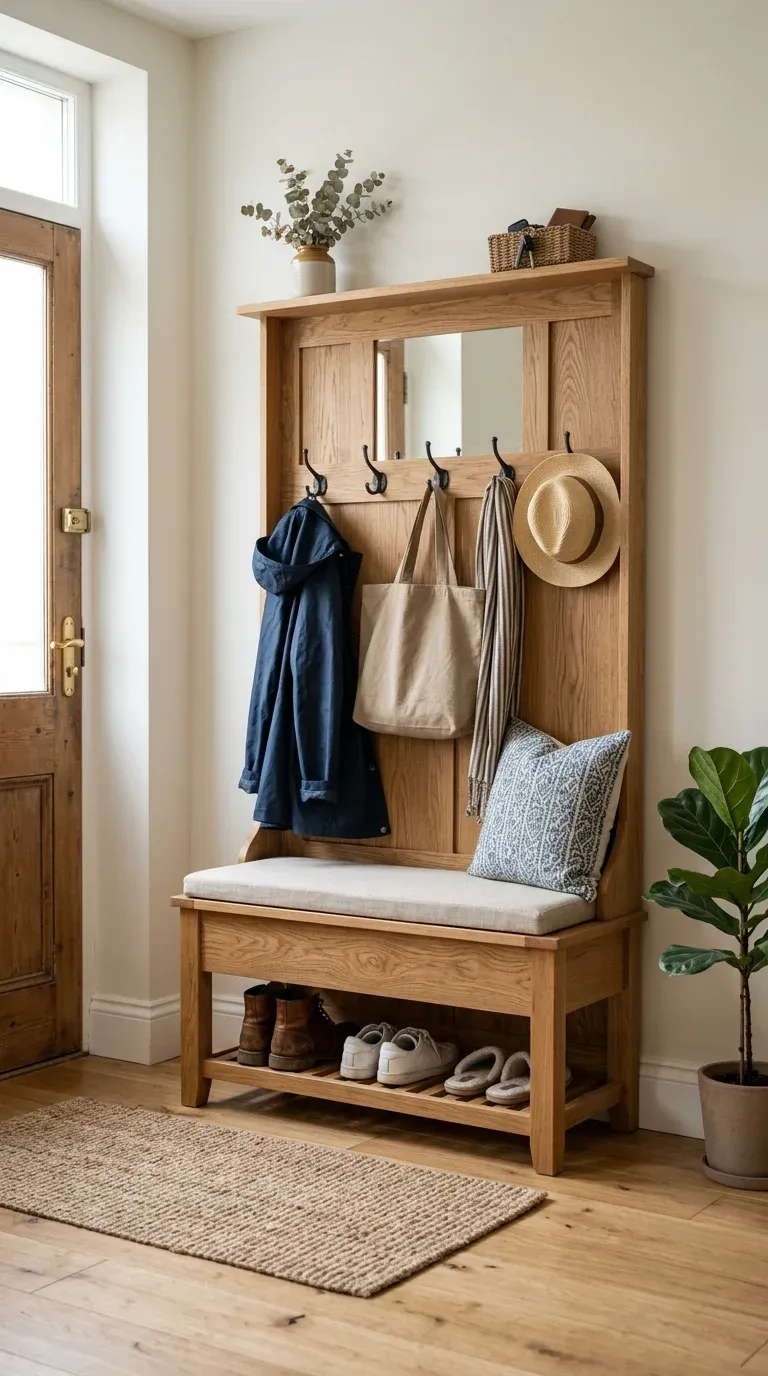
The pattern you should notice: metal wins the physical tests, wood wins the intangible ones — warmth, repairability, resale. MDF wins only on price.
Solid Wood vs. MDF (the sneakiest comparison — weight, fasteners, longevity)
Here’s the trap: many “wood” hall trees aren’t wood at all. They’re MDF wrapped in a wood-look laminate, and the two materials fail in completely different ways.
Solid wood’s superpower is fastener holding. Screws bite deeper into real fibers — a wood screw in oak or maple holds until the hook bracket itself bends, and if a joint loosens after a decade, you can back the screw out, glue in a dowel, and re-drill. You can’t kill a solid wood joint; you can only fatigue it.
MDF is the IKEA-with-a-grudge material: heavier than particleboard, screws hold better, but it hates water. A single winter of wet boots on an unsealed MDF shelf can swell the bottom edge permanently. Worse is longevity under disassembly: MDF units rely on cam-locks and dowels, and every time you take one apart for a move and rebuild it, those joints get a little looser in chewed-up fiberboard. Solid wood tightened back up stays tight; an MDF cam-lock that’s been loose once never recovers.
The honest rule: MDF is fine for a guest-bedroom coat rack, but a family mudroom will start to shiver in year three. For real-wood picks, see our best wooden hall trees guide.
Metal: Strength, Rust, and Patina
Metal’s strength is obvious — a steel frame with welded corners simply doesn’t wobble, and its thin profile keeps it stable when every hook is loaded with a wet parka. But metal has a weakness the showroom never mentions: rust.
The difference is the coating:
- Powder-coated steel — the paint is baked on as dry powder, forming a thick plastic-like skin. It shrugs off salt, wet boots, and scratches. This is what to buy.
- Bare or cheaply painted steel — any scratch down to the metal becomes a rust spot within a season, especially where salt dries on the legs. It’s not fatal — a little steel wool and a touch-up of rust-oleum keeps patina in check — but it’s a chore some people hate.
Oil care for metal means wiping the frame twice a year with a dry cloth and checking welds and joints. That’s it. If raw steel is your thing, keep it oiled like a cast-iron pan. If you’d rather never think about it, buy powder-coated and walk away. For sturdy units, browse our best metal hall trees roundup, or the industrial-styled picks in our best industrial hall trees list.
The 3 Questions That Decide for You
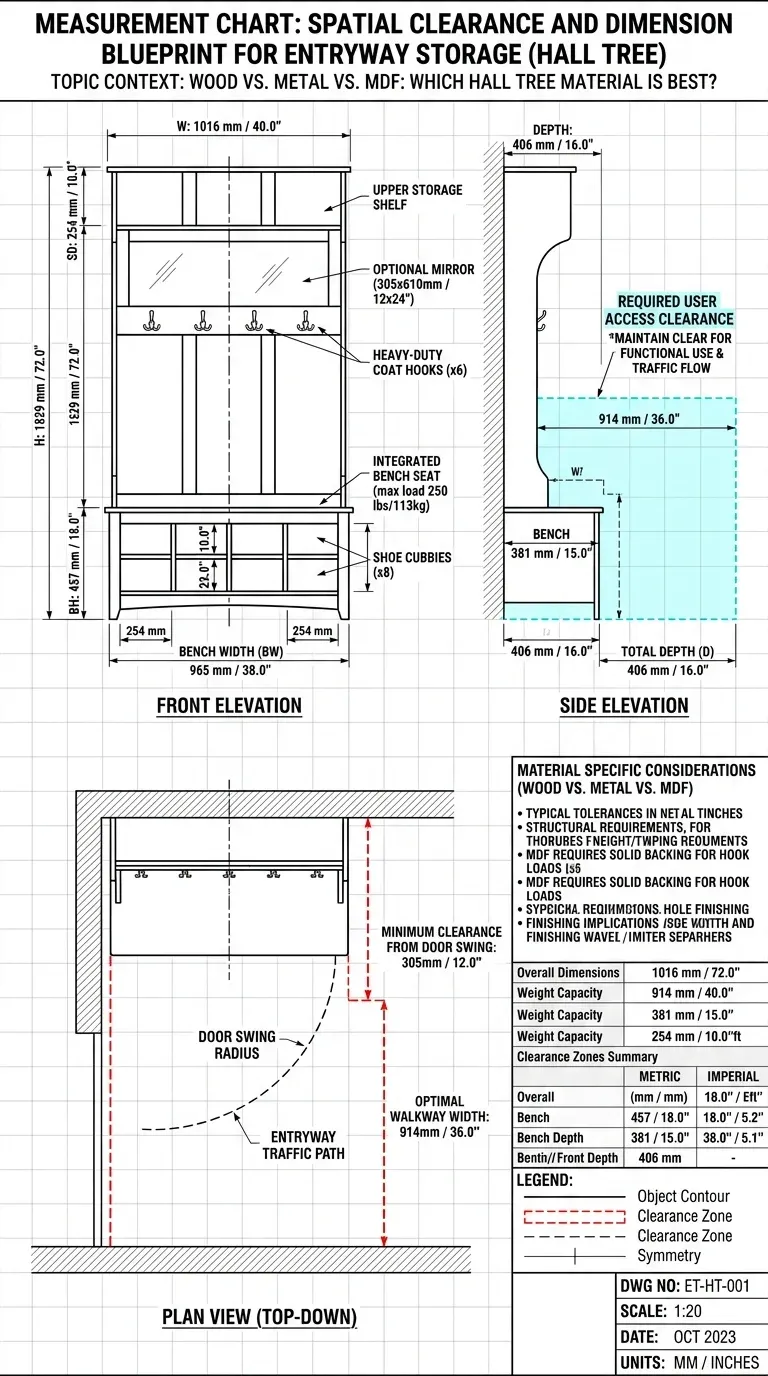
Forget material brochures. Ask yourself these three things, and the answer falls out:
1. Where does it live — dry mudroom or wet boot zone? If wet boots, snow, and umbrellas live within three feet of the unit, the material decision is already made: sealed wood or powder-coated metal, never MDF. A dry hallway, though, opens the door to anything.
2. Heavily loaded or mostly decorative? Are we talking a family of four hanging full backpacks and ski jackets, or a couple of light jackets and a basket of keys? Heavy loads want solid wood or steel frames with welded corners. Light loads mean you can pick whatever matches your decor.
3. Moving apartments soon (lighter wins)? Metal is the moving-day champion — half the weight of an equivalent wood unit, and it reassembles from simple bolted joints. Solid wood units are a two-person, piano-grade move, and that’s when people break them. If you’re signing one-year leases, buy the metal one now and buy the wood one when you own the walls.
Wait — What About Wood vs. Metal for Benches & Consoles?
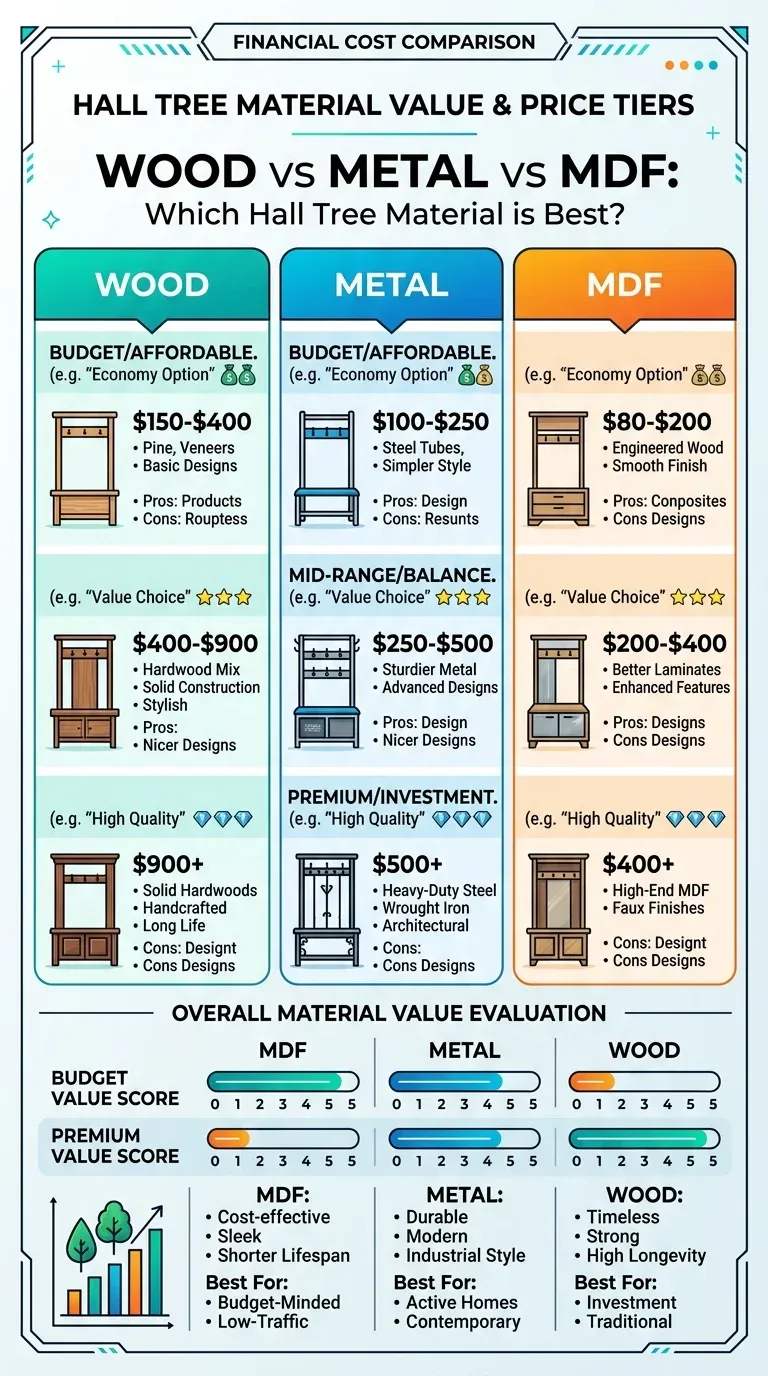
The same material logic applies anywhere people sit or drop things. A bench is where the material difference becomes visceral: a solid wood bench (3/4-inch oak or maple) feels planted and doesn’t flex under a seated adult, while MDF benches dent and sag at the edges first. Metal benches with wire mesh are unbeatable for wet gear but freeze-cold and unforgiving in winter — you can’t sit comfortably in swim trunks, but boots dry faster.
For consoles, weight matters more than strength since nobody sits on them. Metal consoles wobble noticeably if drawers are heavy and the frame is thin, so for a console holding a lamp and mail, wood (or even quality MDF dry) tends to feel more stable. But if that console lives under a window where rain spatters in, metal wins again.
The rule of thumb: wood where you sit and want warmth, metal where things get wet. If you want one final tie-breaker on which material for your entryway, check the facing guide at /wood-vs-metal-which-material/.
Whether you go wood or metal, buy the solidly built version of whichever you choose — the material matters far less than the build. A decade of wet jackets will forgive either one. The cheap version of either won’t.
Top Picks: Best Repair & Maintenance Supplies
Editor's shortlist with verified ratings. Prices and availability below — clicking an Amazon link earns us a small commission at no extra cost to you.
| # | Product | Rating | Reviews | Tag | Check Price |
|---|---|---|---|---|---|
| 1 | Furniture Repair Kit (Wood Filler & Markers) | 9,120 | Top Pick | Check Price | |
| 2 | Gorilla Wood Glue | 21,450 | — | Check Price | |
| 3 | Cam Lock & Connecting Screw Kit | 3,450 | — | Check Price | |
| 4 | Furniture Leveling Feet (Set of 4) | 7,610 | Stability Fix | Check Price | |
| 5 | Anti-Tip Furniture Wall Anchor Straps | 5,230 | Safety | Check Price |
Affiliate disclosure: As an Amazon Associate we earn from qualifying purchases.
Tag: smartlyhomme-20 — change in src/data/topPicks.ts.