
10 Brilliant Small Entryway Storage Ideas to Maximize Your Space
Discover how to transform a cramped foyer into a functional masterpiece. We explore vertical strategies, hidden storage, and design hacks that reclaim your square footage.
Mar 1, 2026 - Written by: Linda Wise

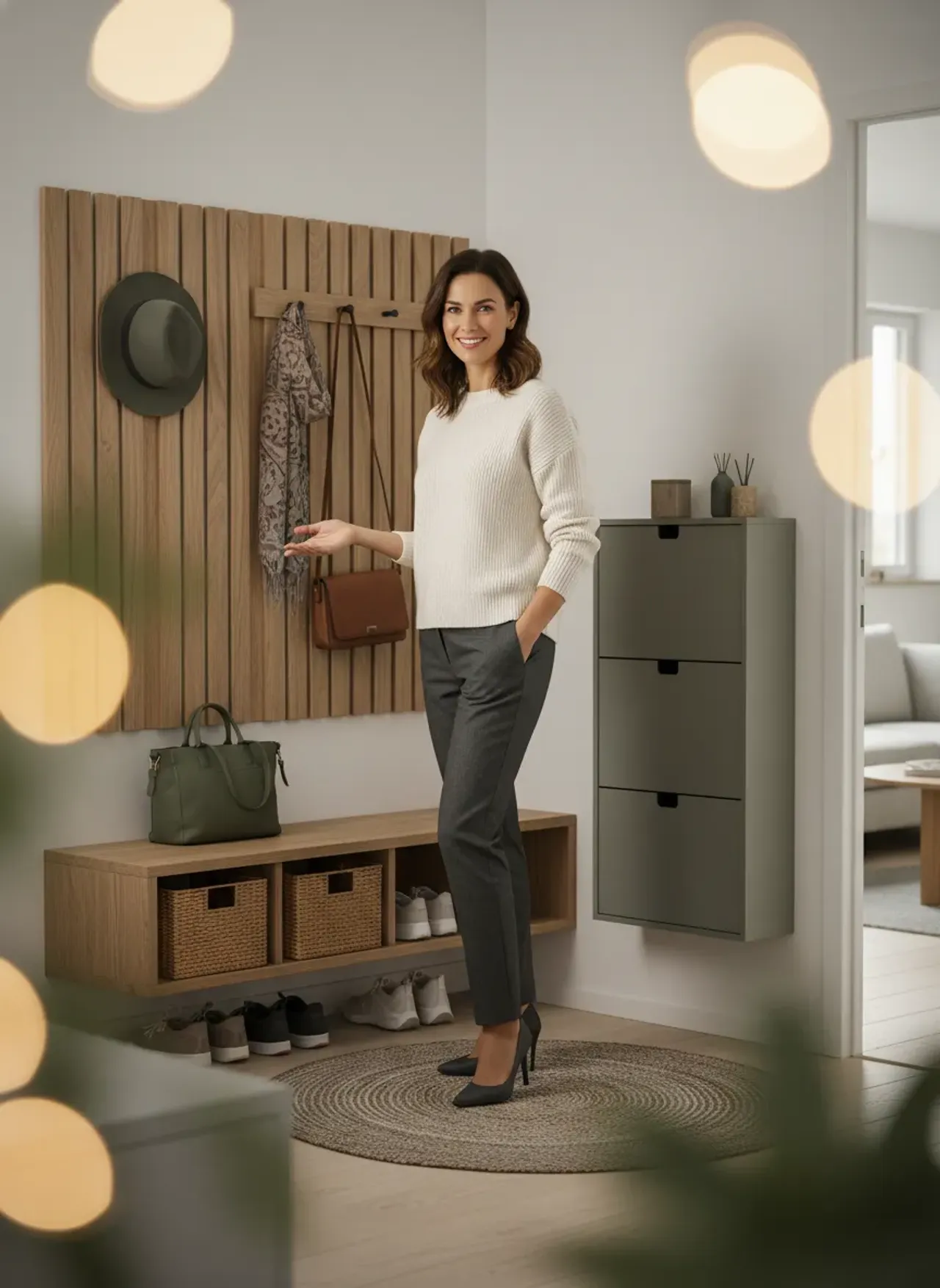
You know that specific, sinking feeling when you open your front door and immediately trip over a wayward sneaker? It is not just a physical stumble; it is a mental block. The entryway is the handshake of your home—it sets the tone for everything that follows. Yet, in so many apartments and smaller houses, this crucial transition zone is treated as an afterthought, a dumping ground for mail, muddy boots, and sheer chaos.
I have spent years consulting on interior spatial planning, and I can tell you that the square footage of your foyer matters far less than the intelligence of your layout. You don’t need a grand hall to have a functional “drop zone.” You need strategy. You need to stop looking at the floor and start looking at the walls, the ceiling, and the hidden potential in your furniture choices.
Transforming a cramped vestibule isn’t just about buying bins; it is about engineering a lifestyle shift that reduces friction when you leave and peace when you return.
1. The Vertical Revolution: High-Altitude Shelving
When the floor plan is tight, the only way is up. It sounds obvious, yet I walk into countless homes where the top two feet of the wall are completely barren. This is prime real estate.
In a narrow hallway, installing a shelf running the entire length of the space, positioned about 12 to 18 inches below the ceiling, changes the game entirely. This isn’t for your daily keys or purse. This is for the “frequency friction” items—things you need, but not today. Think off-season hats, decorative baskets holding winter scarves during July, or archival storage boxes.
The Aesthetics of Height
Visually, drawing the eye upward makes a small space feel cavernous. If you paint that shelf the same color as the wall, it disappears, leaving only your curated storage on display.
Pro Tip: “Don’t just slap a plank of wood up there. Use architectural brackets that match your door hardware. If your handles are matte black, the brackets should be too. It makes the storage look like a deliberate design choice, not a desperate fix.”
2. The “Floating” Furniture Concept
One of the biggest mistakes I see involves heavy, blocky furniture sitting directly on the floor. In a small entry, floor visibility is currency. The more floor you see, the larger the room feels.
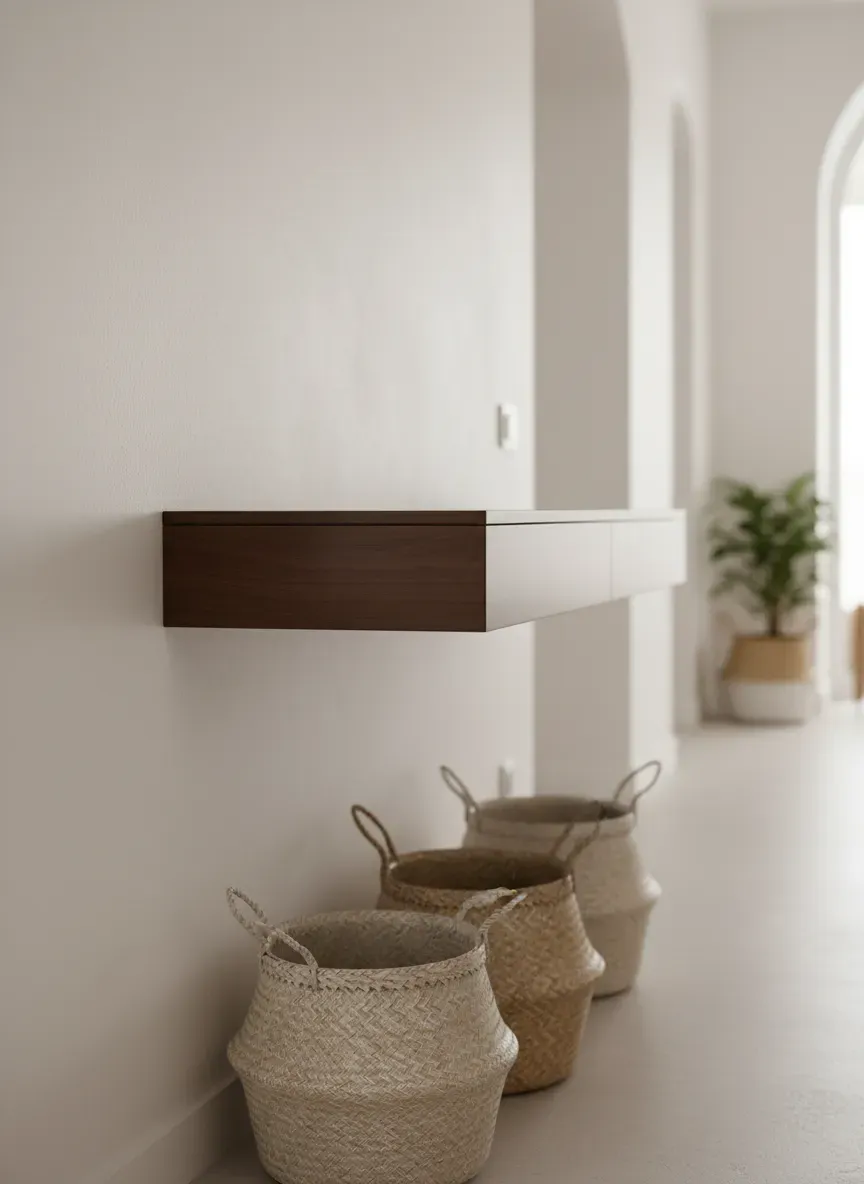
Enter the floating console. By mounting a shallow cabinet or drawer unit directly to the wall, hovering about six to eight inches off the ground, you create an optical illusion of space. Plus, that gap underneath isn’t dead space; it’s the perfect home for a boot tray or a robotic vacuum dock.
If you are renting and can’t drill into the studs, opt for furniture with long, spindly legs rather than a solid base. The airflow beneath the piece prevents the corridor from feeling “stuffed.”
3. The Slim-Profile Tip-Out Shoe Cabinet
If you take nothing else away from this guide, let it be this: shoe piles are the enemy of sanity. But traditional shoe racks are often bulky, ugly, and expose the dirt on your soles to the world.
The solution that has completely dominated the design world for good reason is the “tip-out” shoe cabinet. These units are often only 7 to 10 inches deep. They hug the wall tighter than a baseboard. Because the shoes are stored vertically on a pivot, you can fit a surprising amount of footwear in a footprint that barely encroaches on your walking path.
I’ve personally installed these in hallways that were barely three feet wide. The top surface doubles as a landing strip for your keys and mail, solving two problems with one piece of furniture.
If you want the best experience, I highly recommend checking out the Modern Slim Tip-Out Shoe Storage Cabinet. It keeps the visual clutter hidden and offers a sleek surface for décor.
4. Industrial Lockers for the “Mudroomless” Home
Not everyone is blessed with a dedicated mudroom. If your front door opens directly into the living room, you have to manufacture a transition zone. One of my favorite ways to do this is by leaning into a rugged aesthetic.
There is something undeniably cool about industrial chic metal lockers that turns a boring storage problem into a design feature. Metal lockers are indestructible, they hide everything (jackets, backpacks, sports gear), and they are naturally narrow.
Why Metal Works
Unlike wood, which can feel heavy and traditional, metal lockers bring a loft-like vibe. They are magnetic, meaning the outside of the door becomes a bulletin board for reminders or artwork. If you have kids, assigning one locker per child creates a sense of ownership and boundaries that an open coat rack simply cannot achieve.
5. The Mirror-Storage Hybrid
Mirrors are the oldest trick in the book for expanding space, bouncing light around dark corners. But in a small entryway, a mirror that just sits there is a lazy object. It needs to work harder.
Look for a full-length mirror that slides open or hinges out to reveal shallow shelving behind it. These are often marketed as jewelry cabinets, but they are brilliant for entryways. You can use the hooks for keys and the tiny shelves for sunglasses, lint rollers, and spare change.
Alternatively, a large round mirror with a deep, integrated shelf at the bottom provides a spot for a succulent or a wallet without requiring a separate table.
6. Pegboard Flexibility
The beauty of a pegboard system is that it evolves. Your needs in winter (heavy coats, scarves) are different from your needs in summer (baseball caps, dog leashes). A static row of hooks doesn’t respect that fluctuation.
A floor-to-ceiling pegboard allows you to move shelves, hooks, and bins around at will. It turns a patch of wall into a modular command center. You can paint the pegboard a bold accent color—think navy blue or forest green—to frame your items like a gallery wall.
Key Takeaways:
- Modularity: Adjusts to seasonal gear changes.
- Customization: Paintable to match any decor.
- Density: Holds more items per square foot than standard hooks.
7. Bench Storage: The Dual-Purpose Hero
We have to talk about seating. Putting on shoes while hopping on one foot is a young person’s game. Eventually, you want a place to sit. But a bench in a small entry cannot just be a bench; it must be a vault.
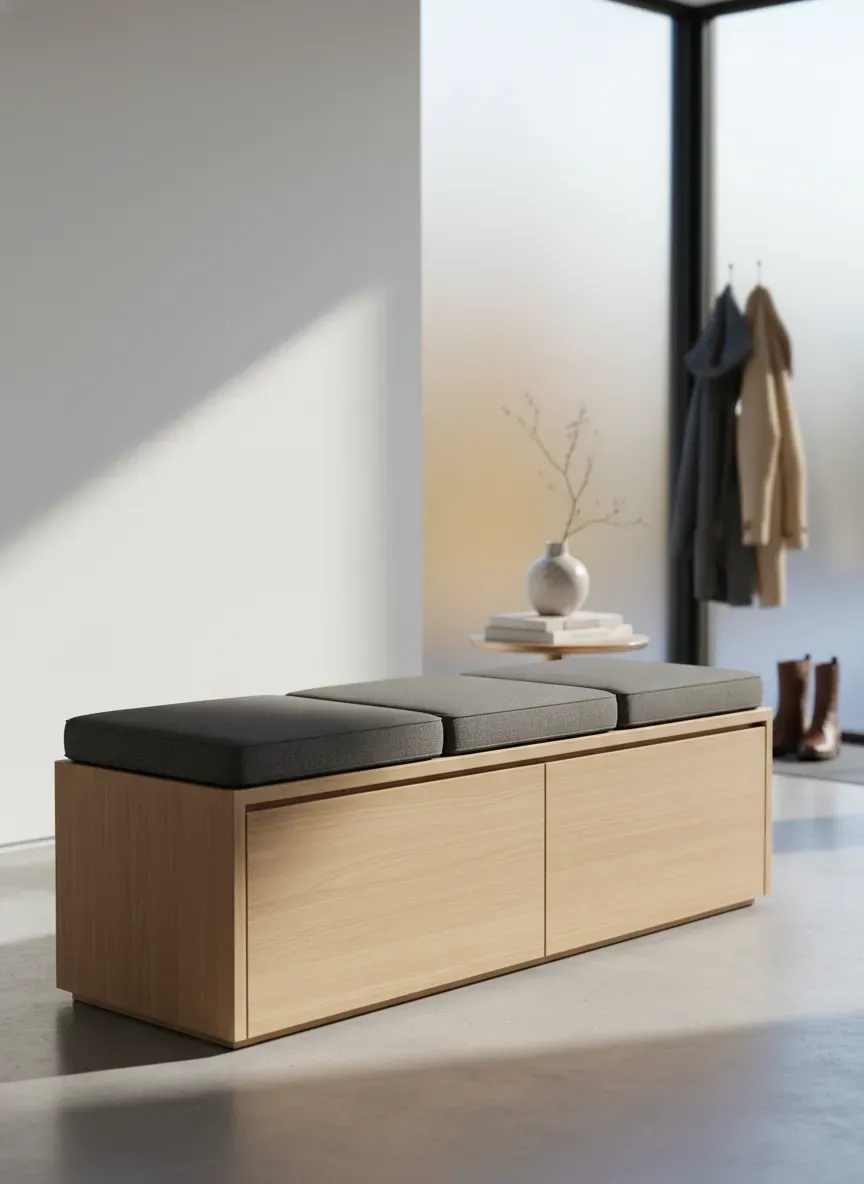
I prefer benches with a flip-top lid over those with open cubbies. Open cubbies tend to look messy unless you are extremely disciplined about what shoes go inside. A flip-top hides the chaos completely.
However, a word of caution: if you have little ones running around, you need to think about safety. Sharp corners at shin-height are a nightmare, so looking into ways to child-proof your entryway seating is non-negotiable. Look for upholstered tops or rounded edges, and ensure the hinges are soft-close to prevent slammed fingers.
For a stylish yet functional option, take a look at the Tufted Storage Ottoman Bench with Safety Hinge. It adds a touch of luxury while swallowing up backpacks and blankets.
8. Corner Utilization: The Dead Zone
Corners are where space goes to die. Most standard furniture is rectangular and leaves that awkward triangle of emptiness in the corner.
In a tiny foyer, a corner coat rack or a triangular corner shelf unit is incredibly efficient. It occupies a footprint that you literally cannot walk on anyway. I’ve seen corner units that combine a bench, a shoe rack, and hooks all in one vertical slice.
The “Wrapper” Shelving
Another advanced technique is “wrapping” shelves around an outer corner. If your entry hallway turns a corner into the living room, custom or floating shelves that hug that 90-degree angle blur the line between the two spaces and draw the eye through the transition.
9. Dealing with the “No Closet” Reality
Let’s face it, older apartments were often designed by people who apparently owned one coat and zero hobbies. If you are struggling with how to handle entryways with no coat closets, you have to get creative with wall-mounted solutions.
The “Accordian” rack is making a comeback. Unlike fixed hooks, an accordion rack expands to fit your wall perfectly and offers dozens of hanging points. When not in use, it collapses back, reducing visual noise.
Another strategy is the “high rail.” Mount a sturdy brass or iron rail (like a towel bar, but stronger) and use S-hooks. This allows you to slide coats together tightly, mimicking the density of a closet on an open wall.
10. The “Landing Strip” Tray Theory
Finally, we have to address the small stuff. Keys, earbuds, lip balm, receipts. These are the items that make a surface look cluttered. The solution is containment.
The “Landing Strip” theory suggests you need a dedicated, bounded zone for pocket debris. It shouldn’t be the whole table; it should be a tray on the table. Psychologically, if you toss keys on a table, it looks messy. If you toss them into a beautiful leather or marble tray, it looks styled.
Implementing these strategies for organizing tight entryways requires a shift in mindset. You are moving from “storage” to “curation.”
For the ultimate organization of small items, I love the Multi-Tier Tabletop Catchall Tray. It adds verticality to your table surface, saving space while keeping your essentials sorted.
Lighting as a Spatial Expander
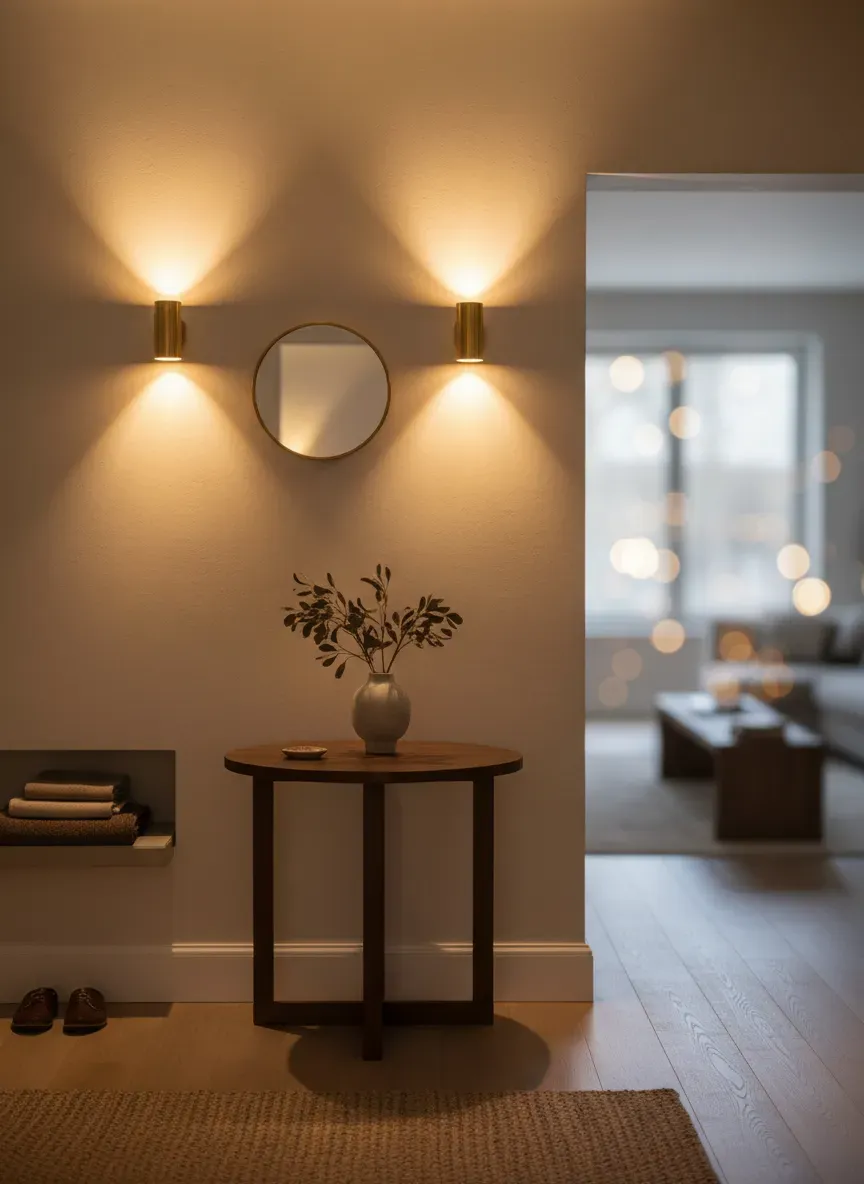
While not strictly “storage,” lighting dictates how we perceive space. A dark corner feels smaller. If you don’t have room for a floor lamp, use wall sconces.
Sconces free up the surface area of your console table. If hardwiring isn’t an option, there are fantastic battery-operated, rechargeable sconces available now that look built-in but require zero electrical work. Good lighting highlights your organizational systems and ensures you aren’t digging for keys in the dark.
The Bottom Line
You do not need to renovate to reclaim your entryway.
The battle for space is won by inches. It is won by choosing a cabinet that is 8 inches deep instead of 12. It is won by utilizing the back of a door or the top foot of a wall.
Start by auditing what actually needs to be at the door. Does the vacuum cleaner really need to live there? Do you need twelve coats for a household of two? Once you edit the inventory, apply these vertical and hidden storage principles. You will find that your small entryway isn’t actually too small—it was just waiting for the right strategy.