
Small Entryway, Big Impact: 10 Clever Layout Hacks to Maximize Your Space
Transform your cramped foyer into a functional masterpiece. Discover 10 expert layout hacks, from vertical storage to lighting tricks, that maximize space without sacrificing style.
Mar 1, 2026 - Written by: Linda Wise

The threshold of your home is a handshake. It’s the first thing guests encounter and, perhaps more importantly, the decompression zone where you shed the weight of the outside world. But what happens when that handshake feels more like a crowded elevator?
I’ve walked into countless homes where the “foyer” is essentially a three-foot square of hardwood sandwiched between the front door and a staircase. The struggle is visceral. You step inside, keys in hand, bag on shoulder, and immediately perform a clumsy pirouette to avoid tripping over a wayward sneaker. It’s frustrating. It sets a chaotic tone for the rest of the house.
Here is the reality: Square footage is a luxury, but spatial efficiency is a skill. You don’t need a grand hall to create an entrance that breathes. You need geometry, psychology, and a few architectural sleights of hand.
This isn’t about tossing a rug down and calling it a day. We are going to dismantle the limitations of your floor plan. By manipulating verticality, light, and furniture profiles, we can engineer an entryway that punches well above its weight class.
1. The “Up, Not Out” Verticality Rule
When the floor fails you, look to the ceiling. It sounds elementary, yet I consistently see homeowners cluttering their precious walking path with low-profile bins while the five feet of wall space above remains barren.
In a tight entryway, floor space is gold dust. Every inch occupied by furniture is an inch you cannot walk on. By shifting storage vertically, you draw the eye upward, creating an illusion of height while reclaiming the floor.
The Floating Strategy
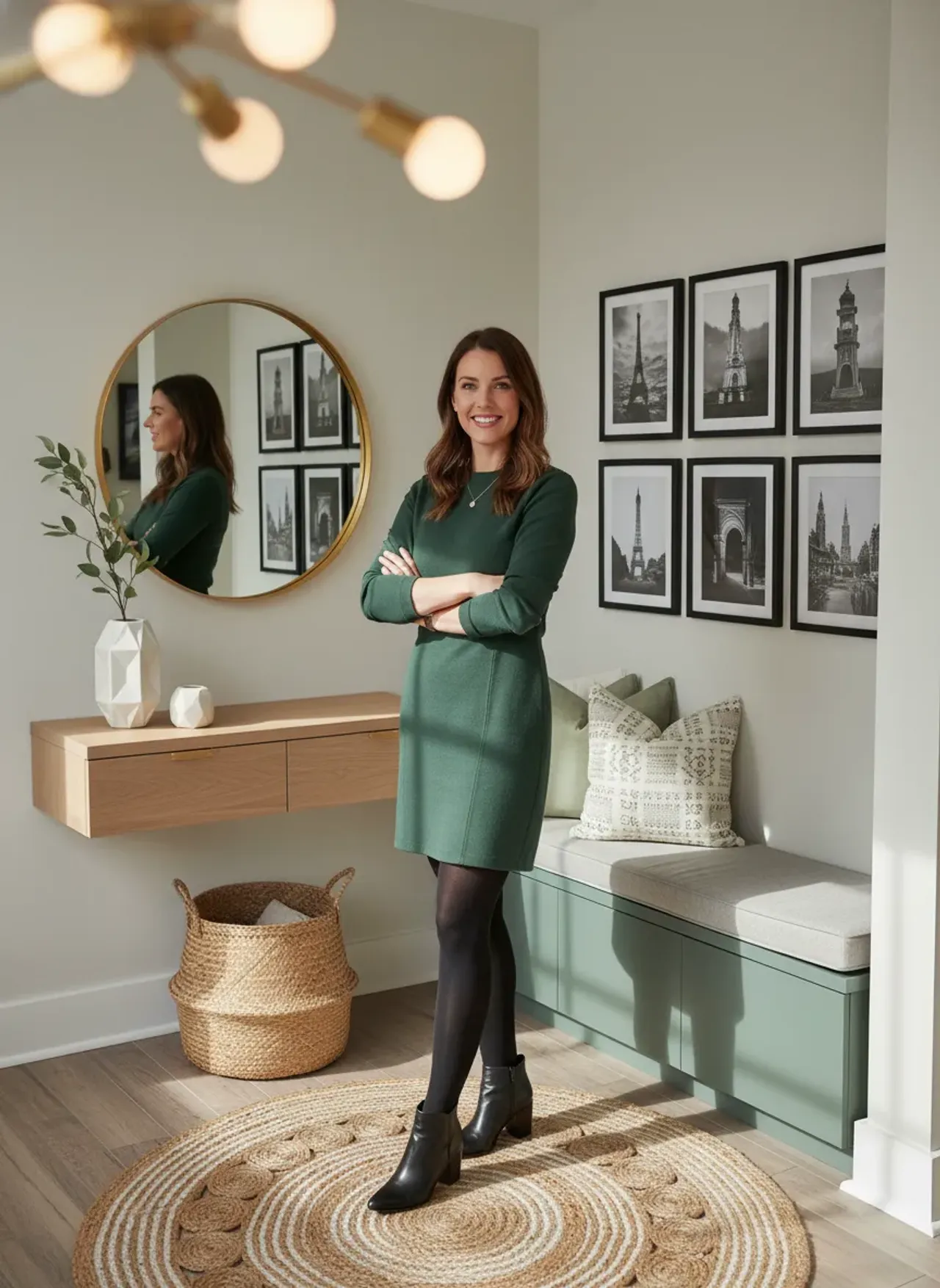
Ditch the heavy console table. Instead, install floating shelves or wall-mounted cubbies. A floating shelf at waist height serves as a landing strip for keys and mail but leaves the floor beneath it visible. Seeing the floor extend to the wall tricks the brain into perceiving the room as wider than it is.
Pro Tip: Mount hooks at varying heights. A lower row for kids or bags, and a higher row for long coats. This staggering technique prevents the “bulk” of items from converging at one visual level.
If you are struggling with a lack of built-ins, specifically regarding coats, our guide on maximizing entryway storage in the absence of a coat closet offers distinct architectural workarounds that go beyond simple hooks.
2. Mirror Placement: The Physics of Reflection
Mirrors are the oldest trick in the designer’s handbook, but few people use them correctly. Hanging a small mirror at eye level is fine for checking your lipstick, but it does nothing for the room’s physics. To truly expand a small entryway, you need to think architecturally.
The Window Effect
Position a large mirror—preferably floor-to-ceiling or an oversized round piece—on a wall perpendicular to the light source. If your front door has a window, or if there is a window nearby, the mirror will bounce that natural light into the darker corners of the hall. This effectively doubles the visual depth of the space.
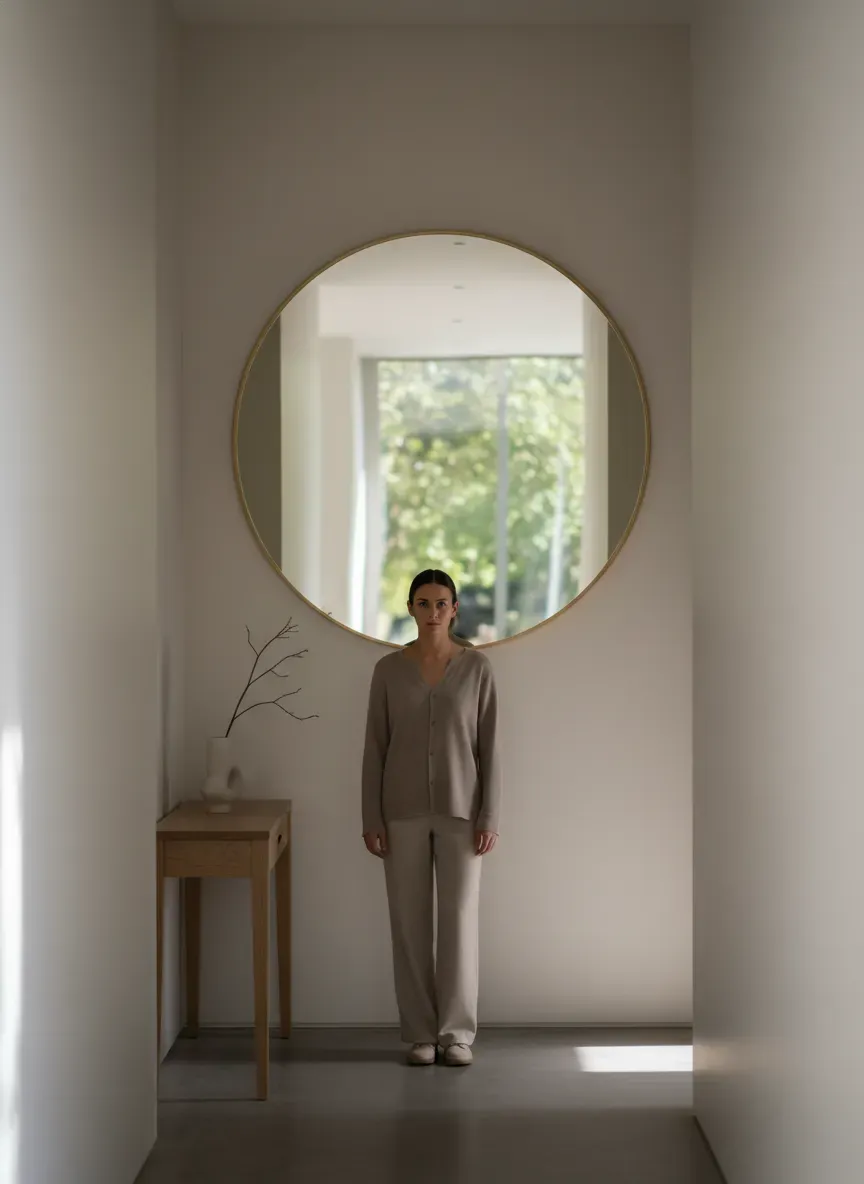
Avoid placing a mirror directly opposite the front door if the view behind you is cluttered or unappealing. You don’t want to double the image of a messy street or a neighbor’s recycling bin.
3. The “Landing Strip” Concept
One of the primary causes of entryway claustrophobia is “clutter creep.” Mail piles up. Keys vanish. Receipts scatter. To combat this, you need a designated “Landing Strip.” This is a concept borrowed from efficiency experts to ensure smooth transitions from outdoors to indoors.
You need a surface. However, in a narrow hallway, a standard 16-inch deep table is a knee-bruiser.
Slimline Solutions
Look for console tables with a depth of 10 inches or less. These are specifically designed for tight corridors. I’ve had great success using the Safavieh American Homes Collection Console Table in client projects. Its ultra-slim profile hugs the wall, providing just enough surface area for a tray and a lamp without encroaching on the walkway.
Key Takeaways for the Landing Strip:
- Containment: Always use a tray. Loose items look messy; items in a tray look curated.
- Lighting: A small lamp adds warmth and eliminates the “cave” feeling.
- Greenery: A tall, thin vase with a single stem adds life without bulk.
4. Zoning for Traffic Flow
Even in a space the size of a postage stamp, zoning is critical. You have a “wet zone” (where dirty shoes land) and a “dry zone” (where you step in socks). If these mix, you end up with grit tracked into the living room.
The Rug Anchor
Use a runner rug to define the walking path. The rug creates a visual vector, leading the eye forward rather than side-to-side. This elongates the hallway. Ensure the rug is durable—sisal, jute, or a high-traffic synthetic blend.
The Bottom Line: If your door swings inward, ensure the rug pile is low enough to clear the door sweep. There is nothing more aggravating than a rug that bunches up every time you open the door.
5. Multi-Functional Furniture Hybrids
When you can only fit one piece of furniture, it needs to do three jobs. The era of the single-purpose bench is over. In a small entryway, we look for hybrids.
Consider a bench with internal storage and a shoe rack beneath it. Or a tall, thin cabinet that serves as a mirror, a shoe tipper, and a mail sorter.
Safety Considerations
If you have little ones running around, heavy multi-functional furniture can be a tipping hazard if not secured. It is vital to consider child-proofing your entryway benches and cabinets to ensure that your space-saving hacks don’t become safety liabilities.
6. Utilizing the “Invisible” Space (Back of the Door)
I am constantly amazed by how many people ignore the back of the front door or the coat closet door. This is prime real estate.
The Command Center
Use a heavy-duty over-the-door organizer for items that usually clutter surfaces: dog leashes, umbrellas, sunglasses, and outgoing mail.
However, avoid the cheap clear plastic shoe organizers. They look tacky and add visual noise. Opt for structured fabric organizers or sleek metal racks that blend with the door color. If you own your home, mounting a permanent rack directly into the door core is far more stable than the hooks that hang over the top.
7. Industrial Open Storage vs. Closed Cabinetry
There is a debate in the design world: hide everything behind doors, or keep it open? In a massive mudroom, closed cabinetry is lovely. In a tiny entryway, large cabinets can feel like coffins standing on end. They suck the air out of the room.
For small spaces, I lean towards industrial, open-frame concepts.
Sightlines Matter
Furniture with legs and open shelving allows you to see the wall and floor through the piece. This transparency keeps the room feeling airy. Metal frames, wire baskets, and exposed wood offer utility without visual weight.
If you enjoy that raw, utilitarian aesthetic, exploring industrial chic mudroom lockers metal designs can provide inspiration for units that are durable, slim, and visually permeable.
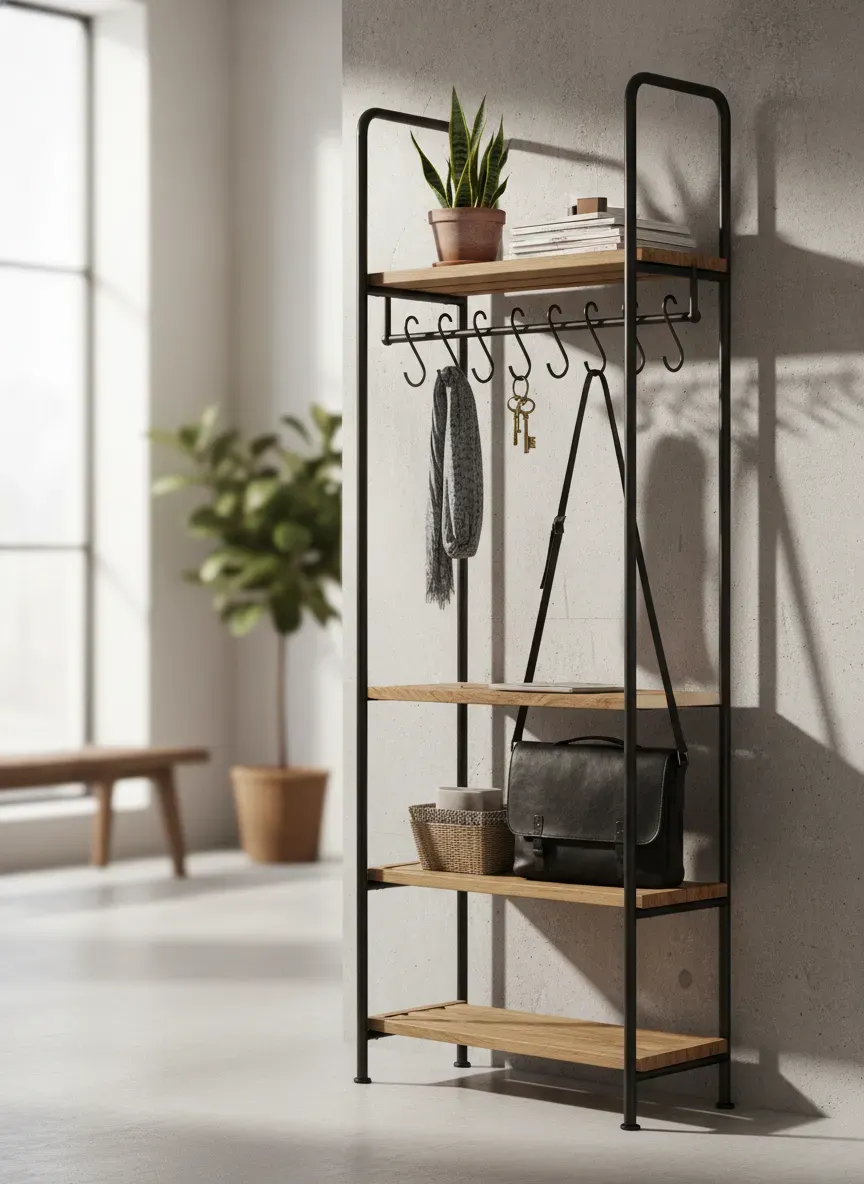
For a sleek, retractable option that disappears when not in use, the Umbra Flip Wall Mounted Coat Rack is a game-changer. It looks like a piece of modern art until you flip a hook down.
8. Lighting as a Spatial Expander
Dark corners shrink a room. If your entryway relies solely on a single “boob light” flush mount from the 1990s, you are fighting a losing battle.
Layering Light
You need multiple light sources to eliminate shadows.
- Overhead: Swap the builder-grade fixture for a semi-flush mount or a pendant (ceiling height permitting) that casts light outward, not just down.
- Sconces: Wall sconces are brilliant for narrow hallways because they don’t take up floor space. They wash the walls with light, pushing the boundaries of the room outward.
- Temperature: Stick to 2700K to 3000K bulbs. Anything cooler (4000K+) will make your entryway feel like a dentist’s waiting room.
9. The Art of the “Edit” (Curating Clutter)
No layout hack can fix a hoarding problem. In a small entryway, you have to be ruthless. This space is for items in active rotation.
It is not the place for the winter boots you wear once a year, or the collection of tote bags you keep “just in case.”
The basket Method
Assign a specific basket to each family member. If it doesn’t fit in the basket, it goes to the bedroom or the main closet. This imposes a physical limit on accumulation.
For this, texture is key. Plastic bins feel cheap. I prefer natural materials that add warmth. The Seagrass Woven Storage Baskets are excellent because they are rigid enough to hold heavy items but soft enough to prevent scratching the wall.
10. Troubleshooting Weird Layouts
Sometimes, you don’t even have a hallway. You open the door and boom—you are in the living room. This is the “non-tryway.”
Creating a Phantom Foyer
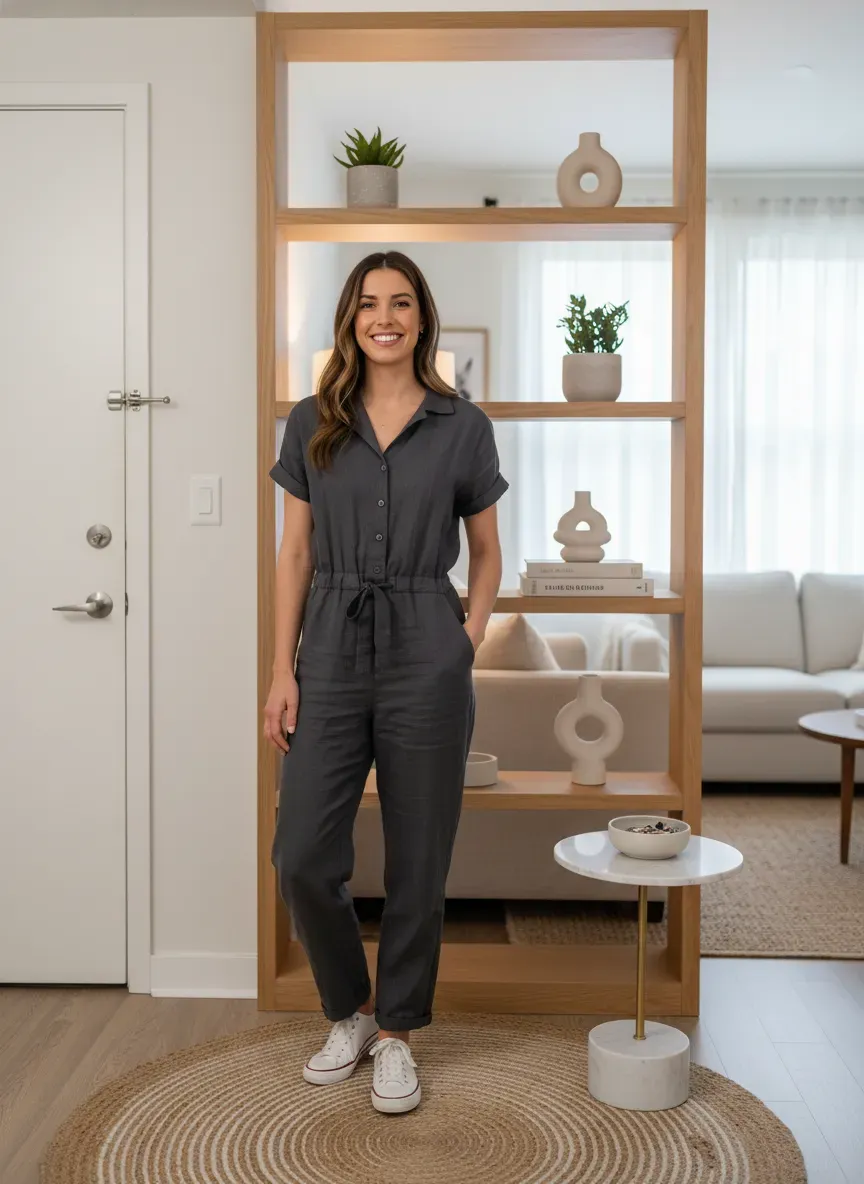
In this scenario, you must manufacture an entryway using furniture layout.
- The Perpendicular Console: Place a sofa or a console table perpendicular to the wall, a few feet from the door. This creates a physical barrier that stops the eye and directs traffic.
- The Paint Zone: Paint the section of the wall behind the door and the immediate ceiling area a different color than the rest of the living room. This visual blocking signals to the brain, “This is a separate zone.”
For a deeper dive into specific layout configurations, check our comprehensive analysis on maximizing small entryway layouts, where we break down L-shaped and square foyers in detail.
The Final Polish
Maximizing a small entryway isn’t about buying smaller furniture; it’s about making smarter choices with the physics of the room. It requires a shift in perspective. You stop looking at the lack of floor space and start seeing the potential of the walls, the light, and the vertical volume.
When you implement these hacks—lifting storage off the ground, controlling the light, and rigorously editing your possessions—you change the energy of your home. You transform a cramped bottleneck into a welcoming breath of fresh air. It’s a small change with a massive impact, setting the stage for everything that follows.