
Hall Tree Buying Guide: Everything You Need to Know (2026)
Complete hall tree buying guide for 2026. Learn how to measure your entryway, compare materials, choose bench types, and find the best hall tree with storage for your home and budget.
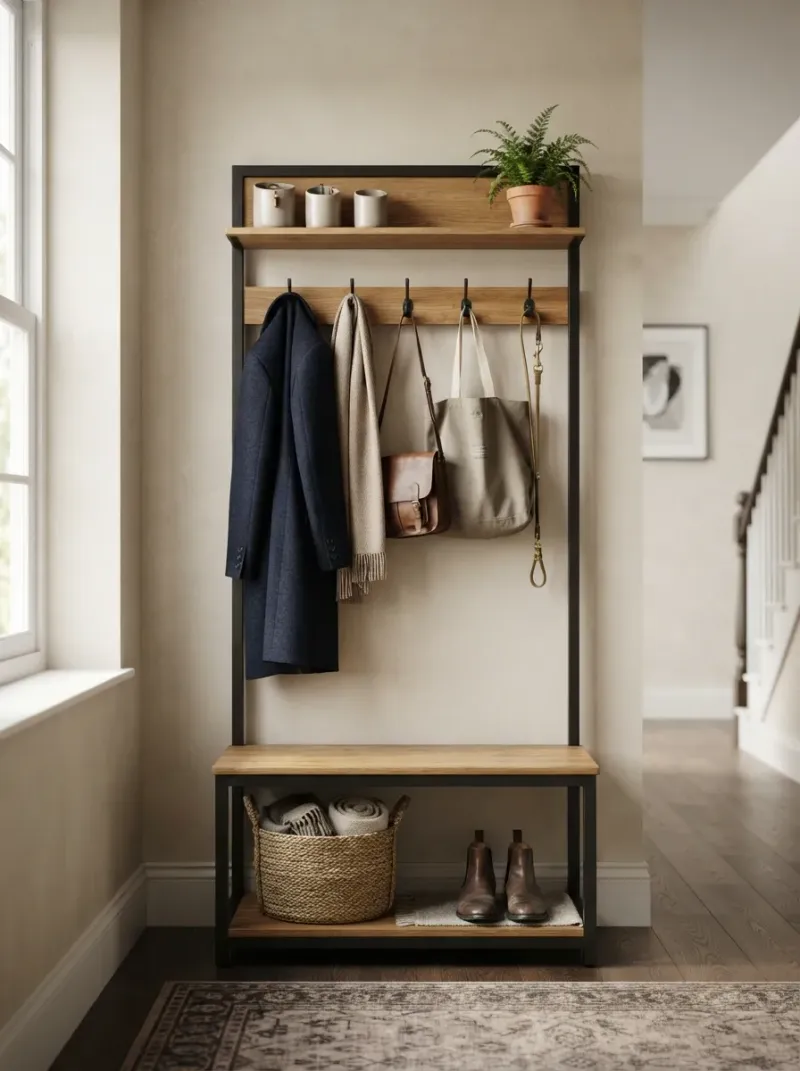
Jul 29, 2026 · Linda Wise
15 min readYour home’s entryway is a high-stakes transition zone. It sets the tone for every person who walks through your front door — including you. Yet for most households, this space rapidly degrades into a tangle of misplaced keys, scattered boots, overflowing tote bags, and coats draped over the nearest available surface.
The fix is simpler than you think: the right hall tree.
A hall tree is a single, multi-functional piece of entryway furniture that combines a coat rack with hooks, a bench seat for shoe changes, under-bench shoe storage, and often an integrated mirror — all in one compact wall footprint. It is one of the most efficient all-in-one entryway storage solutions, and it doesn’t require carpentry or landlord approval to install.
But not all hall trees are created equal. This complete hall tree buying guide walks you through everything you need to know: anatomy, materials, dimensions, safety, product reviews, and budget strategy — so you can make an informed investment that genuinely improves your daily life.
Quick Comparison: Top-Rated Hall Trees
| Product | Rating | Price Tier | Check Price |
|---|---|---|---|
| VASAGLE Entryway Hall Tree with Bench | ⭐⭐⭐⭐½ | Budget–Mid | View on Amazon |
| Bush Furniture Salinas Hall Tree with Shoe Bench | ⭐⭐⭐⭐⭐ | Mid-Range | View on Amazon |
| Homestyles Americana White Hall Tree | ⭐⭐⭐⭐⭐ | Premium | View on Amazon |
Part 1: The Anatomy of a Hall Tree — Know What You’re Buying
Before you can confidently choose the right unit, you need to understand how a hall tree is structured. Knowing what a hall tree is and why it’s essential for modern entryway organization helps you cut through the marketing noise and evaluate products on a functional basis.
+------------------------------------------+
|               Top Shelf                  |
|        (Storage Baskets / Decor)         |
+------------------------------------------+
|   [Hook]   [Hook]   [Hook]   [Hook]      |
|                                          |
|               Back Panel                 |
|         (Beaded Wood, Metal Grid,        |
|            or Open Framework)            |
|                                          |
+------------------------------------------+
|                                          |
|               Bench Seat                 |
|      (Wood, Cushion, or Laminate)        |
|                                          |
+------------------------------------------+
|         Shoe Cubbies / Drawers /         |
|             Flip-Top Storage             |
+------------------------------------------+
The Bench: Seating vs. Storage — Which Style Is Right for You?
The bench is the functional heart of every hall tree. It provides a stable place to sit while changing footwear and serves as the primary lower storage system. Understanding your household’s daily habits is key to choosing the right bench style.
- Open Shoe Cubbies: Ideal for high-traffic families. Shoes slide in and out quickly with no doors to open. Downside: everything is visible — including muddy shoes and tangled laces.
- Flip-Top Benches: A hinged lid opens to reveal a deep internal chest, perfect for concealing dog toys, seasonal scarves, or bulky winter gear. Important caveat: you can’t leave items sitting on the bench lid if you need frequent access to the storage below.
- Pull-Out Drawers or Cabinet Doors: The cleanest, most streamlined option. Shoes and accessories stay completely out of sight. Slightly more effort to access, but your entryway will always look tidy at a glance.
When comparing options, be sure to decode hall tree terminology like bench seat height, hook clearance, and cubby depth so you don’t end up with a bench that’s too low for comfortable adult seating or too shallow to sit on securely.
The Hanging Zone: What to Look For in Coat Hooks
The vertical section of a hall tree is where coats, bags, hats, and scarves live. Two hook types dominate the market:
- Double-Prong Hooks: The gold standard. The lower prong holds a coat; the upper prong holds a hat or bag. Two items per hook instantly doubles your hanging storage without adding any width to the unit.
- Hanging Rods: Found on modern industrial-style hall trees. Allows you to use standard hangers for delicate coats, keeping them wrinkle-free. Excellent for households with dress coats or blazers that need to maintain their shape.
The Upper Zone: Don’t Overlook the Top Shelf
The top shelf of a hall tree is prime storage real estate that most buyers underestimate. It’s the ideal location for out-of-season accessories in woven baskets, a compact mail organizer, or a small potted plant that brings warmth and life to what could otherwise be a purely utilitarian corner.
Part 2: A Brief History of the Hall Tree
The hall tree is not a modern invention of the organization and declutter movement. Its origins stretch back over 150 years.
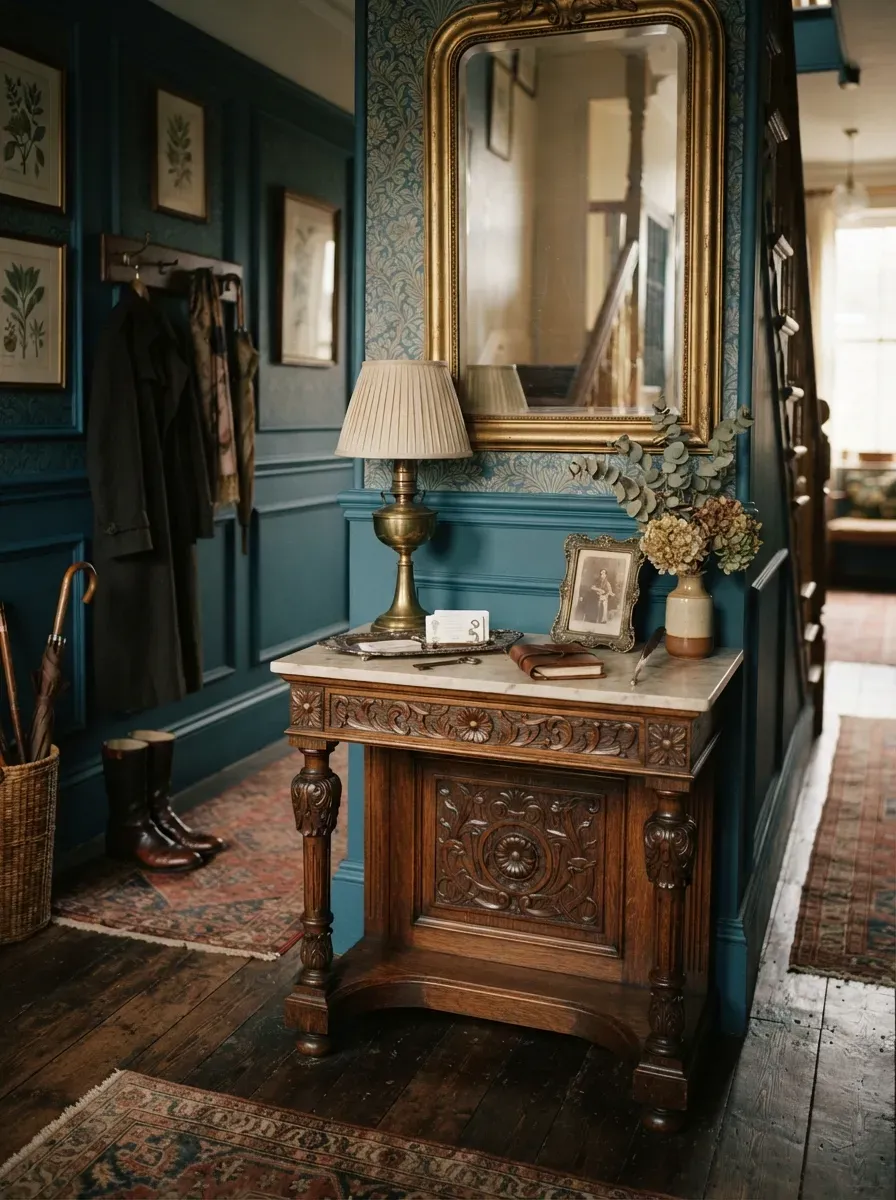
During the Victorian era, the entrance hall was a critical social threshold governed by strict etiquette. Visitors were required to leave outdoor gear — heavy wool coats, muddy boots, walking sticks, and elaborate hats — at the door before entering the parlor. Victorian hall trees were dramatic, imposing structures crafted from dark hardwoods like mahogany, walnut, and oak, featuring ornate hand carvings, built-in umbrella stands with drip pans to protect hardwood floors, and large central beveled mirrors.
As home architecture evolved through the 20th century — from formal Victorian receiving halls to open-concept suburban layouts and practical mudrooms — the hall tree shed its decorative excess and adapted. It became leaner, more modular, and more functional.
Tracing the full evolution of the hall tree from Victorian grandeur to modern utility reveals how closely this piece of furniture has tracked changing domestic life over two centuries.
Part 3: How to Measure Your Entryway — The Most Important Step
Before you browse a single product listing, pull out your measuring tape. An ill-fitting hall tree is one of the most common — and most frustrating — furniture mistakes homeowners make.
Your 4-Step Entryway Measuring Checklist
- Width: Measure the total available wall space for the unit. Account for electrical outlets, baseboard heating vents, wall-mounted thermostats, and light switches. You cannot block functional controls.
- Depth: The average hall tree runs 15–20 inches deep. After placing the unit, you need at least 36 inches of clear walking path in front of it — especially critical in high-traffic entryways with children or pets.
- Height: Standard hall trees range from 65 to 80 inches tall. Measure your ceiling height and check for wall-mounted light sconces or protruding architectural features that could conflict with the unit’s top.
- Door Swing Clearance: Open your front door to its maximum swing. Note exactly where the door handle lands. Your hall tree cannot occupy any point inside that arc.
Pro Tip: Use painter’s tape to mark the exact footprint of your prospective hall tree on the floor and wall before purchasing. Live with the tape for 24 hours, walking through your entryway normally. If the taped zone feels cramped or impedes your movement, that unit is too large.
Baseboards and flush placement: Most standalone units will not sit flush against the wall unless you modify the baseboard. Three common solutions: cut away the baseboard section behind the unit for a built-in look, notch the back of the unit to fit over the baseboard, or anchor the unit to the wall with spacers and hide the gap with trim.
Reviewing these metrics thoroughly — along with the 10 critical spatial and safety considerations to check before buying — will save you the expensive hassle of returning a heavy, flat-packed piece of furniture.
Part 4: Hall Tree Materials — Durability, Moisture Resistance & Price
The materials used to build your hall tree determine how long it lasts, how much weight it can safely support, and how it responds to the inevitable moisture from wet boots and dripping umbrellas. This is one of the most important buying decisions you will make.
Solid Hardwood (Oak, Birch, Pine, Rubberwood)
If your goal is a family heirloom that absorbs decades of daily use, solid hardwood is the gold standard.
- ✅ Pros: Exceptional structural strength; highly resistant to load-bearing deformation; can be sanded and refinished if scratched or dented
- ❌ Cons: Premium price point; very heavy, making repositioning difficult
MDF and Engineered Wood (Budget & Mid-Range)
The majority of hall trees at the 300 price point use MDF or particle board core materials, topped with a wood grain laminate or real-wood veneer.
- ✅ Pros: Lightweight; affordable; available in a wide variety of colors and finishes
- ❌ Cons: Susceptible to moisture damage — a significant vulnerability in wet mudrooms where snowy boots are common; pre-drilled screw holes can strip if the unit is moved frequently
Metal & Wood Hybrids (Industrial Style)
Industrial hall trees pair a powder-coated steel frame with engineered wood or wire mesh shelves.
- ✅ Pros: Extremely sturdy; open-frame designs make tight entryways feel larger; excellent moisture resistance on the metal frame
- ❌ Cons: Industrial aesthetic is not compatible with traditional, colonial, or formal farmhouse interior styles
Material Comparison at a Glance
| Material | Durability | Moisture Resistance | Price Range | Best For |
|---|---|---|---|---|
| Solid Hardwood | Exceptional | Moderate (if sealed) | $400+ | Lifetime use, formal entryways |
| MDF / Engineered Wood | Moderate | Low (prone to swelling) | 300 | Budget buyers, dry entryways |
| Metal & Wood Hybrid | High | High (metal frame) | 350 | Modern spaces, wet mudrooms |
Part 5: Hall Tree vs. Mudroom Lockers — Which Is Right for You?
Many homeowners designing an entryway overhaul find themselves debating between a freestanding hall tree and built-in mudroom lockers. They solve similar problems but serve very different households.
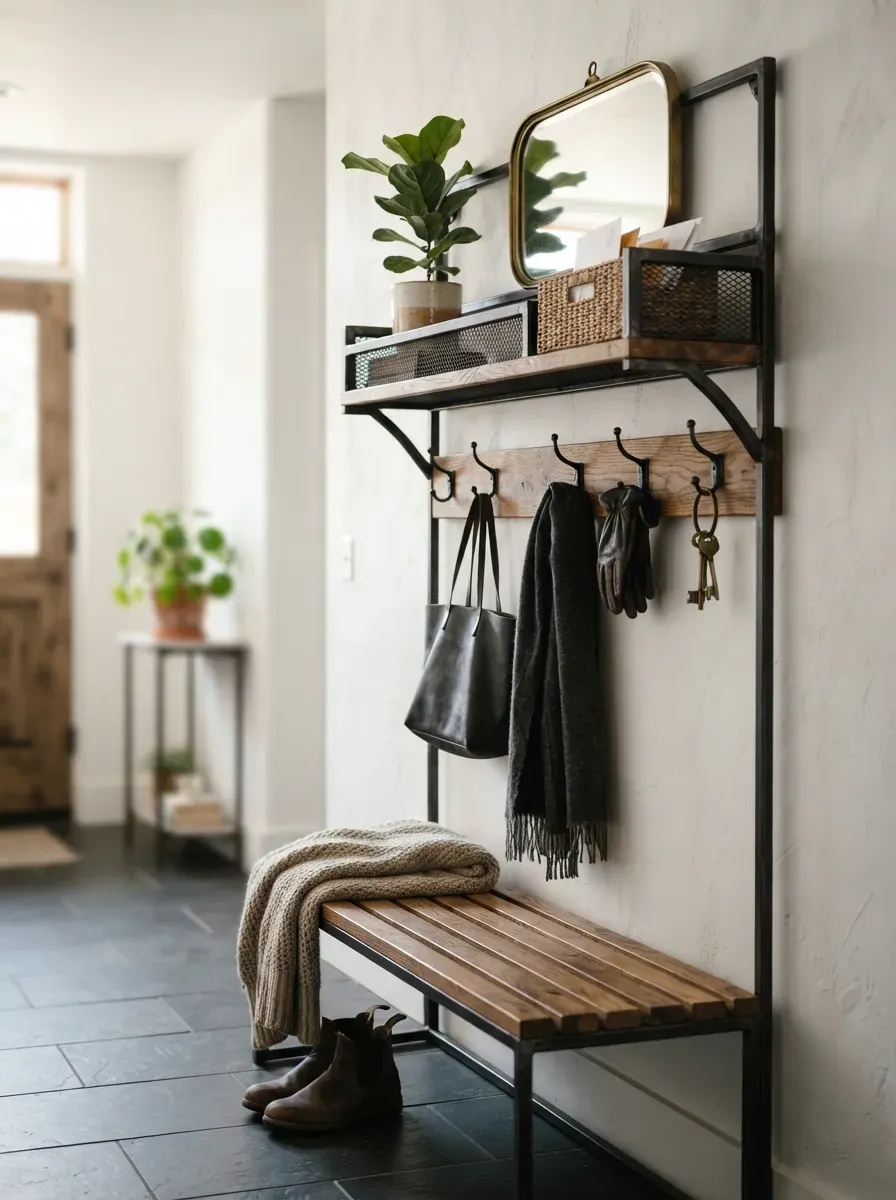
Choose a Hall Tree if you:
- Rent your home and cannot install permanent fixtures
- Live in a home with an unusual floor plan where standard measurements don’t apply
- Need a fast, affordable, and highly movable storage upgrade
- Have a single entryway serving one to two people
Choose Mudroom Lockers if you:
- Own your home and have a dedicated mudroom with full wall access
- Have a large family (3+ children) who need individual, compartmentalized storage stalls
- Want a built-in, custom look that flows architecturally with your home’s interior
Our in-depth comparison of mudroom lockers vs. hall trees breaks this decision down in detail if you’re still weighing both options.
Part 6: Top 3 Hall Trees Reviewed for 2026
Based on published specifications and customer feedback patterns, here are three well-reviewed hall trees across price tiers currently available.
1. VASAGLE Entryway Hall Tree with Bench — Best Budget Pick
Best for: Small apartments, industrial-style homes, and budget-conscious buyers who need durable open shoe storage
VASAGLE’s rugged matte-black steel frame and rustic engineered wood shelves deliver a premium-looking industrial aesthetic at an aggressively competitive price point. Its standout feature is the hanging system: nine robust, repositionable hooks spread across two rows, allowing you to customize hook height and spacing to match your specific coats, bags, and accessories.
The two wire mesh shelves beneath the bench accommodate up to eight pairs of shoes and allow wet soles to air-dry quickly — eliminating the stale, damp smell that plagues enclosed shoe cabinets.
- Materials: Alloy steel frame, particle board shelves
- Dimensions: 12.6” D × 27.6” W × 68.9” H
- Bench Weight Capacity: 176 lbs (80 kg)
2. Bush Furniture Salinas Hall Tree with Shoe Bench — Best Mid-Range Pick
Best for: Traditional homes, cottage interiors, and households needing a heavy-duty bench seat
The Bush Furniture Salinas is an elegant showcase of mission-style design at a surprisingly accessible mid-range price. Available in Antique White and Cape Cod Gray finishes, it features tapered legs, curved base rails, and an overall aesthetic that looks custom-built rather than flat-packed. Its four open cubby shelves beneath the bench keep footwear organized at a glance, while three heavy-duty double-prong hooks handle the family’s heaviest coats and bags with ease.
- Materials: Engineered wood, protective laminate
- Dimensions: 15.7” D × 31.7” W × 68.1” H
- Bench Weight Capacity: 250 lbs
3. Homestyles Americana White Hall Tree — Best Premium Pick
Best for: Large entryways, luxury homes, and families with young children
For buyers who want an heirloom-quality piece, the Homestyles Americana delivers strong craftsmanship. Constructed from solid hardwood and engineered wood with a multi-step white finish, it anchors any large entryway with genuine architectural presence. Its flip-top storage compartment includes a safety hinge that prevents the lid from slamming on small fingers — a critical feature in households with toddlers. A large beveled mirror in the vertical panel provides a full appearance check before heading out, and four heavy-duty brass-finished hooks complete the package.
- Materials: Solid hardwood + engineered wood
- Dimensions: 18” D × 40” W × 64” H
- Bench Weight Capacity: 250+ lbs
Part 7: Hall Tree Pricing — What to Expect at Every Budget Level
Your budget will set realistic expectations for materials, assembly complexity, and included features. Here’s what each tier actually delivers:
- Entry Level (150): Primarily metal-and-wire or basic MDF units. Fully flat-packed, self-assembly required. Use wood glue on dowels for extra rigidity and take your time; rushing assembly at this tier leads to wobbly, unstable units.
- Mid-Range (400): High-grade engineered wood with thick protective laminates, sturdier metal frames, and added features like integrated mirrors, beadboard paneling, and drawers.
- Premium ($400+): Solid hardwood construction, custom paint finishes, soft-close hardware, and intricate molding details. Often shipped partially or fully assembled, reducing the setup burden significantly.
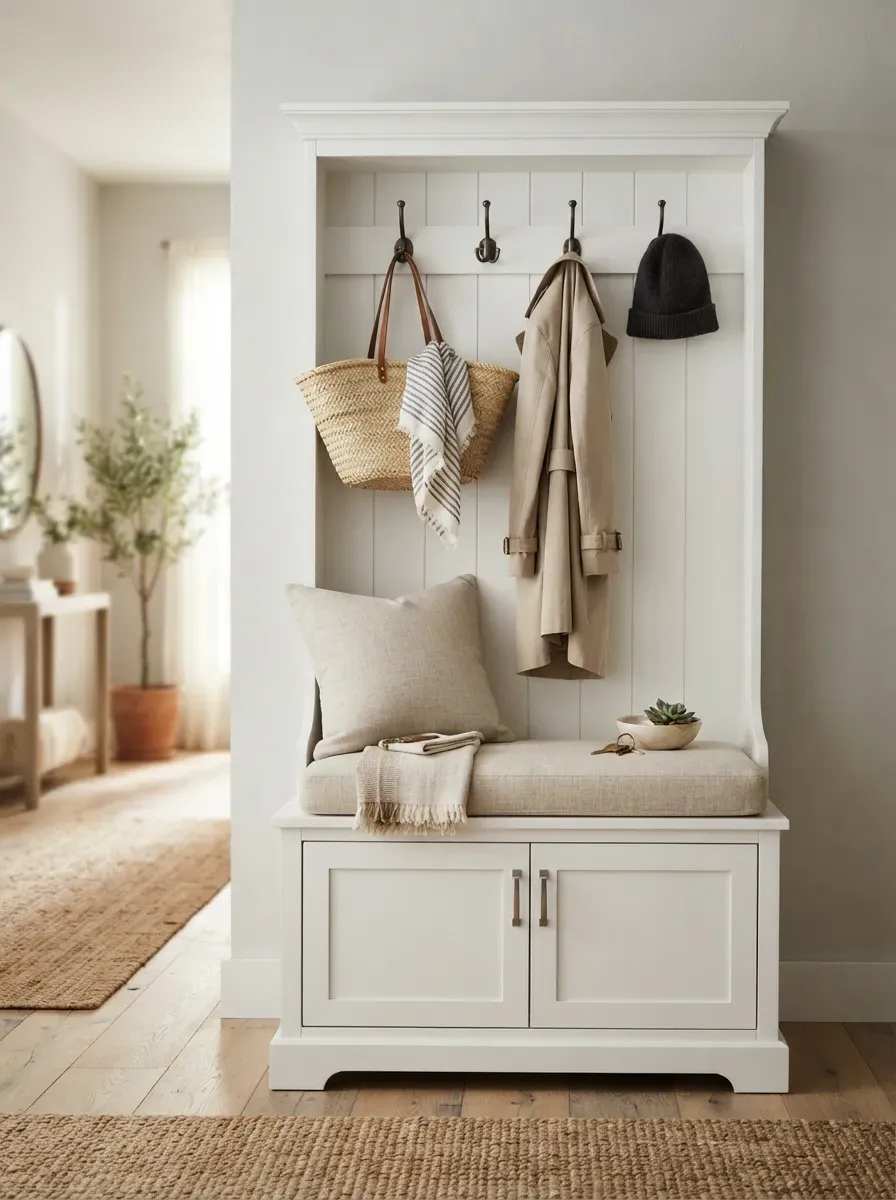
To get the best price across retail channels, consult our guide to the top 5 retailers for affordable hall trees before purchasing — the same unit can vary by 100 depending on where you buy.
Part 8: Safety First — Anti-Tip Installation Is Non-Negotiable
A hall tree is inherently top-heavy. When loaded with winter coats on the upper hooks, the center of gravity shifts upward. An unanchored hall tree poses a serious tipping risk — especially for households with climbing toddlers or large, energetic pets.
Hall Tree Safety Rules
- Always use the included anti-tip wall anchor strap. This is not optional furniture packaging; it is a critical safety component. Do not discard it.
- Anchor into a wall stud. Use a stud finder to locate the wood framing behind your drywall and drive a 2-inch wood screw directly into the stud — not just into drywall.
- No stud available? Use heavy-duty toggle bolts rated for at least 100 pounds — not the flimsy plastic expansion anchors often included in the box.
- Level the unit before anchoring. Entryway floors in older homes are rarely perfectly level. Use the included adjustable feet (metal units) or insert wooden shims under the base until the unit is completely stable and flush.
- Distribute weight strategically. Place heavy items — boots, storage baskets, bulky gear — on the lower shelves and inside the bench. Avoid loading multiple heavy coats onto a single side hook; spread the weight evenly across all hooks.
Part 9: Styling Your Hall Tree — From Functional to Stunning
A well-chosen hall tree shouldn’t just solve a storage problem — it should be a beautiful focal point that reflects your home’s design personality.
Step-by-Step Hall Tree Styling Plan
- Start with Woven Textures: Add matching rattan, seagrass, or wire baskets to open cubbies and top shelves. Baskets instantly conceal messy items like dog leashes and loose gloves while adding natural, organic warmth to wood and metal frames.
- Soften Hard Surfaces: If your bench is plain wood, add a custom-sized bench cushion or a pair of durable throw pillows. The softness breaks up the rigid angles and invites people to sit down rather than rushing past.
- Add Living Greenery: A small cascading pothos or a compact snake plant on the top shelf adds color and life to what could otherwise feel like a purely utilitarian corner of your home.
- Curate Your Hooks: Resist the urge to hang every coat you own. Keep two to three cohesive daily-use pieces on display (a denim jacket, a neutral trench, a canvas tote) and rotate seasonal outerwear in and out as needed.
- Anchor the Space with a Runner Rug: Place a durable wool or washable synthetic runner in front of the hall tree. It protects your floors from wet shoes and grit while visually grounding the furniture in the space.
- Create a Built-In Look: Even a flat-pack unit can look custom. Add crown molding to bridge the gap between the furniture and the ceiling, caulk the seams where the unit meets the wall, paint the unit to match your trim, and swap stock knobs for high-end brass or matte black hardware.
- Illuminate the Space: If your entryway lacks natural light, consider mounting a simple plug-in LED sconce on the wall adjacent to your hall tree. Good lighting makes the entire entryway feel welcoming rather than dim and claustrophobic.
Key Takeaways: Your Hall Tree Buying Checklist
Use this quick-reference summary before making your final purchase decision:
- ✅ Measure first, shop second. Confirm width, depth, height, and door-swing clearance before opening any product page.
- ✅ Choose materials for your reality. MDF works in dry entryways. Metal-and-wood hybrids win in wet mudrooms. Solid hardwood is the forever investment.
- ✅ Anchor to a wall stud. Never skip this step, regardless of how stable the unit feels on the floor.
- ✅ Match bench style to your habits. Open cubbies for fast-moving households; enclosed drawers or flip-top chests if you want a consistently tidy appearance.
- ✅ Budget for assembly. Premium wooden hall trees can have 100+ hardware pieces. If that sounds stressful, add 120 to your budget for professional assembly.
The Bottom Line: A hall tree is more than a piece of furniture — it is an investment in your daily peace of mind. By centralizing your entryway storage into a single, beautifully organized unit, you eliminate the frantic morning search for keys, coats, and kids’ backpacks. You walk out of your home calmly, and you walk back in without stepping over chaos. Choose your hall tree well, and enjoy the quiet satisfaction of an organized home.
More on this: How to Choose the Right Hall Tree
The entryway is your home”™s first handshake. It is also the primary battleground against daily clutter—backpacks, heavy coats, muddy boots, and loose keys. A hall tree is the ultimate piece of multi-functional furniture designed to solve this spatial crisis. It combines seating, hanging storage, shelving, and shoe organization into a single vertical footprint.
Choosing the wrong hall tree leads to daily frustration. A unit that is too deep blocks the front door”™s swing radius. A unit built from cheap materials will bow under the weight of winter parkas or buckle when a guest sits down to remove their boots.
To make a smart purchase, you must evaluate spatial clearances, material durability, joinery methods, and weight capacities. This comprehensive guide provides the exact architectural, structural, and aesthetic frameworks required to choose the right hall tree for your home.
Quick Comparison: Top Picks & Benchmarks
Before examining the engineering and spatial math, review how these top-rated hall trees compare across critical structural benchmarks.
| Product | Frame Material | Seating Bench Capacity | Storage Configuration | Check Price |
|---|---|---|---|---|
| Vasagle Industrial Hall Tree | Alloy Steel & Particleboard | 220 lbs | 9 Hooks, 2 Mesh Shelves | Check Price on Amazon |
| Crosley Furniture Seaside Hall Tree | Painted Engineered Wood | 250 lbs | 4 Double Hooks, Deep Bench Storage drawer | Check Price on Amazon |
| Hoctieon Corner Hall Tree | Steel Frame & MDF | 180 lbs | 6 Hooks, 3-Tier Corner Shelving | Check Price on Amazon |
1. Assessing the Entryway’s Physical Realities (Spatial Clearance & Traffic Flow)
You cannot buy a hall tree based on aesthetics alone. You must measure with absolute precision. Entryways are high-traffic zones with tight physical boundaries.
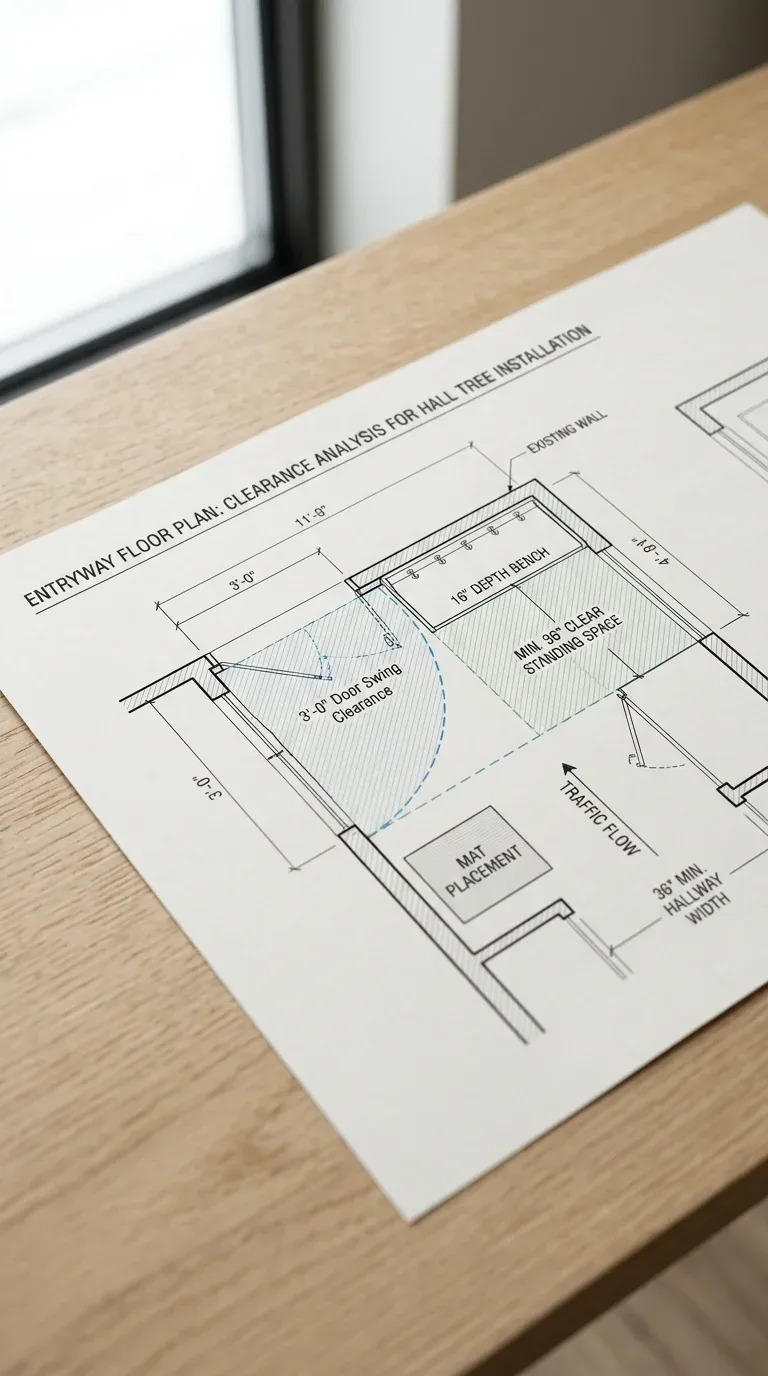
The Door Swing Radius and the “Golden Clearance”
The most common mistake is failing to account for the front door’s swing path. Open your main entrance door to its maximum 90-degree angle. Measure the distance from the edge of the open door to the adjacent wall.
- Minimum Clearance: You need at least 36 inches of clear, unobstructed walkway space in front of the hall tree.
- The Swing Buffer: If your hall tree sits on the wall behind the door’s hinge side, ensure the door handle or door corner does not strike the unit when opened. Install a heavy-duty floor stop to prevent physical damage to both the wall and your new furniture.
Analyzing the Three Dimensions
- Depth (The Obstruction Factor): Standard hall trees range from 12 to 20 inches deep. If your entryway is a narrow corridor (under 5 feet wide), stick to a slim profile of 12 to 14 inches. Anything deeper will make the hallway feel like a tunnel and restrict movement when carrying groceries or luggage.
- Width (The Spatial Footprint): Measure your available wall space, leaving at least 3 inches of breathing room on either side of the unit. This prevents the hall tree from looking crammed against door casings, light switches, or electrical outlets. Common widths are 24 inches (compact/corner), 36 to 40 inches (standard), and 60+ inches (wide/multi-bay).
- Height (The Overhead Clearance): Hall trees typically stand between 68 and 80 inches tall. Measure your ceilings. Standard 8-foot (96-inch) ceilings accommodate almost any retail model. If you have low basement ceilings or a sloped under-stairs entryway, you must choose a low-profile unit or modular components. Ensure that upper shelves are reachable; a top shelf higher than 75 inches is unusable for kids and shorter adults without a step stool.
2. Material Science: Durability, Grain, and Frame Integrity
A hall tree is heavy-use furniture. It faces wet coats, muddy soles, heavy boots, dropped keychains, and the physical force of adults sitting down on the bench. Understanding the raw materials ensures your unit won’t warp, crack, or peel within two seasons.
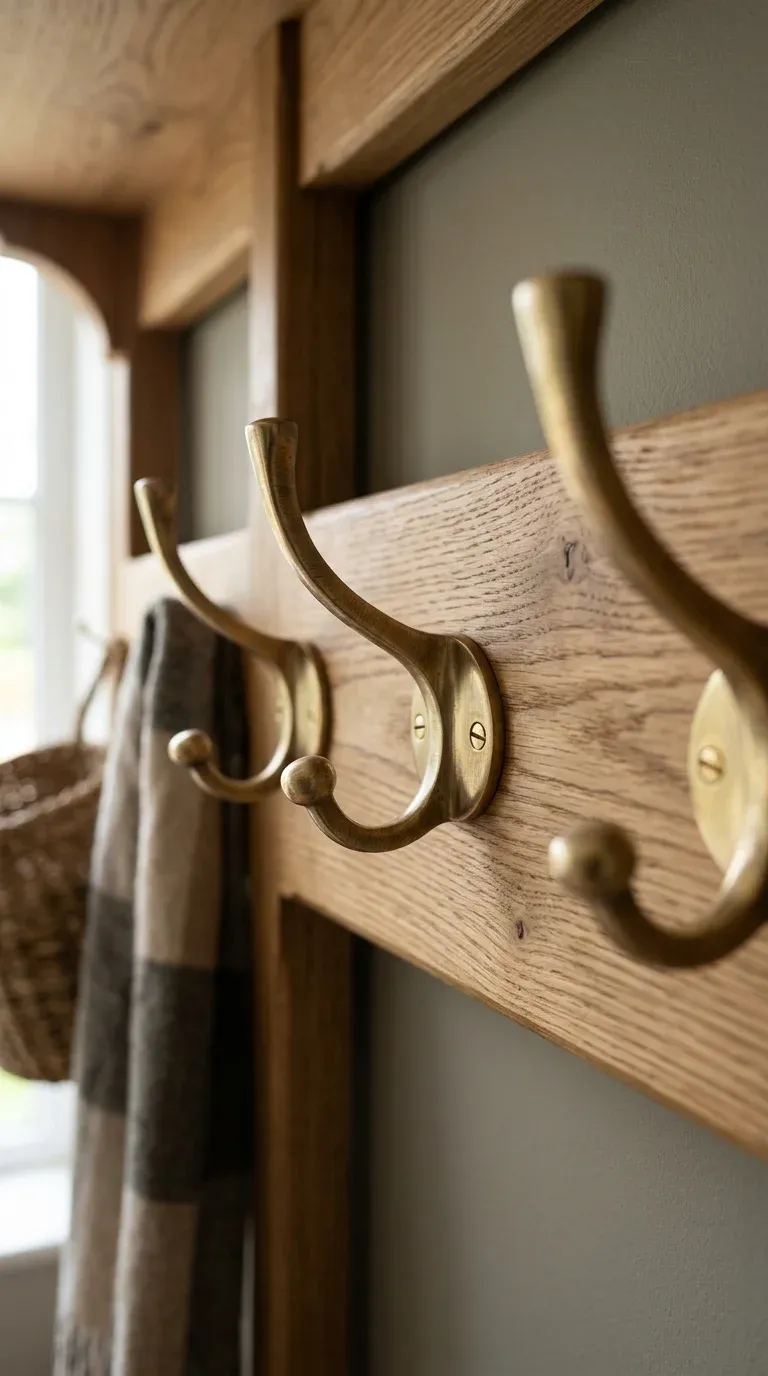
Solid Wood vs. Engineered Wood vs. Metal Frames
Solid Hardwood (Oak, Birch, Maple)
- The Verdict: The gold standard for longevity.
- Characteristics: Excellent screw-holding capacity, beautiful natural wood grain variance, and high structural rigidity. It handles moisture well if properly sealed.
- The Catch: Expensive and heavy. Wood expands and contracts with seasonal humidity changes, requiring high-quality joinery (mortise and tenon or pocket screws) to prevent splitting.
Engineered Wood (MDF & Particle Board)
- The Verdict: Budget-friendly but highly vulnerable to water.
- Characteristics: Medium-Density Fiberboard (MDF) offers a perfectly smooth surface for paint. It resists warping from temperature fluctuations better than solid wood.
- The Catch: If moisture penetrates the outer laminate or veneer layer—which happens easily on shoe shelves—the underlying fibers swell, crumble, and ruin the structural integrity. Check that the unit has sealed edges or a raised water-resistant melamine coating.
Steel and Iron Frames (Industrial Style)
- The Verdict: Maximum load capacity per dollar.
- Characteristics: Powder-coated steel frames provide incredible rigidity without adding immense bulk. They resist scratches, dents, and moisture.
- The Catch: Visually cold. They must be paired with solid wood or laminate shelves to prevent a sterile, commercial appearance.
Hardware Check: Fasteners, Hooks, and Drawer Glides
Do not overlook the small connections. They dictate the lifespan of the unit.
- Hook Metallurgy: Avoid thin, cast-aluminum or cheap plastic hooks. Look for zinc alloy, solid brass, or powder-coated iron. Double-pronged hooks secured with two screws (rather than a single screw) prevent rotation and loose mountings over time.
- Hinges and Glides: If the bench features storage drawers, look for ball-bearing drawer glides rated for at least 50 pounds. For drop-down storage chests, look for soft-close safety hinges or hydraulic lid stays. These prevent the heavy bench lid from slamming down on children”™s fingers.
3. Anatomy of an Ideal Hall Tree: Core Features Deep Dive
Every component of a hall tree must be optimized to match your household’s daily habits. Let us dissect the essential structural elements.
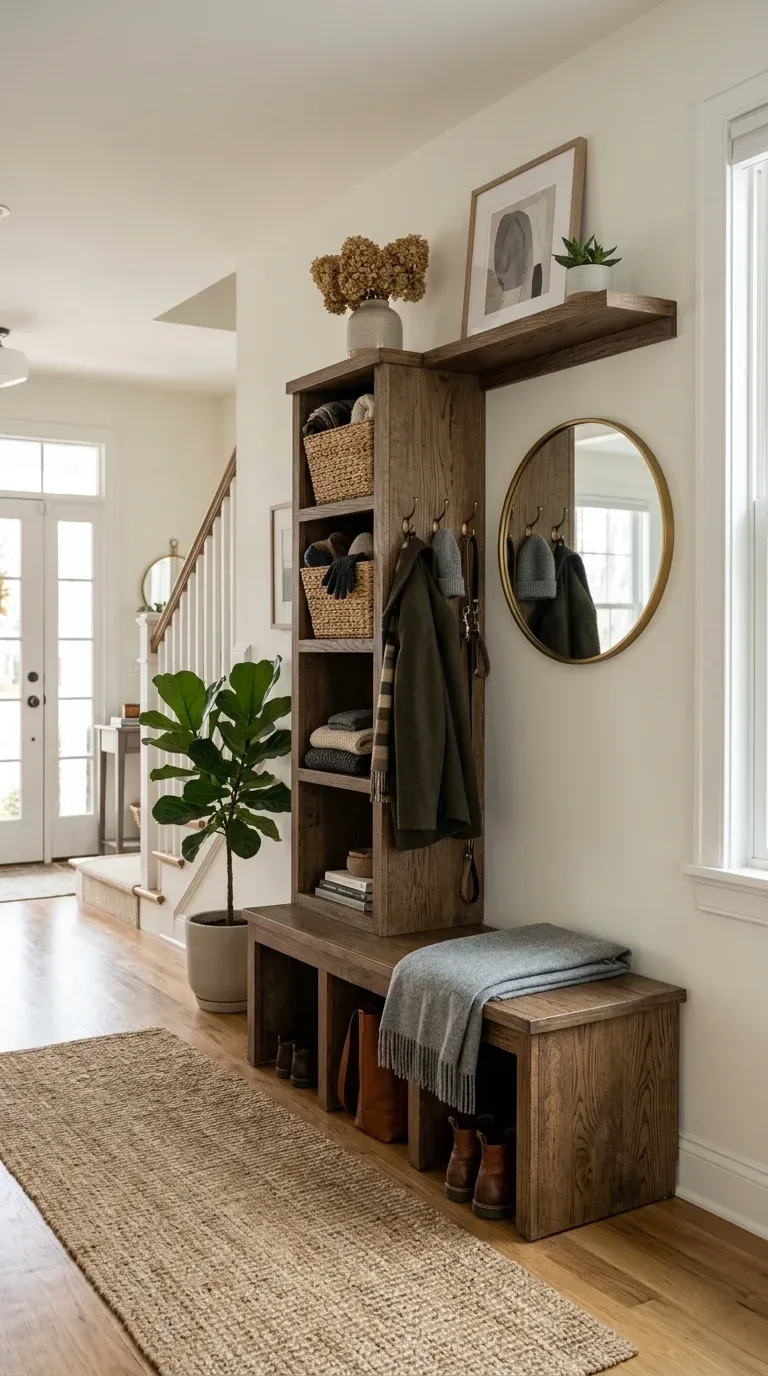
The Seating Bench: Ergonomics and Weight Thresholds
A hall tree bench is not just decorative; it must support the dynamic weight of a person sitting down.
- Seat Height: The optimal ergonomic seat height is 18 to 20 inches from the finished floor. This matches the standard dining chair height, allowing comfortable leg angles while tying shoes.
- Weight Capacity: Look for a static weight rating of at least 220 to 300 pounds for single or standard-width benches. For wider units meant to seat two people simultaneously, seek a capacity of 400+ pounds.
- Deflection Resistance: Press down hard on the center of the bench during your inspection. Any visible bowing or flexing indicates a lack of central support bracing, which will lead to structural failure.
Hook Engineering and Layout
The hooks are the hardest-working part of the unit.
- Spacing: Hooks must be spaced at least 8 to 10 inches apart horizontally. If they are too close, bulky winter coats will overlap, creating a massive, unsightly bulge that pushes people off the bench.
- Vertical Position: Hooks should sit between 50 and 65 inches above the floor. If they are mounted too low, long trench coats or rainwear will drag on the bench surface.
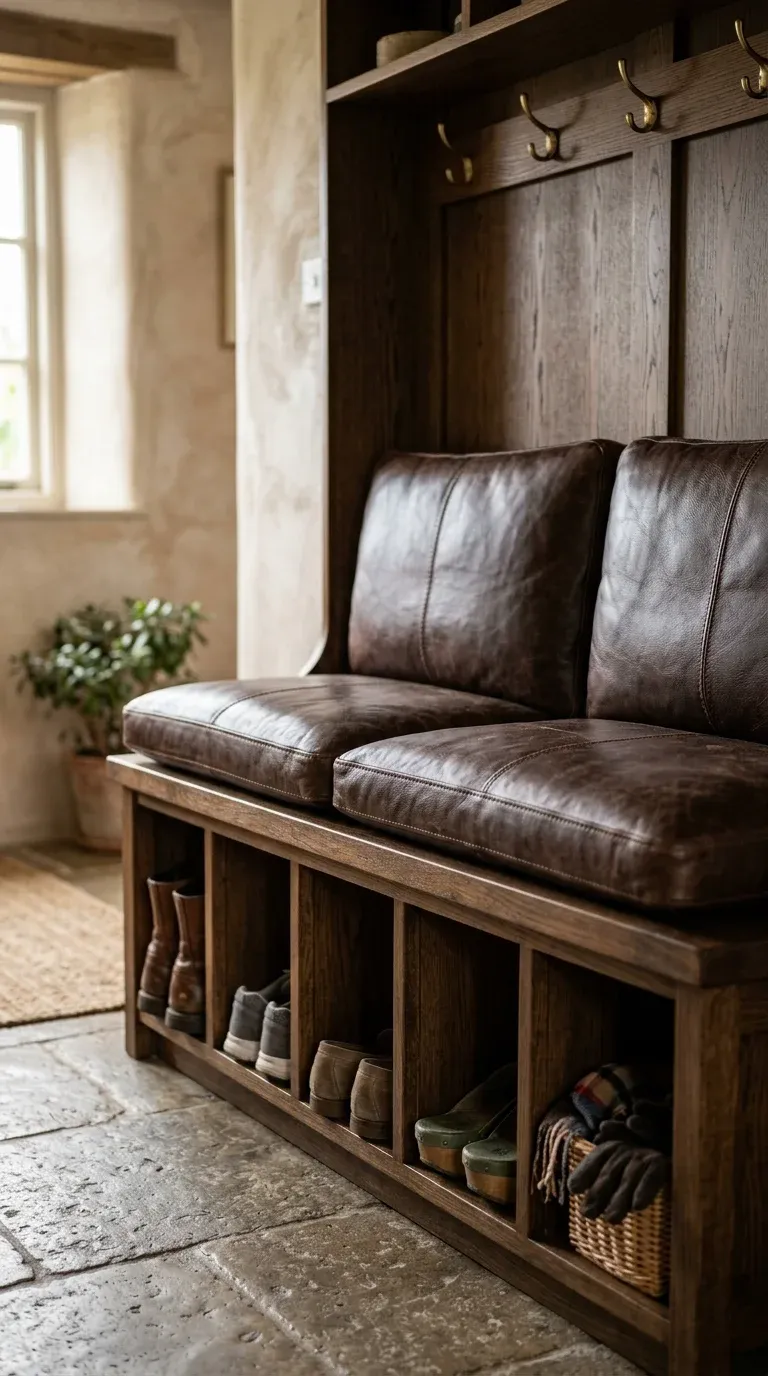
Shoe Storage Configurations
The base of your hall tree must manage dirt, water, and footwear organization.
- Open Wire Shelving: Excellent for air circulation and drying wet shoes. However, dirt and water from the top shelf can drip down onto the shoes stored below.
- Closed Cubbies: Provides a clean visual look. Ensure the cubbies are deep enough for your household’s shoe sizes. A standard cubby should be at least 12 inches deep and 6 inches high to accommodate men”™s size 12 sneakers or high-top boots.
- Drop-Down Cabinets: Conceals clutter entirely but limits ventilation. Wet shoes stored in closed cabinets can develop mold and unpleasant odors. If choosing this style, ensure there are integrated ventilation grilles or open backs.
4. Architectural Styles & Aesthetic Integration
The physical design of your hall tree should complement your home”™s existing architecture. To understand the wider market before diving into specific styles, read our comprehensive hall tree buying guide to align your functional needs with your personal style.
Traditional and Built-In Style
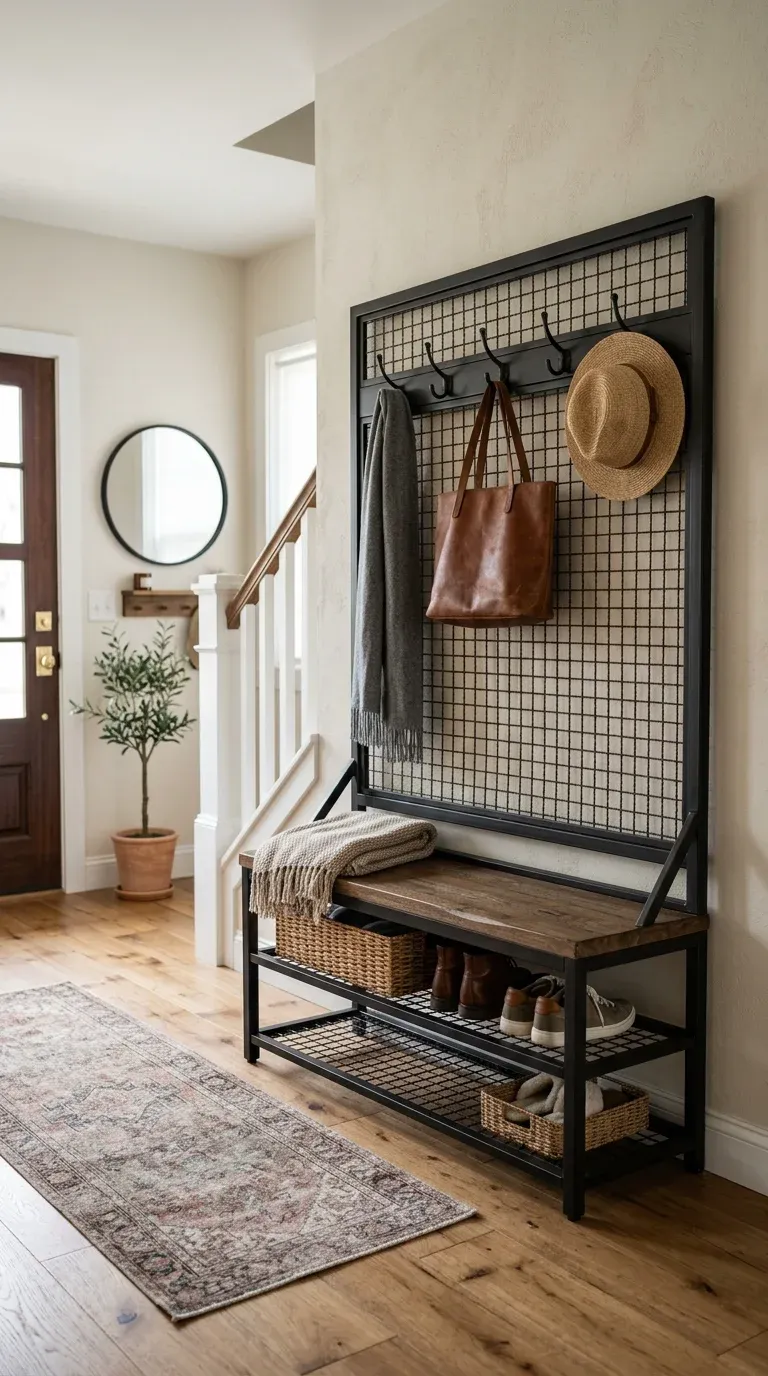
These models feature beadboard backing, crown molding, and painted finishes (often white, cream, or navy). They resemble custom millwork and look best in classic, colonial, or transitional homes. To see how these classic aesthetics compare to modern configurations, check out our curated list of the best hall trees for every entryway scenario.
Modern Industrial
Characterized by raw metal frames, clean lines, and distressed wood finishes. They fit perfectly in lofts, apartments, and modern rustic spaces. They are highly durable, highly functional, and visually lightweight.
Farmhouse Warmth
If you prefer cozy, rustic textures, consider 7 stunning farmhouse hall trees that emphasize distressed wood, sliding barn door hardware, and antique bronze finishes.
Corner and Compact Units
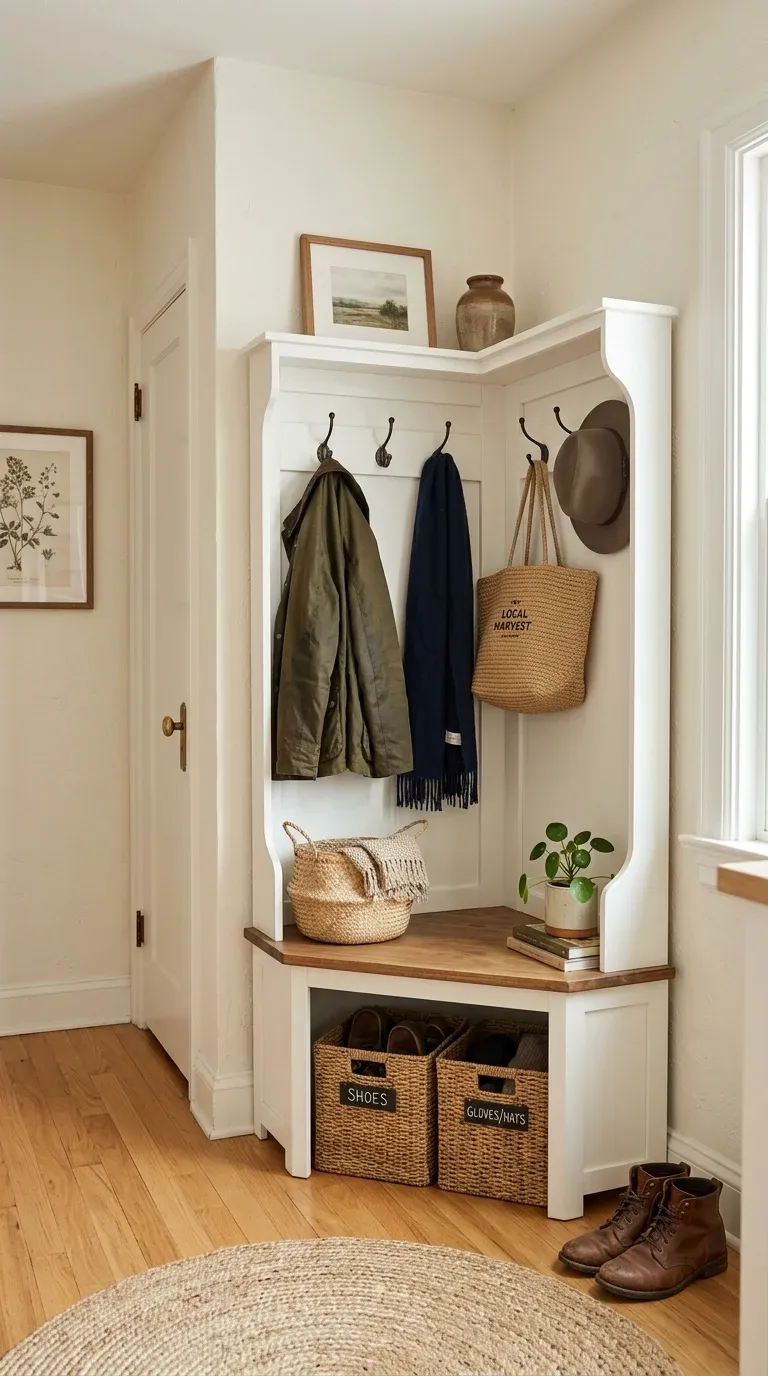
When square footage is premium, standard wide hall trees won’t work. Learn how you can maximize storage and style by maximizing style in small spaces with a corner hall tree. These units utilize the unused corner wedge, keeping walkways clear.
Color and Finish Considerations
Do you want your hall tree to blend into the wall or stand out as a focal point? If you need help coordinating wood stains, paints, or hardware finishes with your existing walls and flooring, check out our expert advice on choosing the right color and finish for your hall tree.
5. Curated Product Reviews: In-Depth Spec Comparison
Let us analyze three high-performing hall trees that represent distinct design, material, and spatial categories.
1. Best Overall Value: Vasagle Industrial Hall Tree
       [   UPPER SHELF   ]
       ===================
         O   O   O   O     <-- 9 Removable Hooks
       -------------------
       |                 | <-- Steel Grid / Panel
       |                 |
       ===================
       [ WOODEN BENCH   ] <-- 220 lbs capacity
       |  [MESH SHELF]   |
| [MESH SHELF] | <-- Shoe Storage- The Engineering Profile: Built on a robust, powder-coated square steel frame. The bench is constructed of high-density particleboard with a water-resistant rustic brown laminate.
- The Numbers:
- Width: 33.1 inches
- Depth: 11.8 inches (excellent slim profile for tight spaces)
- Height: 72 inches
- Bench Weight Capacity: 220 lbs
- Pros:
- strong stability for the price.
- Features 9 movable, dual-pronged hooks that can be repositioned along the wire grid.
- Adjustable feet compensate for uneven entryway flooring.
- Cons:
- The particleboard bench, though laminate-protected, will swell if wet snow boots are left directly on it for long periods.
- Best Use-Case: Small to medium-sized apartments, mudrooms, or industrial-themed entryways requiring heavy storage capacity in a narrow footprint.
- Check Price: Buy the Vasagle Industrial Hall Tree on Amazon
2. Best Traditional / Built-In: Crosley Furniture Seaside Hall Tree
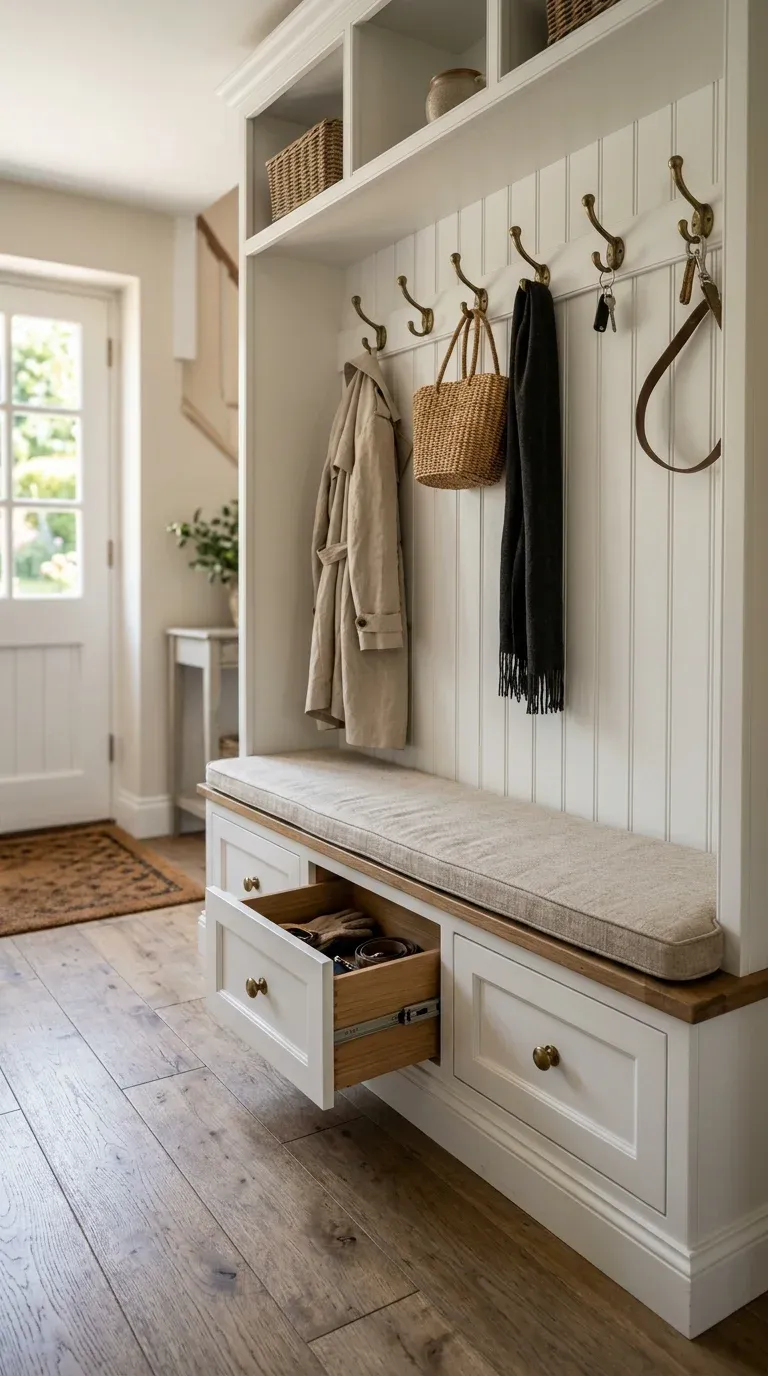
- The Engineering Profile: Constructed from high-grade MDF and birch veneers with a multi-step painted finish. Features beadboard paneling and a large lower storage drawer on full-extension ball-bearing glides.
- The Numbers:
- Width: 40 inches
- Depth: 18.5 inches (requires a wider entryway)
- Height: 74.5 inches
- Bench Weight Capacity: 250 lbs
- Pros:
- Elegant, custom-built look that instantly upgrades a home’s entryway.
- The drop-down/pull-out lower drawer completely hides clutter, shoes, and winter gear.
- Double-pronged metal hooks are securely anchored into solid backing boards.
- Cons:
- Heavy unit (weights over 100 lbs assembled), requiring two people for safe assembly and anchoring.
- At 18.5 inches deep, it will choke narrow hallways.
- Best Use-Case: Large traditional foyers, formal entryways, or suburban homes with dedicated mudrooms.
- Check Price: Buy the Crosley Furniture Seaside Hall Tree on Amazon
3. Best Space-Saver: Hoctieon Corner Hall Tree
- The Engineering Profile: A 90-degree corner unit designed with a steel chassis and engineered wood panels. Includes three wire mesh lower shelves and an upper shelf.
- The Numbers:
- Width: 17.7 inches (along each wall side)
- Depth: 17.7 inches
- Height: 72 inches
- Bench Weight Capacity: 180 lbs
- Pros:
- Transforms dead corner space into an efficient, organized mudroom zone.
- Open mesh shoe shelves allow air to circulate around wet footwear.
- Features a surprisingly high hook count (6 moveable hooks) for its compact footprint.
- Cons:
- Small bench area. It is adequate for one person to sit briefly but is not comfortable for long periods.
- Must be anchored securely to both walls to prevent tipping due to the narrow base.
- Best Use-Case: Micro-apartments, small modern condos, or rear garage-entry doors where wall space is extremely limited.
- Check Price: Buy the Hoctieon Corner Hall Tree on Amazon
6. Installation, Leveling, and Safety Engineering
Once you purchase your hall tree, you must install it safely. This is not optional. A tall, top-heavy piece of furniture loaded with heavy coats and backpacks is a serious tipping hazard, especially for families with children or pets.
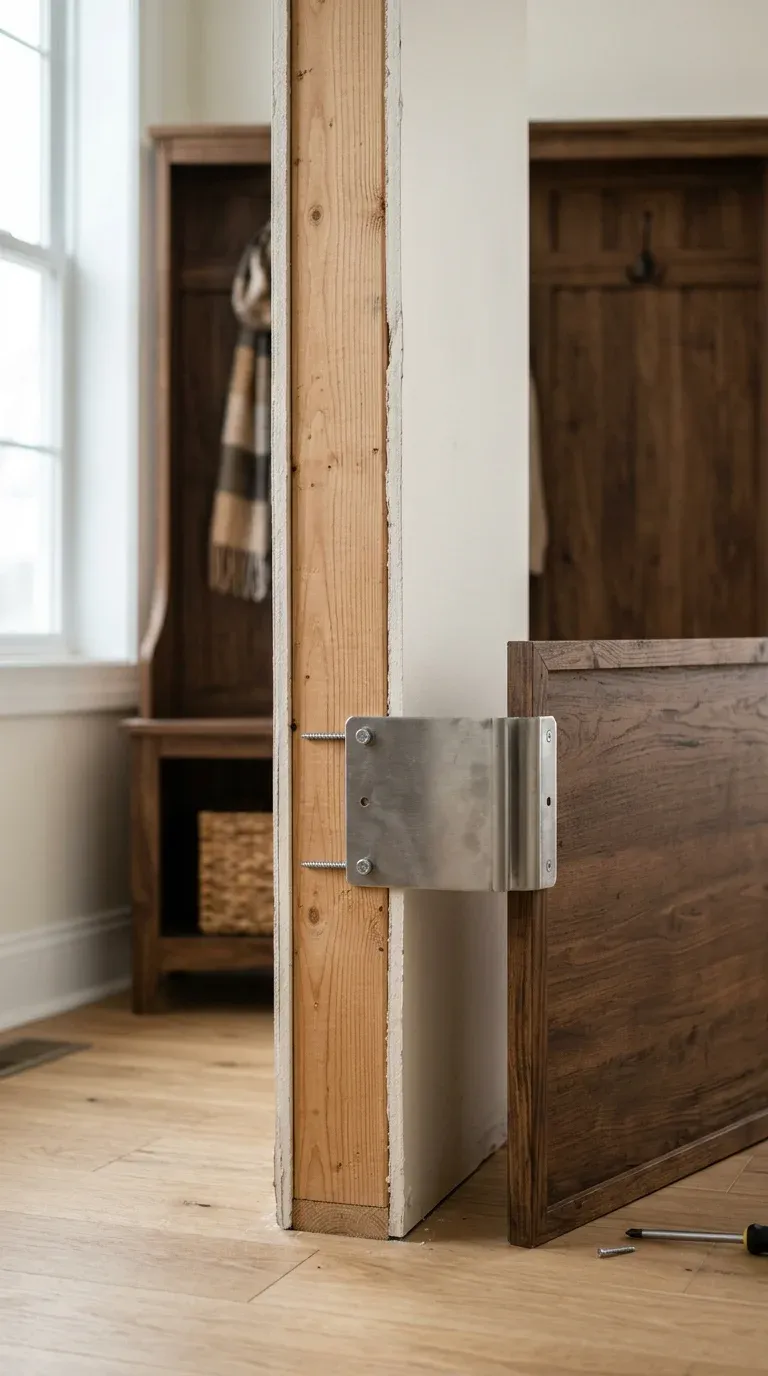
The Non-Negotiable: Anti-Tip Anchoring
Every hall tree taller than 60 inches must be anchored to the wall.
- Locate the Studs: Use a magnetic or electronic stud finder to locate the wood studs behind the hall tree. Do not rely on drywall anchors unless you are using heavy-duty toggle bolts rated for at least 100 lbs.
- Mount the Safety Brackets: Securely screw the anti-tip bracket (usually a steel cable or nylon strap) directly into the wall stud. Secure the other end to the solid frame of the hall tree.
- Check Tension: Ensure there is minimal slack in the safety cable. If a child pulls on the upper hooks or attempts to climb the shelves, the unit must not tip forward even a fraction of an inch.
Note: Never anchor a hall tree to drywall alone with plastic plug anchors — the dynamic force of an adult grabbing a heavy bag off an upper hook can easily rip cheap anchors out of the plaster.
Leveling on Uneven Floors
Few floors are perfectly level, especially in older homes or near tiled entryways with grout lines.
- Adjustable Feet: High-quality metal-framed hall trees come with screw-in leveling glides. Rotate them clockwise or counter-clockwise until the unit is perfectly vertical. Use a spirit level placed flat on the bench to verify.
- Felt Pads and Shims: If your wood-framed unit lacks adjustable feet, use plastic furniture shims or adhesive felt pads under the low corners. This prevents the unit from rocking when you sit down, which loosens joinery over time.
7. Maintenance, Longevity, and Daily Wear Prevention
To keep your hall tree looking and performing like new, establish a simple maintenance routine.
Protecting Against Moisture and Salt
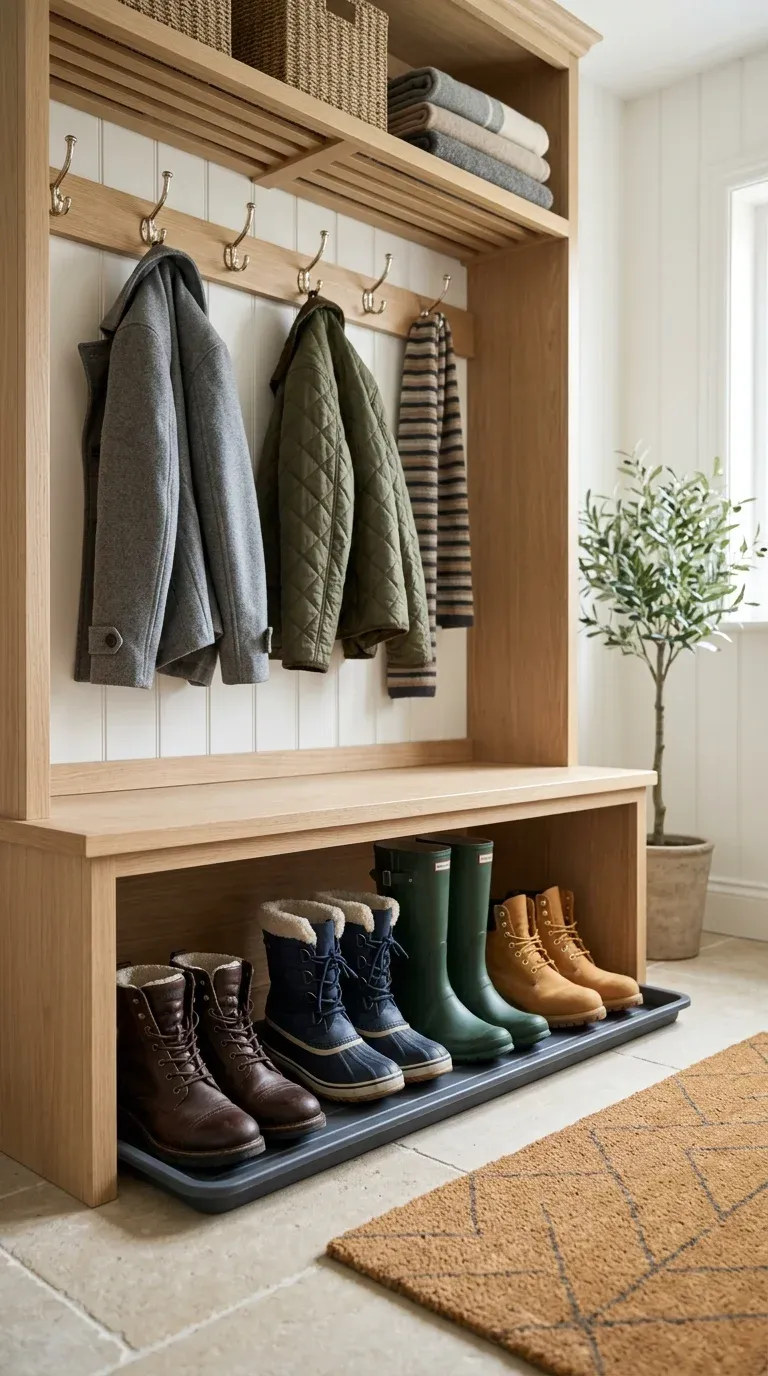
- Use Boot Trays: Do not place wet boots directly on MDF or wood shoe shelves. Buy a slim, heavy-duty plastic boot tray and slide it onto the bottom shelf or underneath the unit. This catches melting snow, salt, and mud before it damages the furniture.
- Apply a Protective Coat: If you purchase a solid wood hall tree, apply a high-quality water-resistant wax or polyurethane sealer to the bench seat once a year. This prevents water spots and discoloration from wet jackets.
Structural Upkeep
- Tighten Hardware Semi-Annually: The vibrations of daily use will loosen screws and cam-locks over time. Every six months, grab your screwdriver and tighten all hook screws, drawer slides, and frame connectors.
- Clean Hook Tips: Wet coats can transfer moisture to metal hooks, leading to rust. Wipe down the hooks with a dry microfiber cloth during humid seasons or winter months.
8. Comprehensive FAQ
How much weight can a standard hall tree hook hold?
Published hook ratings vary by model and mounting method, so there are no universal limits. As a general range, well-made dual-pronged metal hooks screwed into a solid wood or steel support frame are often rated around 15–25 pounds, while hooks mounted into thin MDF or particleboard backings may tear out well below that. Always check the manufacturer’s stated capacity and fastening requirements before loading a hook.
Can I place a hall tree in a very narrow hallway?
Yes, but you must select a slim-profile unit with a depth of 12 inches or less. Ensure the unit has open lower shelves or wire racks rather than closed doors or drawers to keep the space feeling light and airy. Alternatively, choose a corner hall tree to keep the primary hallway pathway completely unobstructed.
Is MDF safe for mudroom environments?
MDF is safe only if it is completely sealed with paint or a heavy-duty laminate veneer. Unsealed MDF absorbs humidity and liquid water like a sponge, causing it to swell and weaken structurally. If your mudroom is prone to high humidity or wet boots, choose a unit with a steel frame, solid hardwood, or rust-resistant metal shoe shelves.
Should I choose a hall tree with a mirror?
A mirror is an excellent addition to a hall tree because it allows for quick appearance checks before leaving the house and bounces light around tight, dark entryways, making them feel larger. However, ensure the mirror is made of shatter-resistant tempered glass and is securely mounted to the back panel.
How do I stop a hall tree from wobbling on thick carpet?
If your hall tree is placed on plush carpet, it is likely to wobble. To solve this, adjust the front leveling feet slightly higher than the back feet to tilt the unit’s weight back toward the wall. Once you anchor the unit to the wall studs using the mandatory anti-tip hardware, all wobbling will be completely eliminated.
Top Picks: Best Hall Trees & Coat Racks
Editor's shortlist with verified ratings. Prices and availability below — clicking an Amazon link earns us a small commission at no extra cost to you.
| # | Product | Rating | Reviews | Tag | Check Price |
|---|---|---|---|---|---|
| 1 | Crosley Furniture Seaside Hall Tree | 5,410 | Top Pick | Check Price | |
| 2 | HOOBRO Hall Tree with Bench | 2,230 | — | Check Price | |
| 3 | VASAGLE Hall Tree with Bench & Coat Rack | 1,820 | Best Modern | Check Price | |
| 4 | Alaterre Aspen Hall Tree | 980 | — | Check Price | |
| 5 | Pemberly Row Farmhouse Hall Tree | 1,450 | Best Farmhouse | Check Price |
Affiliate disclosure: As an Amazon Associate we earn from qualifying purchases.
Tag: smartlyhomme-20 — change in src/data/topPicks.ts.