
The Best Wood for DIY Entryway Furniture: A Complete Guide to Durability and Style
Stop guessing at the lumber yard. Discover the definitive guide to selecting wood that survives muddy boots, wet umbrellas, and daily chaos.

Mar 1, 2026 - Written by: Linda Wise

I still remember the first entryway bench I ever built. I was ambitious, inexperienced, and trying to save a buck. I grabbed some “whitewood” framing lumber from the local big-box store, slapped some stain on it, and called it a day. Three months later, the legs were warping, the finish was flaking off where wet boots sat, and the whole thing looked like a relic from a bad garage sale.
That failure taught me a valuable lesson: The entryway is not a living room. It is a transition zone. It is a battlefield.
Furniture in this space faces rapid temperature changes, high impact from dropped bags, and the arch-nemesis of all woodwork: moisture. When you decide to build your own hall tree, console table, or bench, the material selection isn’t just an aesthetic choice—it’s an engineering decision.
If you are tired of furniture that wobbles or stains the moment a drop of rain hits it, you’re in the right place. We are going to bypass the generic advice and dig into the nitty-gritty of Janka hardness ratings, rot resistance, and grain stability.
The Entryway Ecosystem: Why “Indoor” Wood Isn’t Enough
Before we talk about Oak or Walnut, we have to respect the environment. Your entryway is the airlock between the controlled climate of your home and the chaos of the outdoors. Every time you open that front door, you invite humidity swings.
I’ve seen beautiful tabletops ruined because the maker didn’t account for wood movement. When you are strictly focused on choosing the right wood for DIY entryway furniture, you have to look past the price tag and look at the cellular structure of the lumber.
Pro Tip: If your entryway has direct sunlight hitting the furniture, UV degradation is a real threat. Some woods, like Cherry, darken quickly, while Walnut lightens. Plan your finish accordingly.
The Janka Hardness Scale Explained
You will hear woodworkers throw around the term “Janka rating.” Here is the plain English version: It measures how much force it takes to embed a steel ball halfway into the wood.
Why does this matter for a mudroom? Think about high heels, dog claws, and the metal studs on denim jackets.
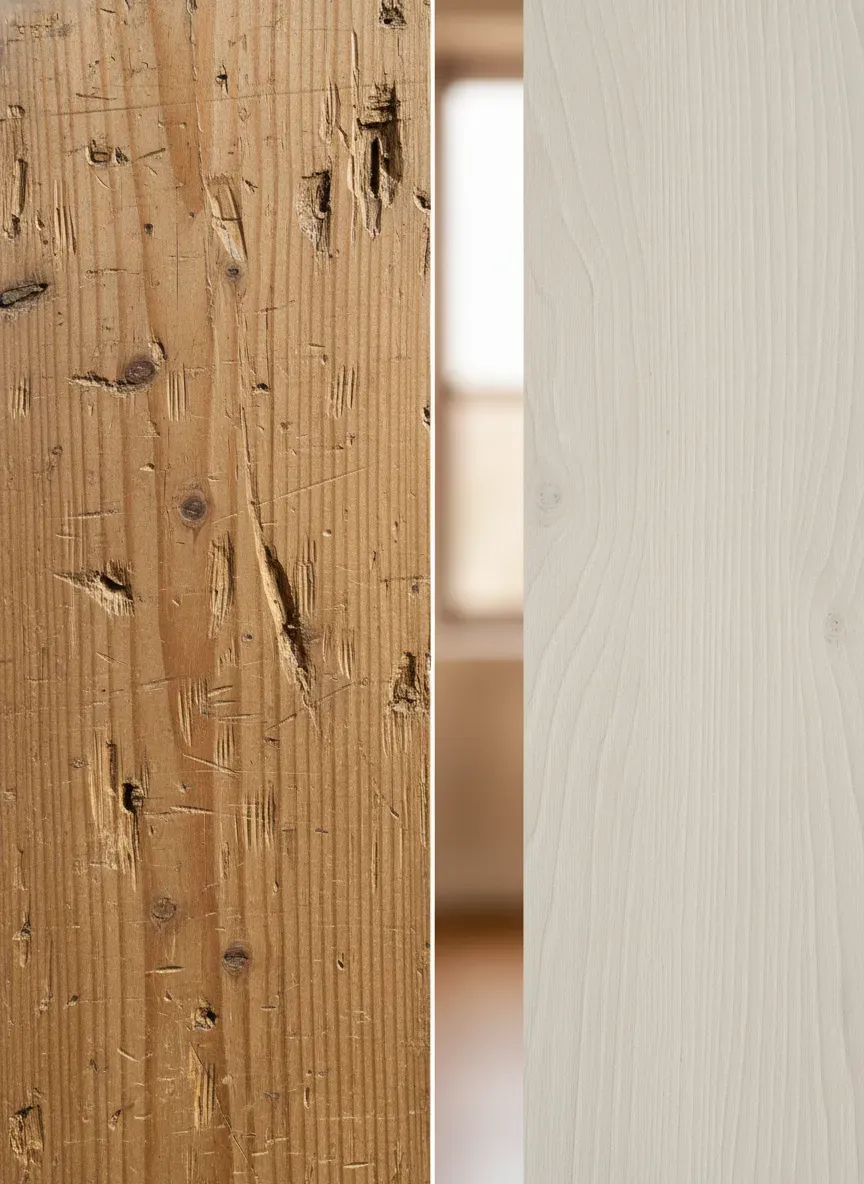
- Softwoods (Pine, Fir): Ratings around 380–660 lbf. Prone to denting.
- Hardwoods (Oak, Maple): Ratings around 1290–1450 lbf. Resistant to impact.
If you want a rustic look where every dent tells a story, a softwood is fine. If you want a pristine modern look that lasts twenty years, you need to climb the Janka ladder.
The Heavy Hitters: Top Domestic Hardwoods
For those willing to invest a bit more upfront to avoid rebuilding later, domestic hardwoods are the gold standard. They machine well, finish beautifully, and stand up to the abuse of a busy household.
White Oak: The King of Durability
If I could only use one wood for the rest of my life, it would be White Oak. Not Red Oak—White Oak.
Here is the science: White Oak pores are plugged with a substance called tyloses, which makes the wood effectively waterproof and rot-resistant. It was used to make whiskey barrels and ships for a reason. For a bench that sees wet raincoats or snowy boots, White Oak is unmatched.
Visually, it has a neutral, wheat-colored tone that fits everything from Scandi-modern to farmhouse. It takes stain evenly, but honestly, it looks best with a clear, matte finish.
Walnut: The Luxury Aesthetic
Walnut is softer than Oak (Janka ~1010), but what it lacks in rock-hard density, it makes up for in sheer beauty. It works like butter under a chisel or saw blade.
I often recommend Walnut for console tables or mirror frames—items that won’t be sat on or walked on. The rich, chocolate brown requires no stain. However, be aware that the sapwood (the outer rings) can be creamy white. You will need to trim that off or dye it if you want a consistent dark look.
Hard Maple: The Paint-Grade Powerhouse
Are you planning a painted built-in look? Do not waste your money on Oak; the open grain will show through the paint texture (unless you want that look). Instead, go for Hard Maple (Sugar Maple).
It is incredibly dense (Janka ~1450), has a tight, closed grain, and sands to a glass-like smoothness. It provides the perfect substrate for enamel paints. This is particularly useful if you are building cubbies or lockers where surface durability is paramount.
The Bottom Line: Use White Oak for moisture resistance, Walnut for show-stopping grain, and Maple if you plan to paint.
The Budget Contenders: Softwoods and Composites
Not every project needs to cost a fortune. I’ve built fantastic pieces using cheaper materials, but the preparation is different.
Southern Yellow Pine (SYP)
Construction lumber (2x4s) is usually SPF (Spruce-Pine-Fir). It is soft, wet, and unstable. However, Southern Yellow Pine is a different beast. It is significantly harder and heavier.
If you are on a budget, go to a real lumberyard and ask for “C-Select” or clear grade SYP. It has a beautiful grain pattern. The catch? You must seal it aggressively. Softwoods absorb moisture like a sponge, leading to warping.
This is a valid option, especially if you are concerned about child-proofing your entryway benches against sharp corners and splinters. Softwoods are easier to round over and sand into forgiving shapes than splintery Red Oak.
Baltic Birch Plywood
Forget the flaky plywood at the hardware store. Baltic Birch comes in 5x5 sheets and has void-free inner plies.
It is incredibly stable, meaning it won’t expand or contract with humidity changes. This makes it ideal for cabinet carcasses or shoe rack shelves. Recently, leaving the striped edges exposed has become a trendy design choice. It pairs beautifully with raw steel, similar to the vibe seen in industrial chic mudroom lockers with metal accents.
The Silent Killer: Moisture and Wood Movement
Here is the technical reality that ruins most DIY projects: Wood moves.
When humidity rises in the summer, wood swells across the grain. When it drops in winter, it shrinks. If you screw a solid wood breadboard end tightly across the grain of a table, it will crack.
Designing for Movement
- Elongated Holes: When attaching a table top to a base, use z-clips or drill elongated holes in the apron. This allows the screw to slide as the wood expands.
- Finish Both Sides: A common mistake is finishing only the visible top of a bench. This causes uneven moisture absorption, leading to “cupping.” Always seal the underside.
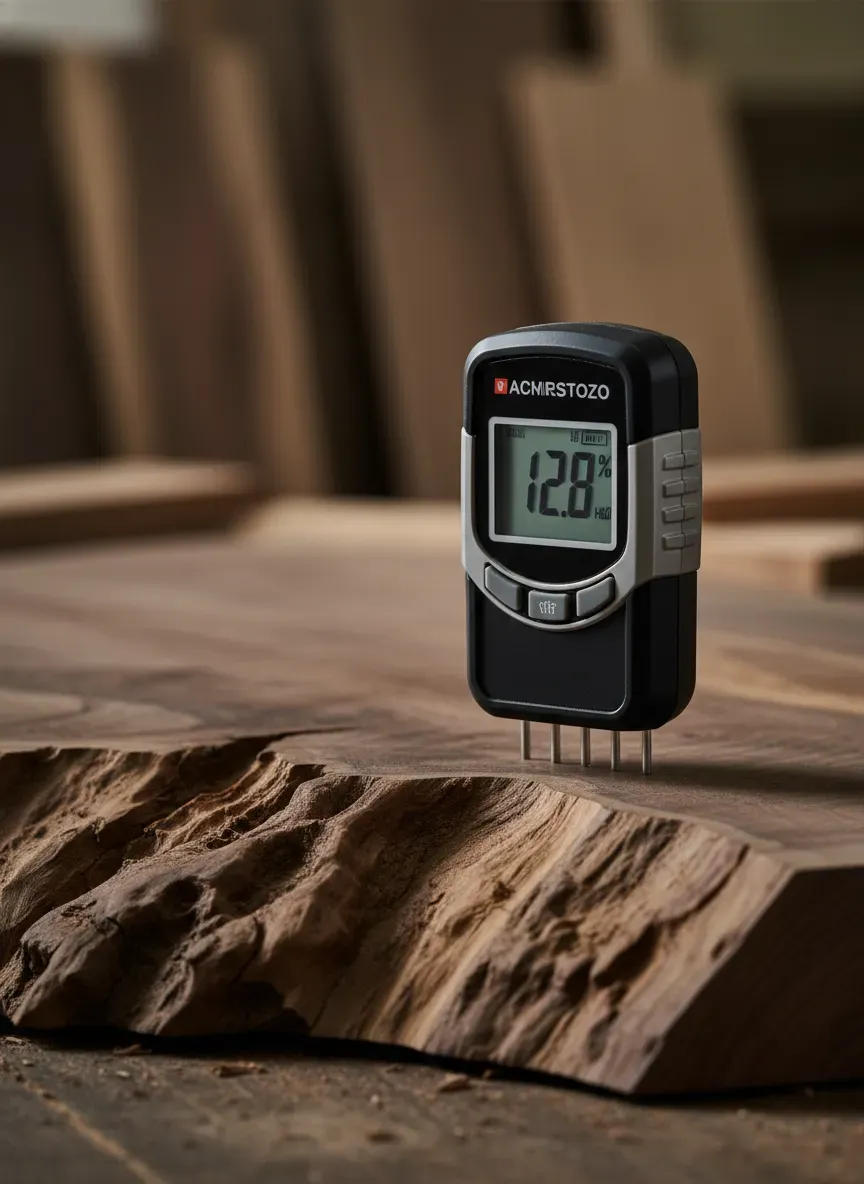
To truly master this, you need to know the moisture content of your lumber before you start building. If you build with wet wood, it will shrink and crack as it dries inside your house.
I never start a project without checking the board first. If you want the best experience, I highly recommend checking out the Wagner Meters Orion 950 Pinless Wood Moisture Meter. It’s non-destructive (no pin holes) and gives you the data you need to know if the wood is ready to work.
Sourcing Your Lumber: Step Away from the Big Box
If you take nothing else from this guide, take this: Stop buying furniture wood at Home Depot or Lowe’s.
The “hardwood” selection there is usually Red Oak and Poplar. They are often overpriced per board foot and stored in conditions that encourage warping.
The Lumberyard Experience
Find a local hardwood dealer. It can be intimidating walking in there for the first time—it smells like sawdust and grumpy old men—but the quality difference is astronomical.
- Rough Sawn: Cheaper, but requires a planer and jointer to flatten.
- S2S or S4S: Surfaced on 2 or 4 sides. More expensive, but ready to build with if you don’t have heavy machinery.
You will pay less for superior Walnut at a lumberyard than you will for mediocre Red Oak at a home center.
Finishing: The Shield Against the Elements
Your wood choice matters, but your finish is the armor. In an entryway, you need resistance to abrasion and liquids.
Polyurethane vs. Hard Wax Oils
For decades, Polyurethane was the default. It sits on top of the wood, creating a plastic shell. It is durable, but if it gets scratched, you have to sand the whole thing down to fix it.
I have personally switched almost exclusively to Hard Wax Oils. These bond with the wood fibers rather than coating them.
Why I love them:
- Repairability: If you get a scratch, you just sand that tiny spot and rub in a little more oil. No stripping required.
- Feel: You feel the actual wood, not a plastic layer.
- Application: It’s impossible to mess up. Wipe on, wipe off.
For a finish that enhances the grain while providing distinct protection, I highly recommend checking out the Rubio Monocoat Oil Plus 2C. It is expensive by volume, but a little goes a long way, and the durability is legendary in the woodworking community.
Matching Wood to Your Entryway Style
Your choice of timber should converse with the rest of your home.
The Modern Minimalist
Stick to lighter woods with subtle grain. Maple, Birch, or White Oak (with a water-based finish to prevent yellowing) are excellent. The goal here is clean lines. Using Baltic Birch plywood with exposed edges is a staple of this aesthetic.
The Rustic Farmhouse
This is where Knotty Alder or Reclaimed Pine shines. You want the knots, the cracks, and the character. Just ensure you fill any large voids with black epoxy so they don’t collect dirt. This style is forgiving of the wear and tear that comes with a busy family life.
The Mid-Century Modern
Walnut is the undisputed king here. However, Cherry is a fantastic runner-up. Cherry starts as a light salmon color and ages to a deep, rich russet brown over time. It brings a warmth that is hard to replicate with stains.
Practical Construction Tips
When you are actually in the shop (or garage) putting this together, keeps these structural realities in mind.
Joinery Matters
Glue is stronger than screws, but in an entryway bench, you want mechanical reinforcement. Dowels, dominoes, or mortise and tenon are best.
If you are a beginner, pocket holes are acceptable if used correctly. Do not use them on parts that will expand (like breadboard ends). For rapid, strong joinery that hides screws effectively, I highly recommend checking out the Kreg Pocket-Hole Jig 720PRO. It clamps automatically and makes the workflow seamless.
Acclimation
Bring your wood into the house (or at least the garage) a week before you cut it. Let it get used to the temperature. If you cut it the day you buy it, it might warp as it releases internal tension.
This is also the time to plan your layout. This layout is critical for maximizing entryway storage in the absence of a coat closet, where every inch of vertical space in your shelving or locker system counts.
Troubleshooting Common Pitfalls
Even with the best wood, things go wrong. Here is how to avoid the most common headaches I see.
- The ” Blotchy” Stain: Pine, Cherry, and Birch are notorious for staining unevenly. They end up looking camouflaged. The Fix: Always use a pre-stain wood conditioner, or better yet, use a gel stain that sits on the surface rather than soaking in.
- The Wobbly Legs: Entryway floors are rarely perfectly level. The Fix: Install adjustable leveling feet on your furniture. It saves you from using felt pads or shims.
- The Sticky Drawer: Wood swells in summer. If you build your drawers with tight tolerances in the winter, they will be jammed shut by July. The Fix: Leave a 1/16” to 1/8” gap around drawer fronts.
Making the Final Decision
Choosing the wood for your entryway project is a balance of budget, skill level, and expected traffic.
If you have kids who throw their backpacks like they are trying to break through a wall, go with White Oak or Hard Maple. They are the tanks of the hardwood world. If you are building a delicate side table to hold keys and mail, Walnut or Cherry offers elegance that elevates the whole room.
And if you are just starting out? Don’t be afraid of Pine or Poplar. Just know that they will age and dent. Embrace that character.
The most important step is simply starting. Get the wood, let it acclimate, measure twice, and create something that makes you smile every time you walk through your front door. It doesn’t have to be perfect; it just has to be yours. Go make some sawdust.