
Finding the Ideal Mudroom Locker Depth: 12 to 24 Inches Guide
From narrow 12-inch hooks to deep 24-inch cabinetry, discover the exact mudroom locker depth and bench depth you need to optimize space and traffic flow.
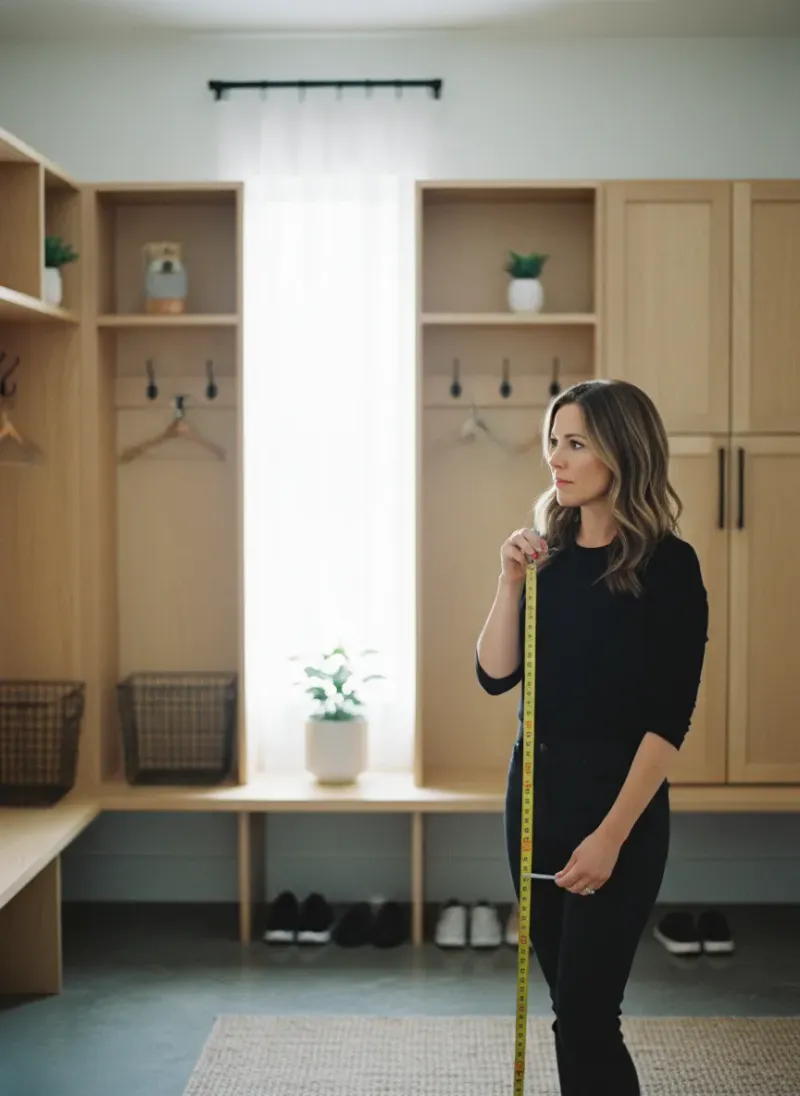
Feb 26, 2026 · Linda Wise
15 min readYou know that feeling when you walk through the door, arms full of groceries, and immediately trip over a rogue sneaker? Or perhaps you’ve experienced the frustration of buying a “standard” storage unit only to realize your winter parka prevents the cabinet door from closing.
These aren’t just organizational failures; they are geometric ones.
When designing a mudroom, most people obsess over height (floor-to-ceiling looks expensive) or width (how many lockers can we fit?). But after years of designing entryways and troubleshooting DIY space plans, I can tell you that depth is the silent killer of utility. The difference between 12 inches and 24 inches is not just a foot of space; it’s the difference between a sleek hook strip and a cavernous closet. It dictates whether you use hangers or hooks, open cubbies or closed doors, and ultimately, whether your entry space feels like a sanctuary or a bottleneck.
In this guide, we are going to tear apart mudroom locker depth and mudroom bench depth dimensions, inch by inch, to find the exact configuration for your home.
1. The Spatial Physics of Entryways: Mudroom Size & Layout Planning
Before pulling out your tape measure, you must understand the spatial cost of depth. In a hallway or foyer, floor space is premium real estate. Every inch of locker depth is an inch subtracted from your active walking path. If your lockers are too deep for the room, they create a cramped, tunnel-like passage. If they are too shallow, they cause “backpack spillover,” where bags and coats tumble onto the floor, defeating the purpose of the locker system entirely.
Mudroom Clearance Math (Top-Down View)
========================================================================
Ideal Foyer Sizing (8-Foot Wide Room)
------------------------------------------------------------------------
 [ Wall ] ====================================================
   |       [ 18" Mudroom Locker & Bench Depth ]
   |
 [ Flow ]  ======[ 60" Clear Walking Path (Traffic Zone) ]======
   |
 [ Wall ] ====================================================

Narrow Hallway Sizing (4-Foot Wide Corridor)
------------------------------------------------------------------------
 [ Wall ] ====================================================
   |       [ 12" Slim-Profile Locker Shelf ]
   |
 [ Flow ]  ======[ 36" Minimum Clear Walking Clearance ]======
   |
 [ Wall ] ====================================================
========================================================================
How Big Should a Mudroom Be?
To determine how big should a mudroom be, you need to look at both the layout dimensions and your family’s storage volume. The overall size of mudroom you need depends on your entry traffic:
- The Standard Mudroom Size: A typical mudroom size is 6 feet by 8 feet (48 square feet) for a family of 3 to 4. This footprint accommodates a single row of lockers, a bench, and a clear walking path.
- The Large / Garage Mudroom Size: A high-capacity mudroom or a garage mudroom size typically scales to 8 feet by 10 feet or larger. This allows for deep 24-inch cabinetry, a separate wash station, and a wide bench.
- Minimum Mudroom Size in Feet: The absolute minimum footprint for a functional mudroom space is 5 feet by 6 feet. Anything smaller functions as a simple entryway drop zone rather than a dedicated mudroom.
Clearance Guidelines: The 36-Inch Rule
Always maintain a minimum of 36 inches of clear walking space in front of your lockers or benches. If you have cabinet doors that swing out, or deep pull-out drawers, you need 42 to 48 inches of clearance. This ensures two people can pass each other, or one person can bend over to tie a shoe while another walks past.
2. The 12-to-14 Inch Range: Slim-Profile Lockers for Tight Corridors
Let’s look at the shallowest functional locker footprint. A depth of 12 to 14 inches is incredibly narrow for a cabinet, yet it remains one of the most requested dimensions for retrofits in existing hallways.
Apparel Clearance in a 12-Inch Locker (Side View)
==========================================================
  [ Back Panel ]
   |
   |--(\)  <-- Hook mounted on back wall
   |   |
   |   (   Coat drapes forward (requires 10"–12" clear depth)
   |   )
   |
  [ Bench Seat - 12" Depth ] (Large adult shoes will overhang)
==========================================================
The Reality of 12-Inch Locker Depth
When working with a standard locker depth of 12 inches (or a clear internal depth of 11 inches after subtracting the back panel), you must design around these physical limitations:
- No Standard Hanger Rods: A standard adult coat hanger is 17 to 18 inches wide. A winter coat on a hanger requires 22 to 24 inches of depth. Therefore, you cannot hang coats sideways in a 12-inch locker. You must use hooks mounted to the back or side panels.
- Shoe Overhang: An adult men’s size 11 shoe is roughly 12 inches long. In a 12-inch deep locker, adult shoes will sit flush with the edge or overhang. If your lockers have doors, adult shoes must be angled or stored on slanted shelves with heel catches.
- Backpack Containment: Modern school backpacks loaded with laptops, binders, and lunch boxes are thick. They easily measure 14 inches from front to back. In a 12-inch locker, they will spill out over the edge.
When to Choose a 12-to-14 Inch Depth
This depth is strictly for “grab-and-go” drop zones where visual simplicity and floor space are the main priorities. It works best in corridors that are 4 feet wide or less, where a standard cabinet would block traffic.
At 12 inches, think of your mudroom units more like built-in bookcases than closets. They are perfect for small storage bins, folded mail, keys, dog leashes, and lightweight jackets. If you treat a 12-inch locker like a closet, it will feel cluttered. If you treat it like a 3D hook rail, it works beautifully.
3. The 15-to-18 Inch Zone: The Mudroom Goldilocks Sweet Spot
This is the range where the vast majority of residential semi-custom and custom mudrooms land. It is deep enough to store bulky winter gear but shallow enough to keep your floor space feeling open.
Stepped-Depth Mudroom Locker Layout (Side View)
========================================================================
  [ Ceiling ]
       |
  [ Upper Locker Section - 12" Depth ]  <-- Keeps upper visual profile slim
       |
  [ Back Panel with Hooks ]
       |
       |  (Coat drapes freely)
       |
  [ Seating Bench - 18" Depth ]         <-- 6" visual step-back
  |                                 |
  |  [ Drawer / Open Shoe Shelf ]   |   <-- Deep shoe storage below bench
  |_________________________________|
========================================================================
Mudroom Cubbies Dimensions: Width and Depth
In this range, you can design highly functional mudroom cubbies dimensions:
- Ideal Depth: 15 to 18 inches allows you to place backpacks flat on shelves or hang heavy coats from double-prong hooks. It provides enough depth that bulky garments drape naturally without puffing past the face frame.
- Ideal Width: how wide should mudroom cubbies be? The standard width for a single cubby is 18 to 22 inches per person. Anything under 15 inches wide is too tight for adult shoulders, while anything over 24 inches wide should be split to prevent shelves from sagging under weight.
The Mudroom Bench Depth: Ergonomics of the Seat
If your locker configuration includes a built-in seat, this is the range you want for your mudroom bench depth:
- The 18-Inch Bench Seat: An 18-inch mudroom bench depth is the ergonomic gold standard for residential seating. It allows an adult to sit back fully, bend their knees naturally, and lean forward to tie shoes comfortably.
- The 15-Inch Bench Seat: A 15-inch mudroom bench depth is the functional minimum. It serves as a solid perch for quick shoe changes but feels shallow for larger adults.
- Stepped-Depth Layouts: For a clean design, construct a “stepped” unit. Make the bottom bench section 18 inches deep, and step the upper lockers back to 12 or 15 inches. This creates a comfortable 6-inch visual step-back, preventing the upper cabinetry from feeling top-heavy or looming over you while seated.
4. The 20-to-24 Inch Range: Heavy-Duty Closet Depth & Garage Mudrooms
At 20 to 24 inches deep, you are building standard closet-depth cabinetry. This depth is required if you want to hide all visual clutter behind closed cabinet doors.
Hanger Clearance: 18-Inch vs. 24-Inch Lockers (Top View)
========================================================================
18-Inch Locker (Too Narrow for Side-Hanging Rod)
------------------------------------------------------------------------
 [ Back Panel ] ==============================================
   |              \   <-- Hanger must be angled at 45 degrees
   |               \      to fit inside the cabinet frame.
 [ Door Line ] ===[ / ]=======================================

24-Inch Locker (Ideal for Standard Hanger Rod)
------------------------------------------------------------------------
 [ Back Panel ] ==============================================
   |                | <-- Hanger sits flat at 90 degrees.
   |                |     Coats hang cleanly; doors close fully.
 [ Door Line ] ===[ | ]=======================================
========================================================================
When to Choose a 20-to-24 Inch Depth
This deep cabinetry is ideal for:
- Closed-Door Storage: If you want doors to close fully over hanging coats, your mudroom cabinet depth must be at least 22 to 24 inches. Bulky winter coats hung on standard hangers need at least 22 inches of clearance to prevent the sleeves from catching in the door frames.
- Heavy Sports Gear: If your family plays gear-heavy sports like hockey, lacrosse, or football, a shallow locker is useless. You need a 24-inch depth to contain large gear bags, pads, and helmets.
- Garage Mudroom Layouts: The garage is the ideal place for a deep storage wall. The best locker dimensions for home garage mudroom storage are 24 inches deep by 24 to 30 inches wide per locker. This matches standard kitchen cabinet depth, allowing you to store bulky tools, luggage, or seasonal plastic bins.
Mitigating the Visual Weight of Deep Cabinets
A solid wall of 24-inch cabinetry can make a mudroom feel dark and small. Use these three design tricks to soften the visual impact:
- Open Plinths / Leg Bases: Lift the bottom of the cabinet 6 to 12 inches off the ground using legs rather than a solid wood base. Seeing the floor tile run underneath the cabinet makes the room feel larger.
- Light Color Palettes: Paint deep cabinets in light, reflective tones (whites, warm creams, or soft greys) to bounce light around the room. Save dark wood stains or navy blue paints for shallower units.
- Chamfered End Cabinets: If your locker run ends near an entry doorway, use an angled or chamfered end cabinet that transitions from 24 inches deep down to 12 inches. This softens the transition into the walking path.
5. Commercial vs. Residential Lockers: Changing Room Dimensions
It is helpful to compare home mudroom layouts to commercial locker systems. Whether you are analyzing a school hallway, a gym locker room, or an office drop zone, commercial standards prioritize space efficiency.
Commercial vs. Residential Locker Footprint
========================================================================
Commercial Single Locker (Gym / School)
  - Depth: 12" to 15"
  - Width: 12" (Very narrow to maximize locker count)
  - Material: Steel (heavy-duty, easy to hose down)

Residential Mudroom Locker (Custom Built-In)
  - Depth: 18" to 22" (Bench seat integrated)
  - Width: 20" to 24" (Designed for bulky coats & shoulder width)
  - Material: Hardwood, plywood, custom paint/stain finishes
========================================================================
Standard Commercial Locker Dimensions
If you are sourcing vintage metal lockers for a rustic entryway or designing an office space, understand these commercial benchmarks:
- Standard High School Locker Dimensions: Standard school lockers are typically 12 inches wide by 12 to 15 inches deep. They are designed for flat textbooks, binders, and light jackets hung on simple hooks.
- Gym & Changing Room Lockers Dimensions: Professional athletic lockers are deeper, ranging from 18 to 21 inches deep and 15 to 18 inches wide to accommodate gear bags and hangers.
- Locker Room Size & Sizing of Locker Room: In commercial design, a locker room size and the overall dimensions of a locker room are calculated using a ratio of locker count to bench space. A standard layout requires at least 4 to 5 feet of clear space between facing locker banks to accommodate benches and walking traffic.
6. Sizing and Depth Matrix: Quick Reference
Use this reference table to plan your mudroom, entryway, or garage storage layout:
| Locker Type | Depth | Width | Bench Height | Best For |
|---|---|---|---|---|
| Slim-Profile Corridor | 12” – 14” | 15” – 18” | 17” – 18” | Narrow hallways under 4 feet wide, light jackets, mail drops, small apartments |
| Goldilocks Sweet Spot | 15” – 18” | 18” – 22” | 18” | Standard family mudrooms, active back entrances, school backpacks, heavy coats on hooks |
| Cabinet / Garage Storage | 20” – 24” | 24” – 30” | 18” (if stepped) | Closed cabinets with hanger rods, sports gear storage, winter coats behind doors, garage mudrooms |
| Commercial Gym Steel | 15” – 18” | 12” – 15” | N/A | Vintage locker designs, damp utility areas, high-capacity staff storage |
7. Technical Calculations for Mudroom Design
When building your lockers, you must account for wood thickness and drawer hardware, which reduce your usable storage space.
Locker Depth Calculation (Inset vs. Overlay Doors)
========================================================================
Total Available Wall Space Depth: 18 inches

Locker with Overlay Doors (Door sits outside frame)
  - Total Depth: 18.00"
  - Back Panel:  - 0.75"
  - Usable Depth: = 17.25"  <-- Ideal for backpacks and shoes

Locker with Inset Doors (Door sits inside frame)
  - Total Depth: 18.00"
  - Back Panel:  - 0.75"
  - Door Face:   - 0.75"
  - Usable Depth: = 16.50"  <-- Lost 0.75" of internal space
========================================================================
Inset vs. Overlay Cabinet Doors
- Overlay Doors: The door sits on the front face of the cabinet frame. This maximizes your internal depth, leaving you with more room for shoes and storage bins.
- Inset Doors: The door sits flush inside the cabinet frame. This creates a high-end, custom look but steals 0.75 inches of internal depth. If you want inset doors on a closet bench and need to hang coats on hangers, you must increase your cabinet depth to 25 inches.
Drawer Hardware Clearance
If you are installing drawers underneath a bench seat to store shoes, standard heavy-duty drawer slides require 0.5 inches of clearance on each side of the drawer box. Ensure your drawer box depth matches standard slide lengths (e.g., 12, 14, 16, or 18 inches) to avoid paying for custom hardware.
8. Conclusion: The Cardboard Mockup Test
There is no single “ideal” depth for every home. The right choice depends on your hallway width, your storage needs, and whether you want to conceal your clutter behind cabinet doors.
Summary Recommendations
- Go with 12 to 14 inches if your primary constraint is a narrow hallway, you only use hooks, and you want to keep the walkway open.
- Go with 15 to 18 inches if you want a built-in seating bench, open mudroom cubbies for backpacks, and a balanced visual footprint.
- Go with 20 to 24 inches if you want to hang coats on traditional hangers, hide items behind closed doors, or store bulky sports gear in a garage mudroom.
The Ultimate Real-World Test
Before cutting plywood or ordering cabinets, perform the Cardboard Test:
- Gather large shipping boxes and tape them together to match the depth and width of the locker system you are planning.
- Place the boxes in your mudroom or hallway.
- Live with the boxes for 48 hours. Walk past them carrying a laundry basket, sit on the cardboard mockups to test the height, and simulate opening door swings.
Your body has a natural sense of spatial awareness that a blueprint cannot replicate. Doing this simple test will tell you instantly whether your planned depth will function perfectly or create a bottleneck on a busy school morning.
Frequently Asked Questions
What is the standard mudroom locker depth for residential entries?
The standard mudroom locker depth ranges from 15 to 18 inches. This depth allows coats to hang from hooks without protruding excessively, comfortably fits average backpacks, and serves as an ideal seating depth for a built-in bench.
How deep should a mudroom bench be?
A mudroom bench should be between 15 and 18 inches deep. Benches at 18 inches are optimal for adult ergonomics, allowing users to sit and tie their shoes comfortably. In tight spaces, a 15-inch bench is the functional minimum.
How deep are lockers in commercial settings compared to home mudrooms?
Commercial changing room lockers typically have dimensions of 12 to 15 inches deep for standard units, and up to 18 to 21 inches for athletic gear. Residential mudroom cabinets are often deeper (18 to 24 inches) to hide outerwear behind doors.
What is the ideal mudroom size for a family of four?
A typical residential mudroom size should be at least 6 feet by 8 feet (48 square feet). An optimal size is 8 feet by 10 feet (80 square feet), which allows for an 18-inch deep bench, full-size lockers, and at least 4 feet of clear walking clearance.
How deep should garage mudroom lockers be for heavy storage?
Garage mudroom lockers should be 20 to 24 inches deep. This allows you to store heavy sports gear, hockey bags, tools, or bulk bins, and lets you hang thick winter parkas on traditional hanger rods behind closed doors.
Top Picks: Best Entryway Essentials
Editor's shortlist with verified ratings. Prices and availability below — clicking an Amazon link earns us a small commission at no extra cost to you.
| # | Product | Rating | Reviews | Tag | Check Price |
|---|---|---|---|---|---|
| 1 | Vasagle Industrial Entryway Bench | 8,420 | Top Pick | View on Amazon | |
| 2 | Crosley Furniture Seaside Hall Tree | 5,410 | — | View on Amazon | |
| 3 | Seville Classics 12-Pair Shoe Rack | 6,420 | Best Storage | View on Amazon | |
| 4 | Franklin Brass Wall Hooks (5-Pack) | 9,820 | — | View on Amazon | |
| 5 | Simplihome Artisan Solid Wood Bench | 3,127 | Editor's Pick | View on Amazon |
Affiliate disclosure: As an Amazon Associate we earn from qualifying purchases.
Tag: entreyway-20 — change in src/data/topPicks.ts.