
10 Clever Storage Room Ideas (and How to Actually Find Things Later)
Practical storage room ideas you'll actually use: 10 lessons from a pro organizer covering shelving, zoning, and labeling systems that last.
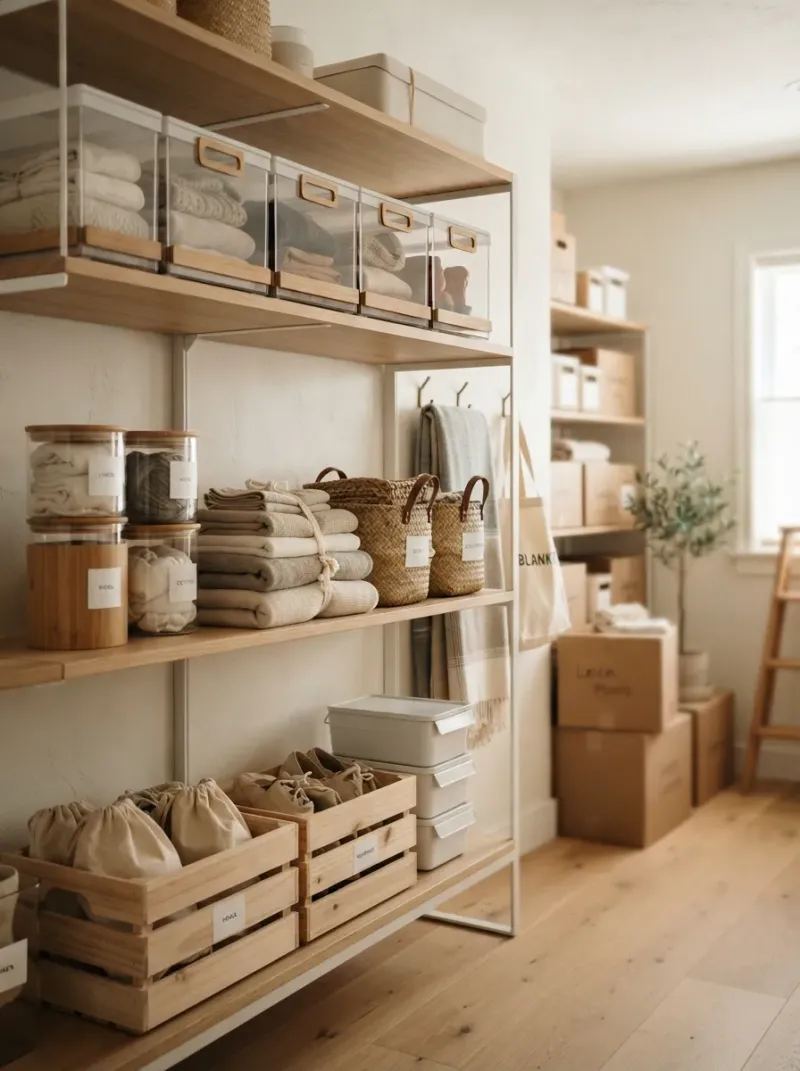
Jul 28, 2026 · Linda Wise
15 min readA storage room is the one room where clutter is legal — but 10 clever ideas later, you’ll actually find things in it.
I’ve walked into hundreds of storage rooms over the past 12 years, and almost every one fails the same way: it’s full of things nobody can find. The room isn’t too small and the clutter isn’t the problem. The problem is that the space was stuffed, never designed.
A storage room is unique: you’re never in it for long, and its only job is to hand you back whatever you came for in under a minute. The ideas below are the ones I actually install for clients — not Pinterest fantasies, but systems that survive real life, real moisture, and real retrieval speed.
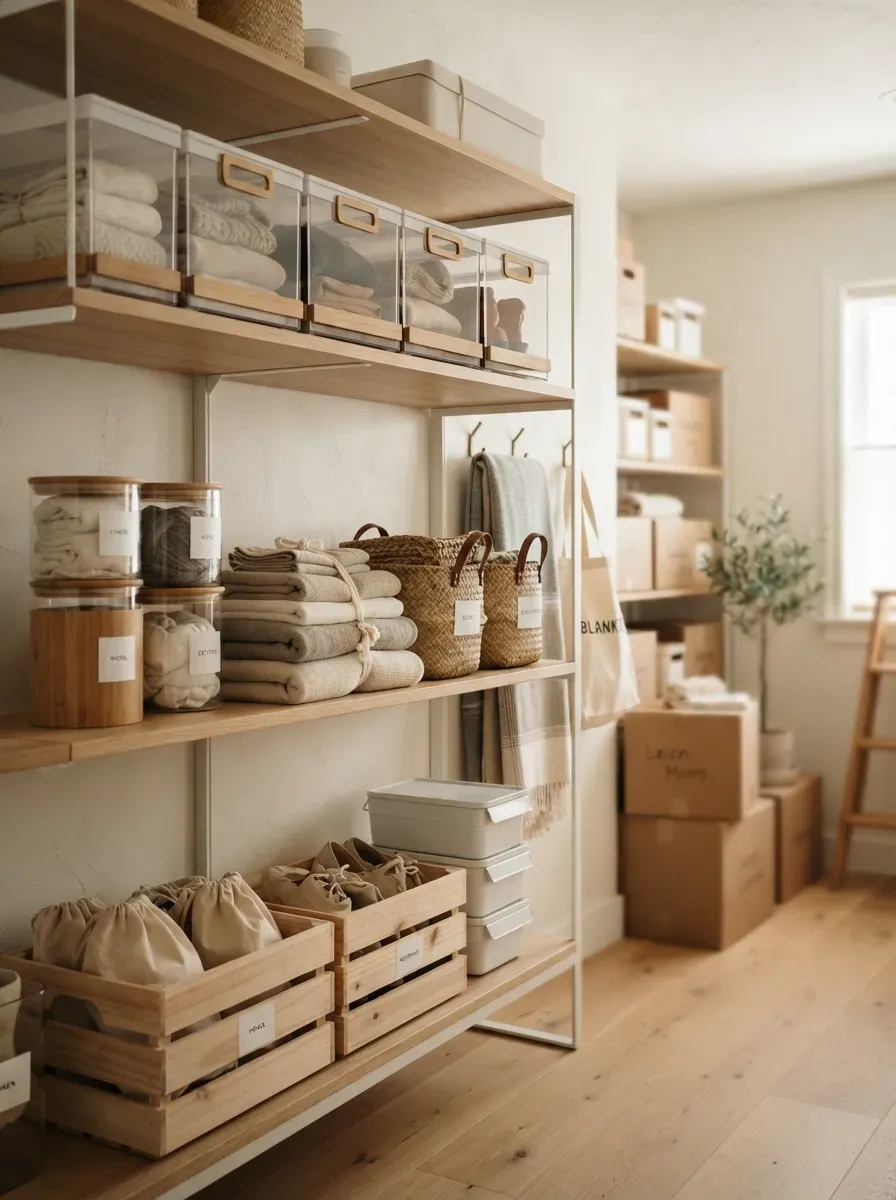
Storage Room Ideas That Work (10 of them)
Ideas for storage room? Ten, below. Every one works because it changes how the room behaves, not just how it looks — behavior is what makes a system stick.
-
Idea 1: empty the room completely, then leave it empty for a day. Why it works: sorting always happens best against an empty room and a clear head — the piles on the floor force you to decide, and the bare walls show you the true shape of the space.
-
Idea 2: zone the room by frequency, not by category. Why it works: stuff you grab weekly lives near the door; yearly stuff lives at the back — when what you need most is closest, no discipline is required to keep it working.
-
Idea 3: wall the shelves 8 inches off the floor. Fetches are fine; floor storage breeds cardboard forts.
-
Idea 4: ban cardboard and switch to clear, latching bins. Why it works: when you can see inside every box without opening it, you stop guessing, stacking, and losing things in the very room built to find them.
-
Idea 5: fill the walls floor to ceiling before you buy a single freestanding rack. Why it works: wall space is footage you already own and can’t trip over — the floor should be the last surface you store on, not the first.
-
Idea 6: label every bin on the front and the top. Why it works: labels written for future-you are the whole game — the day a faded Sharpie becomes unreadable, the room reverts to garbage.
-
Idea 7: keep everything heavy between knee and shoulder height. Why it works: the most brilliant storage room idea fails the second retrieval requires a chiropractor — weight belongs where your body can lift it.
-
Idea 8: light the shelves, not just the room. Why it works: a storage room you can’t see into is full of surprises; light on the labels makes finding things a glance, not a flashlight expedition.
-
Idea 9: keep a dated “to donate” bin by the door. Why it works: the exit is where decisions get made — a two-week deadline fills it, empties it, and pays you back in clear floor space.
-
Idea 10: photograph every bin and keep one list on your phone. Why it works: a searchable inventory means you find things before you even open the door — which is the entire point of the room.
Zone Every Wall (the one rule)
The one rule: every wall gets a job, and no item lives on a wall that isn’t its job. Wall A is holiday decorations, wall B is tools, wall C is seasonal clothing. Catch yourself putting patio cushions on the tool wall and you’ve found the flaw in your zone, not your character.
Frequency drives the zones: the aisle down the middle is weekly-use territory; the far corner is yearly — tax boxes, keepsakes, emergency gear. When you respect the zones, visitors can find things they’ve never seen before. My guide on vertical entryway storage systems applies the same zoning rule to a busy entryway.
Vertical Shelving & Floor-to-Ceiling Racks
The average storage room is a cube; the average user thinks like a sheet of paper. Shelving to the ceiling isn’t a luxury — it’s the difference between 40 bins and 10.
Use wire shelving everywhere gravity will let you: it breathes, dust falls through, and labels stay visible from below. Leave a 3-inch gap behind each rack so air moves — this detail kills basement mold before it starts.
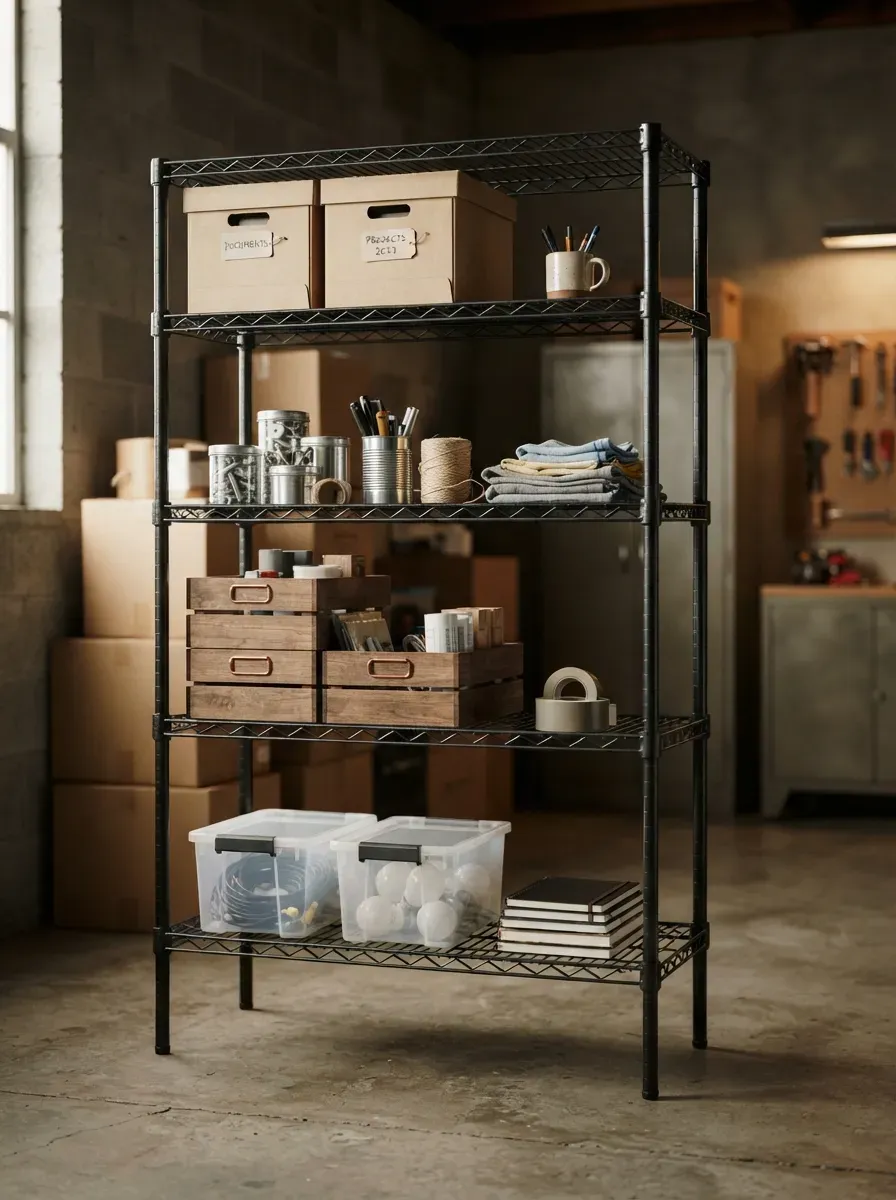
Where static racks can’t reach, hang a ceiling rack from the joists. Seasonal gear — patio cushions, decorations, the camping tent — lives up there exactly once a year. For a rotation on top of the vertical system, organizing seasonal gear by frequency covers what should rotate.
Labeling Systems People Actually Keep
Most labeling fails because it’s decorative. A bin labeled “Winter” holds scarves, sweaters, and a snow shovel that never made it home. People stop trusting labels the first time one lies.
The labeling system that survives contact with real families has three rules:
- Specific beats clever. “Waffle maker, slow cooker, cake pans” outlasts “Kitchen stuff” every time.
- Location lives on the label. Write “Shelf B-3” on the bin, not just the contents — search time drops to seconds.
- The label gets a date. “Reviewed 2026-08” turns every bin into an audit trail; when you can’t remember the last year you saw an item, the label decides.
Lighting That Makes a Storage Room Usable
Dark storage rooms make everything else on this list pointless. You won’t read labels you can’t see, respect zones you can’t distinguish, or put anything back where the light falls last.
Skip the single ceiling bulb — it lights the middle of the floor, where nothing is stored. Instead:
- LED strips under each shelf lip, aimed down at the bin-front labels — the single cheapest upgrade in the room.
- A motion light at the door so you never enter hands-full into darkness.
- Battery puck lights in the darkest corners, where the low-frequency zone ends up.
Beyond the Basement: Storage Rooms Everywhere
You don’t need a dedicated basement room for these storage room ideas. The same rules — clear bins, frequency zones, vertical walls, honest labels — turn a garage wall, hallway closet, or mudroom into a functional storage room.
Garage storage ideas follow the identical logic one level up: heavier racks, coated wire for humidity, and ceiling space used before floor space. In homes with an entryway nook, frequency zoning matters most, because these are the rooms you pass through constantly — seasonal swaps for mudroom gear show the same rotation rule keeping a high-traffic space from clogging.
Wherever your storage room lives, the test is the same: stand at the door, pick something — holiday lights, the waffle maker, spare bulbs — and describe where it is in ten seconds. That’s the goal of all 10 clever storage room ideas: not a prettier room, but a faster one. Clutter may be legal there, but finding things later should be, too.
Top Picks: Best Home Organization
Editor's shortlist with verified ratings. Prices and availability below — clicking an Amazon link earns us a small commission at no extra cost to you.
| # | Product | Rating | Reviews | Tag | Check Price |
|---|---|---|---|---|---|
| 1 | mDesign Stackable Storage Bins | 6,820 | Top Pick | Check Price | |
| 2 | Seville Classics Storage Organizer | 3,210 | — | Check Price | |
| 3 | Simple Houseware Closet Organizer | 2,450 | Best Closet | Check Price | |
| 4 | Rubbermaid Cleverstore Clear Container | 4,120 | — | Check Price | |
| 5 | IRIS USA Storage Bin with Lid | 2,210 | Best Stackable | Check Price |
Affiliate disclosure: As an Amazon Associate we earn from qualifying purchases.
Tag: smartlyhomme-20 — change in src/data/topPicks.ts.